I’m a science journalist and researcher at The Watchers, contributing to the Epicenter edition, where I cover peer-reviewed scientific research and emerging discoveries across Earth and space sciences. With a background in astronomy and a passion for environmental science, I’ve worked in shark and coral conservation in Fiji, conducting reef and shark-behavior research, contributing to mangrove restoration, and earning PADI Open Water and Coral Reef Certifications. I bring a blend of scientific rigor and storytelling to illuminate the discoveries shaping our planet and beyond.

  • Earth’s continents forged in furnace-like heat, new study reveals how stability was born

    Researchers at Penn State and Columbia University have found that Earth’s continents became stable through extreme heat exceeding 900 °C (1 650 °F) in the planet’s lower crust, according to a study published in Nature Geoscience on October 13, 2025.

  • What a runaway black hole did to a galaxy 31 million light-years away

    Astronomers using the James Webb Space Telescope (JWST) and ALMA have identified a 20 000 light-year (6 kiloparsec) scar of gas and dust slicing through the spiral galaxy NGC 3627. The feature was likely created by a massive black hole or the nucleus of a dwarf galaxy that passed through the galactic disk about 20 million years ago.

  • South Atlantic Anomaly, weak spot in Earth’s magnetic field, expanding steadily since 2014

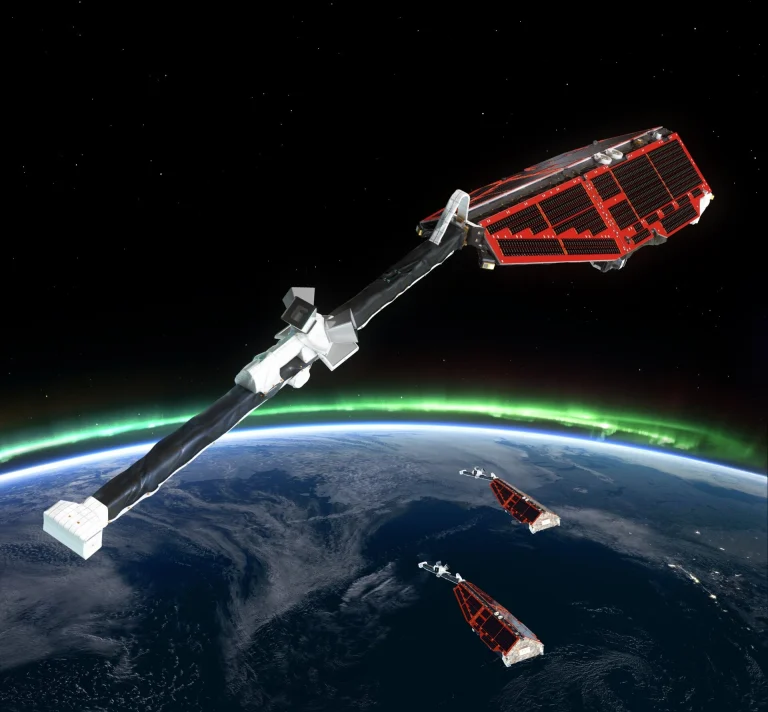
    New data from the European Space Agency’s Swarm mission show that the South Atlantic Anomaly, a weak region in Earth’s magnetic field over the South Atlantic Ocean, has expanded steadily since 2014, now covering nearly 1 % of the planet’s surface. The 11-year record marks the most detailed satellite observation of the field’s uneven weakening to date.

  • NASA telescopes detect unusual chemistry in interstellar comet 3I/ATLAS

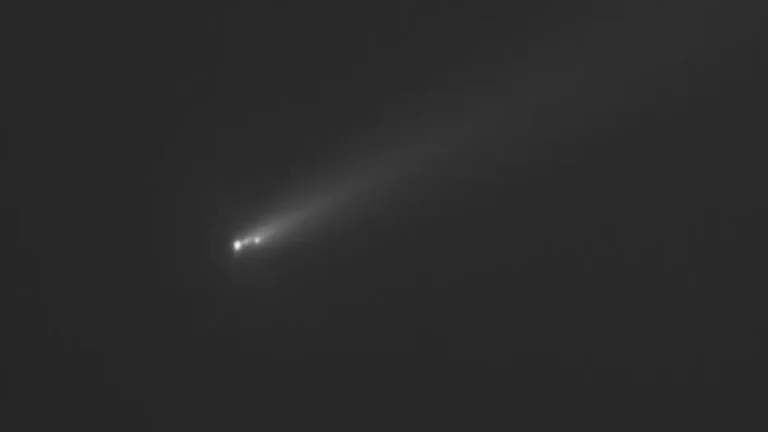
    NASA released the first results of James Webb Space Telescope (JWST) observations of interstellar comet 3I/ATLAS on August 25, 2025, showing a coma dominated by carbon dioxide. The comet was observed on August 6, and complementary data from Hubble and SPHEREx confirm unusual volatile ratios.

  • Death toll rises to 306 in monsoon season, Himachal Pradesh, India

    Monsoon rains have caused 306 deaths in Himachal Pradesh, India, since June 20, 2025, including 155 rain-related and 148 road accident fatalities, according to the State Disaster Management Authority. Estimated losses exceed ₹2 348 crore (USD 281.8 million).