jamal s shrair

Jamal S. A. Shrair earned a master’s degree in experimental and theoretical particle physics and completed a PhD in electronic devices. Following his doctorate, he continued his work as an independent researcher in solar physics, exploring alternative approaches in astrophysics and cosmology.

  • Cosmic accelerators and the magnetic structure of matter

    Current physics theories are not only unable to explain the origin of magnetic fields in the Universe as a whole, but also, the intense galactic magnetic fields in spiral galaxies and the sources of high energy particles, both charged and neutral particles (Cosmic…
  • Einstein discarded 99.99% of the physical reality of the universe

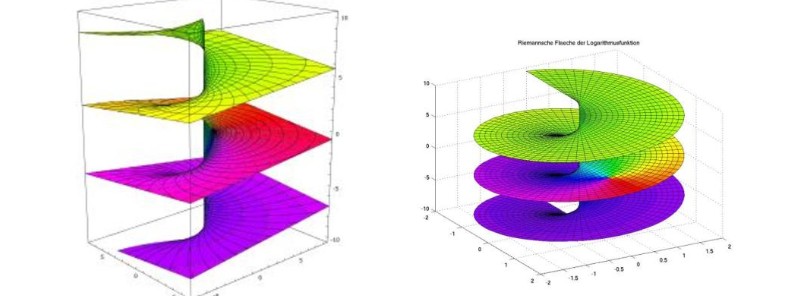
    The notion of space-time is an imaginary concept that was first introduced by the mathematician Hermann Minkowski. The original non-Euclidion geometry of Riemann dealt only with space as an amorphous continuum. But, Minkowski made it metric. Riemann did not present…

  • The emerging new physics myth of quark fusion

    The emerging new physics myth of quark fusion is far more complicated than the myth of thermonuclear furnace that believed to exist at the core of our star. However, the fantasy notion of quark fusion is supposed to involve the fusion of elementary particles known…

  • Super-intense magnetic field at the center of every galaxy

    What is present at the center of every galaxy or any larger scale structure is not a super-massive black hole, but an ultra-intense magnetic field. The intensity of magnetic field at that location is so enormous (at least several billion Gauss) and the field…

  • Study provides evidence for externally powered Sun

    A new study published in the International Journal of Current Research provides evidence for externally powered Sun, challenging the concepts of the Standard Solar Model (SSM). The study suggests our star is not an isolated celestial body, but rather it is linked…