
In 2001, red rain fell on parts of Kerala, India, on and off for about two months. Scientists traced the color to algae spores, but one physicist argued the cells came from space.
On 25 July 2001, brief, sharply localized showers began turning collected rainwater red across parts of Kerala. The phenomenon continued intermittently for about two months. Government scientists identified spores of the lichen-forming alga Trentepohlia, while physicist Godfrey Louis later argued that the cells had arrived in a disintegrating comet.
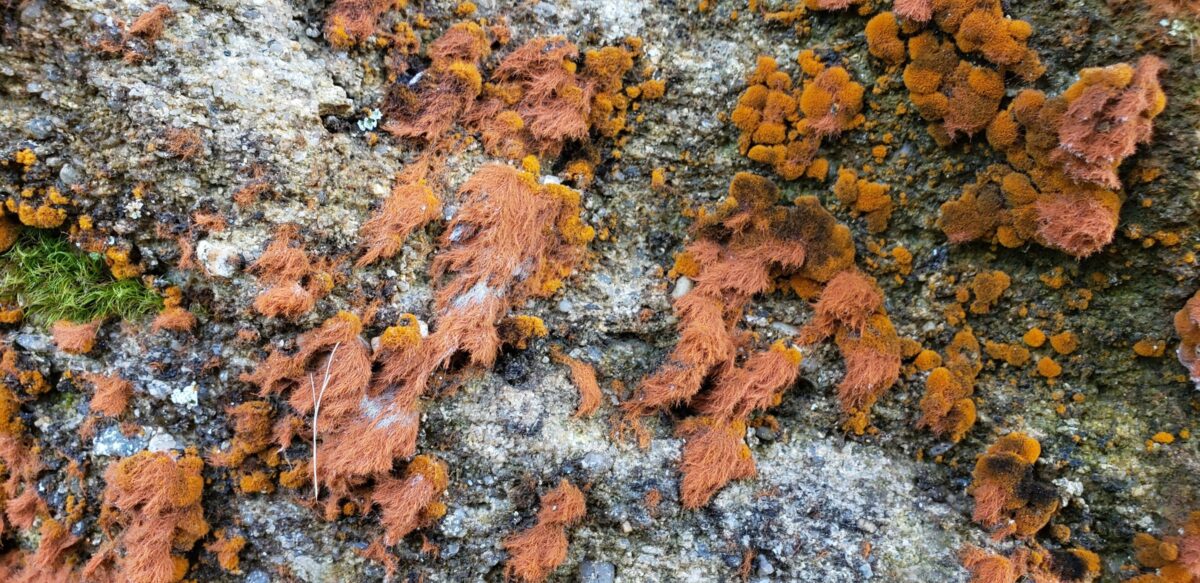
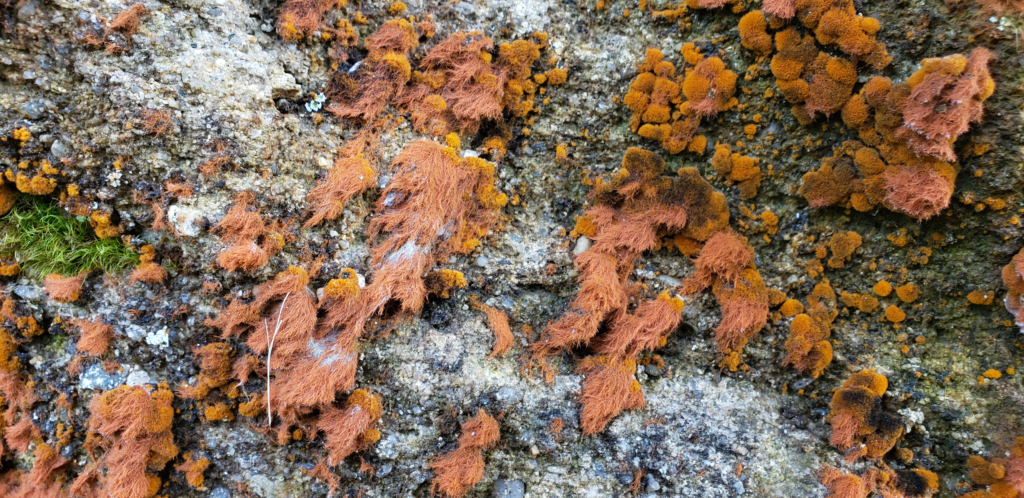
Orange Trentepohlia algae growing on rock. A species of this genus was identified as the source of the color in the 2001 Kerala red rain. Credit: EvanBaldonado, CC BY 4.0, via Wikimedia Commons.
Key takeaways
- Kerala’s red rain began on 25 July 2001. Most reported events occurred in the first 10 days, with isolated cases continuing for about two months.
- A joint investigation by the Center for Earth Science Studies and the Tropical Botanic Garden and Research Institute identified the red particles as spores of the alga Trentepohlia.
- The investigators cultured similar algae from the rainwater and from lichens on local trees, supporting a terrestrial source.
- The official report did not determine exactly how so many spores entered the air and rain at roughly the same time.
- Louis and Kumar argued that a disintegrating comet released the cells, but the proposed meteor link was not independently confirmed.
- A 2013 study demonstrated DNA in the cells after removing pigment that had interfered with earlier staining attempts.
- A 2015 genetic study identified a local Trentepohlia sample as T. annulata, but that sample came from rubber-tree bark and was not recovered from the 2001 rain.
Beginning on 25 July 2001, brief and sharply localized showers across parts of Kerala turned collected rainwater red. Most reports came during the first 10 days, although isolated cases continued for about two months. A government-commissioned investigation found that the color came from vast numbers of spores belonging to the lichen-forming alga Trentepohlia and matched algae cultured from the rainwater with algae growing locally.
Physicist Godfrey Louis and his co-author A. Santhosh Kumar later proposed a far more extraordinary source: a fragile comet that had broken apart in the atmosphere and released the cells. Their hypothesis attracted international attention, but no meteor was recorded, the early claim that the cells contained no DNA was overturned, and the evidence never established an extraterrestrial origin.
The first showers were brief and sharply localized
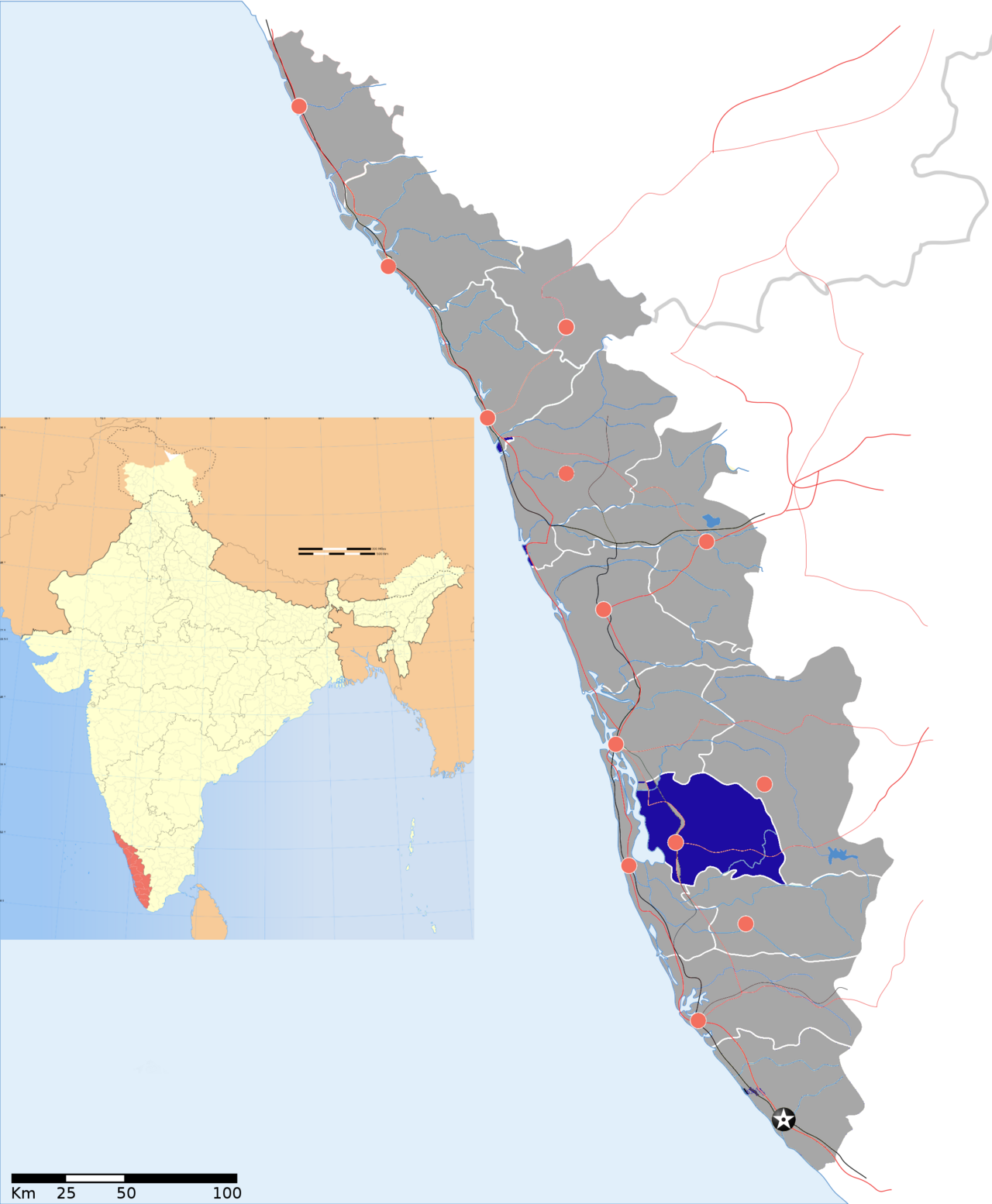
The first documented red shower fell on the morning of 25 July at Morkulangara, near Changanassery in Kottayam district. Residents collected the colored water in household containers, allowing scientists from the Center for Earth Science Studies (CESS) to obtain samples the next day. A joint CESS and Tropical Botanic Garden and Research Institute (TBGRI) team returned to the area on 29 July.
The event was not one continuous storm. Reports described small patches of colored rain, often lasting only minutes, while ordinary rain fell nearby. Louis and Kumar later assembled 124 reports from newspapers and witness accounts between late July and September. That list is useful for showing the timing and spread of the phenomenon, but it was not a systematic meteorological monitoring network.1, 4
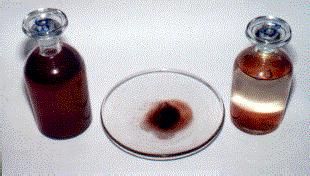
The red material settled to the bottom of collected water. Under a microscope, the official team found that about 90% of the particles were algal spores, with smaller amounts of fungal spores, protozoa and other debris. The color was therefore carried by suspended biological particles rather than by a dissolved red dye.
The official investigation found a terrestrial alga
India’s Department of Science and Technology commissioned CESS and TBGRI to investigate. The researchers cultured the cells and identified them as spores of Trentepohlia, a genus of green algae whose orange or red appearance comes from carotenoid pigments. Members of the genus can grow freely on bark and rock and also live as the photosynthetic partner in lichens.
The team then collected lichens from trees and other surfaces in the affected area. Cultures made from the rainwater and from the local lichens produced the same kind of algae. The report concluded that “the spores seen in the rainwater could most probably have come from local sources.”
Chemical and microscopic examination of the collected rainwater did not support meteoric, volcanic, or desert dust as the material responsible for its red color. The official report also rejected dissolved gases and industrial pollutants as the cause.
A second study found dust above southern Kerala
A separate line of research added an atmospheric complication. Scientists at the Vikram Sarabhai Space Center used lidar at Thiruvananthapuram to detect a dust layer at an altitude of about 4.5 km (2.8 miles) on 24 July, the day before the first red-rain report. Back-trajectory modeling traced air at that level across Afghanistan, Pakistan and northwestern India. The researchers concluded that transported desert dust was also one source of colored rain around Thiruvananthapuram.
The two investigations examined different evidence. The CESS/TBGRI team analyzed particles in collected rainwater and cultured the dominant red cells. The aerosol team measured a dust layer over southern Kerala and reconstructed its probable route. The dust finding shows that mineral aerosol was present and may have mixed into rain locally; it does not erase the direct identification of Trentepohlia spores in the red-rain samples.
One part of the terrestrial explanation remained open
The official report explained what colored the sampled rain, but it did not fully explain how such large numbers of spores entered the atmosphere at about the same time. Kerala had experienced prolonged rain before the event, and investigators observed abundant lichen growth. They considered whether favorable conditions had produced an unusually large spore release, but they lacked the microclimate and dispersal measurements needed to demonstrate the mechanism.
The report suggested that the spores may have remained at relatively low altitude and been washed down by passing showers. It also noted that wind commonly carries particles in the same general size range. What it could not show was the chain of events from growth on bark or lichen, through release and transport, to the highly localized red showers.
A loud bang became the starting point for a comet hypothesis
Several residents near Changanassery reported hearing a loud sound and seeing a flash at about 05:30 local time on 25 July, roughly three hours before the first red shower. The official investigators considered whether the sound might have been a meteor’s sonic boom, but wrote that any relationship to the colored rain was “not apparent.” They found no confirmed reports of similar sounds preceding the other showers.
Louis, then working in solid-state physics, treated the witness accounts as the beginning of a different explanation. In a 2003 preprint and a peer-reviewed paper published in 2006, he and Kumar proposed that a fragile cometary body had fragmented over Kerala and released red biological cells into the stratosphere.
The authors calculated that a cell about 10 μm across could settle through the stratosphere at roughly 0.5 km (0.3 miles) per day. In still air, they argued, a cell could take about 60 days to descend 30 km (19 miles), reproducing the duration of the reports. “Slow settling of cells in the stratosphere explains the continuation of the phenomenon for two months,” they wrote.
The hypothesis also drew on the cells’ resistance to changes in shape when heated, their ultraviolet absorption and early unsuccessful attempts to stain DNA. These observations were unusual, but none established where the cells originated. A cell wall remaining intact during heating is not evidence that an organism was alive at that temperature, a similar ultraviolet curve is not a unique fingerprint of interstellar material, and a failed stain cannot by itself demonstrate that DNA is absent.
The “no DNA” claim did not survive
The DNA question was tested directly by Rajkumar Gangappa and Stuart Hogg in a study published in Microbiology in 2013. The researchers found that the cells’ red pigment and low permeability interfered with fluorescent staining. After extracting the pigment with dimethyl sulfoxide, they successfully detected DNA with DAPI, a dye that binds strongly to DNA.
“Extraction of the pigment with DMSO allowed successful demonstration of DNA using DAPI staining,” they reported. The result did not by itself identify the organism to species, but it removed one of the most widely repeated reasons for describing the cells as unlike known terrestrial life.
The 2015 genetic study did not test the 2001 rain cells
A 2015 paper is often presented as the final genetic identification of the 2001 particles as Trentepohlia annulata. Its methods require a narrower reading. The researchers collected a random natural population of Trentepohlia at Anandapally, Kerala, from the bark of a rubber tree. They sequenced the nuclear ribosomal DNA internal transcribed spacer region of that terrestrial sample and identified it as T. annulata.6
The study demonstrated that T. annulata was present in a Kerala area associated with later red-rain reports, and its genetic similarity to a European isolate led the authors to discuss long-distance aerial dispersal. It did not sequence cells collected from the 2001 rain and therefore cannot, on its own, assign those original particles to that species. The strongest direct taxonomic result for the 2001 samples remains the official identification of the genus Trentepohlia.
The remaining mystery is terrestrial and testable
The red rain was real, and so was the gap in the first explanation. Investigators could identify the particles, grow them, and find matching algae nearby, but they could not reconstruct the unusual release and transport event that concentrated so many spores into small rain showers across Kerala.
That gap is not evidence that the cells came from space. The cometary argument depended on an unrecorded meteor, assumptions about the cells beginning high in the stratosphere, and a “no DNA” result later shown to be a staining problem. What remains is a narrower atmospheric and biological question: which combination of lichen growth, spore release, wind, cloud formation, mineral aerosol, and rainfall produced the event’s striking pattern?
References:
1 Sampath, S., Abraham, T. K., Sasi Kumar, V., & Mohanan, C. N. (2001). Coloured rain: A report on the phenomenon. Center for Earth Science Studies and Tropical Botanic Garden and Research Institute. CESS-PR-114-2001. https://web.archive.org/web/20060613135746/http://www.geocities.com/iamgoddard/Sampath2001.pdf
2 Satyanarayana, M., Veerabuthiran, S., Rao, D. R., & Presennakumar, B. (2004). Colored rain on the west coastal region of India: Was it due to a dust storm? Aerosol Science and Technology, 38(1), 24–26. https://doi.org/10.1080/02786820490247588
3 Louis, G., & Kumar, A. S. (2003). Cometary panspermia explains the red rain of Kerala [Preprint]. arXiv. https://arxiv.org/abs/astro-ph/0310120

