
Two killed after firefighting helicopters collide near Psatha, Greece
A Greek firefighting coordinator and a Danish pilot were killed when two firefighting helicopters collided near Psatha, west of Athens, on August 2, 2026. A British pilot and a second Greek coordinator aboard the other aircraft survived and were transported for hospital treatment. At least 38 agricultural and forest fires had been reported across Greece between August 1 and 2. Meanwhile, the Greek police have arrested and imposed fines on more than 10 arsonists in association with different fires across the country since July 31.
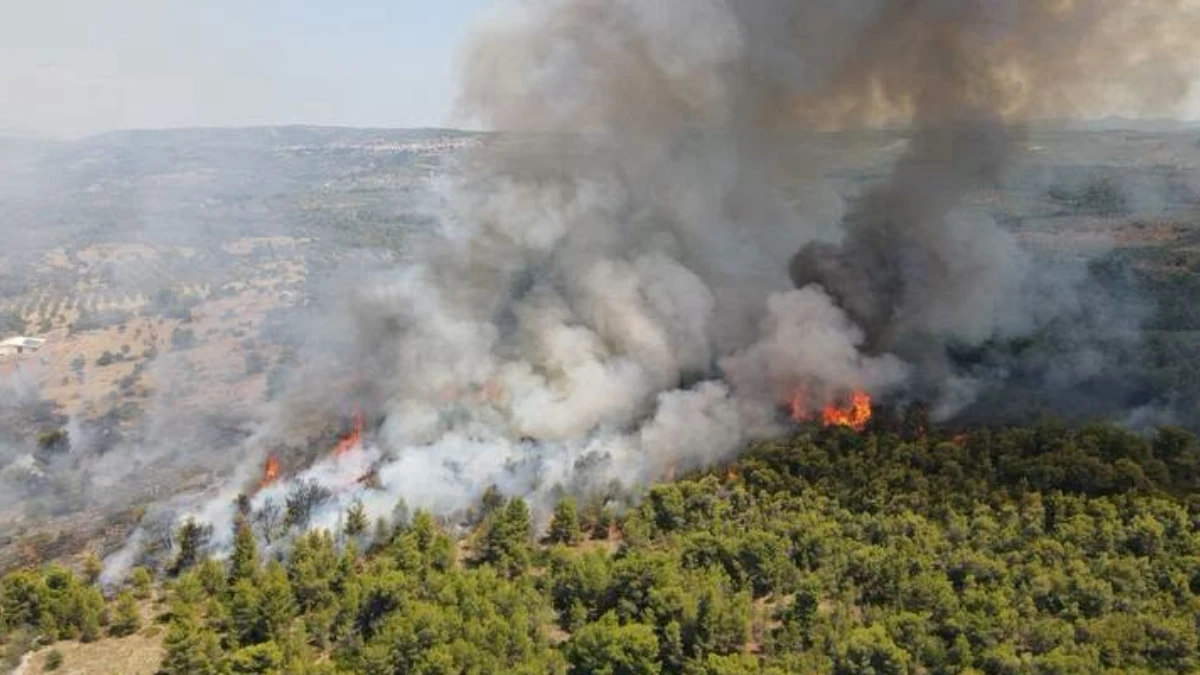
Massive wildfire burning in Attica, Greece, August 2, 2026. Credit: Ministry for Climate Crisis and Civil Protection, Greece
Two crew members were killed, and two survived after two Bell-type helicopters leased by the Hellenic Fire Service collided during an aerial firefighting operation near Psatha, Attica, on August 2.
The collision occurred shortly after 16:00 LT (13:00 UTC) while the helicopters were operating over the fire front near Psatha and Agios Nektarios, west of Athens.
“During an aerial firefighting operation, two Bell-type helicopters leased by the Hellenic Fire Service, each carrying a crew of two, crashed in the wider Psatha area of Attica,” the Greek Fire Service reported. “The helicopters had taken off from the Elefsina Military Air Base,” they added.
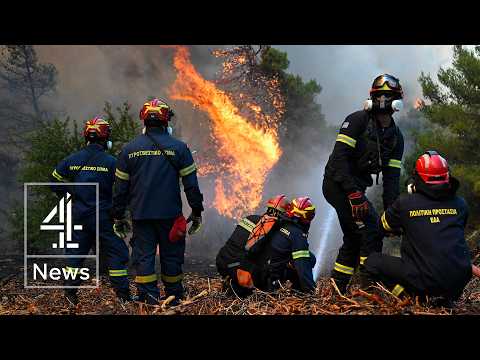
A Greek coordinator and a Danish pilot aboard one helicopter were recovered without signs of consciousness and transported to a hospital, where they were pronounced dead. The second crew, a British pilot and a Greek coordinator, survived and received hospital treatment.
The surviving pilot landed the damaged helicopter on a road, and both crew members left the aircraft before fuel ignited. The second helicopter fell into a ravine, where emergency personnel located its two occupants.
Firefighters already deployed around Psatha joined the search-and-rescue operation, which was coordinated in the field by the chief of the Greek Fire Service. Emergency medical crews recovered the four occupants and transported them to the 251 General Air Force Hospital.
Greek police secured the crash area and opened a preliminary investigation into the circumstances and cause of the collision. The investigation was assigned to the Hellenic Police Directorate for Combating Organized Crime following consultation with the competent prosecutor.

Eight Erickson helicopters, two Canadair aircraft and two Chinook helicopters remained assigned to aerial firefighting operations later Sunday.
The Fire Service said strong winds had repeatedly restricted aircraft operations during the wider wildfire response. No authority had linked the wind, crew actions, aircraft condition or flight coordination procedures to the collision, and the cause remained undetermined.
Water-dropping operations continued on the morning of August 3 with five planes and five helicopters supporting nearly 500 firefighters west of Athens.
The wildfire began on July 31 and had forced more than 1 000 people to evacuate, including more than 250 people removed by boat from coastal areas where fire and smoke restricted road access.
In a separate nationwide update issued at 18:30 LT (15:30 UTC) on August 2, the Hellenic Fire Service said 38 agricultural and forest fires had been reported across Greece between 18:00 LT on August 1 and 18:00 LT on August 2. Firefighters brought 34 under control during their initial stages, while four remained active at the time of the update.
Meanwhile, the Greek police have arrested and imposed fines on more than 10 arsonists since July 31 in association with different fires in Lesbos, Attica, Serres, Evia, Pella, Florina, Achaia, Drama, and Evros.
References:
1 Two firefighting helicopters crash in Psatha, Attica – Hellenic Fire Service _ August 2, 2026
2 Arrests and administrative fines imposed in Lesbos, Attica, Serres, Evia, Pella, Florina, Achaia, Drama, and Evros – Hellenic Fire Service _ August 2, 2026
3 Update on agricultural and forest fires during the past 24 hours – Hellenic Fire Service _ August 2, 2026

Rishav Kothari is Editor-in-Chief of The Watchers, where he runs the newsroom and covers earthquakes, volcanoes, severe weather and space weather.
Published in the last 24 hours
- NASA built the Opportunity rover to last 90 days on Mars, and Martian winds helped keep it alive for nearly 15 years by blowing dust off its solar panels, until a planet-wide dust storm in 2018 blocked sunlight and silenced the rover Epicenter
- In the winter of 1811–12, earthquakes near New Madrid, Missouri, shook so hard that witnesses saw the Mississippi River flow backward, and the shaking left a brand-new lake in Tennessee Epicenter
- On 28 August 1859 a solar storm shocked telegraph operators and threw sparks on other lines, and on 2 September Boston to Portland clerks unhooked their batteries and kept sending for more than two hours on the aurora's current alone. Epicenter
- In 2019, the Ronald Reagan Presidential Library hired hundreds of goats to eat 13 acres of brush around it; months later the Easy Fire surrounded the library, and the fire break the goats left behind slowed the flames before they reached the building Epicenter
