
Astronomers record small asteroid impacting Jupiter
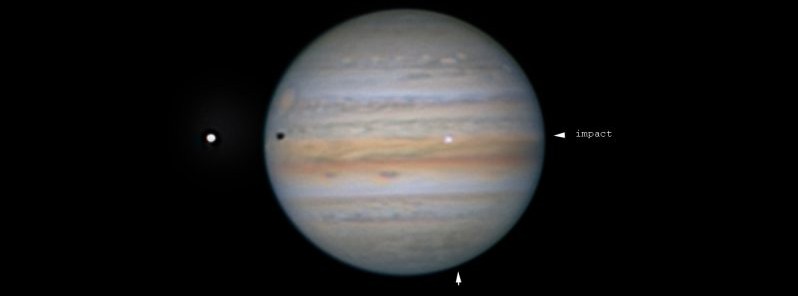
Image credit: Harold Peske via SpaceWeather
A bright fireball — most likely a small asteroid or a comet — struck Jupiter at 22:39 UTC on September 13, 2021. The impact was seen and captured by astronomers across the world who were observing the ongoing transit of the shadow of Jupiter's moon Io.
"A bright flash of light surprised me," German astronomer Harald Paleske, who video-recorded the event, told SpaceWeather.com.1
Paleske reviewed the frames and ruled out objects such as airplanes and satellites, which might have been crossing Jupiter at the time of his observation. "The fireball was fixed in Jupiter's atmosphere. It first appeared at 22:39:27 UT on September 13 and remained visible for a full two seconds."
The most likely explanation is a small asteroid or comet striking the giant planet; an asteroid in the 100 m (330 feet) size range would do the trick.
A new impact flash has been discovered on Jupiter by Brazilian observer Jose Luis Pereira – the flash occurred at Sep 13th, 22:39:30 UTC. It looks quite a bright one. Follow up images of this region will be useful to see if any dark scar was left following the event. pic.twitter.com/LL9rDGvodm
— Damian Peach (@peachastro) September 14, 2021
Impact Flash on Jupiter confirmed by at least 2 amateur astronomers: H. Paleske in Germany & by J.P. Arnould in France. See attached images & for more info about past Jupiter impact events: https://t.co/VIpSt2TQfn #astronomy #jupiter #impact pic.twitter.com/0kMP7iRMao
— Ernesto Guido (@comets77) September 14, 2021

Jupiter impact on September 13, 2021. Credit: Harold Paleske via. SpaceWeather
References:
1 Something just hit Jupiter – SpaceWeather

The Watchers team and our contributors bring the latest on extreme weather, earthquakes, volcanic eruptions, space weather, and all things science. We're all about making sense of the natural world and keeping you informed on what’s happening. Got a tip or a question? Hit us up using the form at newstips!
Published in the last 24 hours
- In September 1859, a solar storm lit up the night sky so brightly that gold miners in the Rocky Mountains woke up after midnight and started cooking breakfast, convinced the aurora glowing over their camp was the sunrise Epicenter
- A patch of warm Pacific water that could become the strongest El Niño in more than 70 years sits thousands of miles from any American town, yet it is already the main reason NOAA expects a wetter winter across the South and a milder one across the North
- A 19-year-old Nebraska teacher reportedly tied her pupils together with twine and led them to safety through a blizzard in January 1888 Epicenter
