
Explosive activity continues at Lewotolo after major eruption on November 29, thousands of people evacuated

Image credit: MAGMA Indonesia
Explosive activity continues at the Indonesian Lewotolo volcano on Monday, November 30, 2020, after a major eruption on Sunday sent ash up to 15.2 km (50 000 feet) a.s.l. The Aviation Color Code was raised to Red following the eruption and Alert Status raised to 3 of 4. Lewotolo is located on Lembata island of East Nusa Tenggara province.
There were no reports of injuries or damage after a major eruption on Sunday but authorities confirmed nearly 2 800 people from 28 villages on the slopes of the volcano were evacuated and nearby Wunopitu airport temporarily closed after ashfall was reported in many areas on the island.
The Disaster Mitigation Agency is urging villagers and tourists to stay 4 kilometers (2.4 miles) away from the crater and be aware of potential threats as the area near the volcano is likely to be inundated with pyroclastic flows, lava, and poisonous gases.
Considering the potential danger of volcanic ash that can cause acute respiratory problems and other health issues, the people around the volcano should prepare nose and mouth masks and other protective equipment for eyes and skin.


Eruption at the volcano continued into Monday, November 30, although with much less intensity.
Explosions accompanied by a burst of incandescent material above the peak were recorded at 03:28, 04:39, 04:59, 06:40, 07:37, and 08:33 WITA today, with an ash column height of 1 400 – 4 000 m (4 600 – 13 100 feet) above the crater.
Fires were also observed around the crater.

Image credit: MAGMA Indonesia

Image credit: MAGMA Indonesia

Image credit: MAGMA Indonesia

Image credit: MAGMA Indonesia
According to the Darwin VAAC, a major eruption on November 29 sent volcanic ash up to 15.2 km (50 000 feet) above sea level.
The eruption was recorded on a seismograph with a maximum amplitude of 35 mm and a duration of 600 seconds.
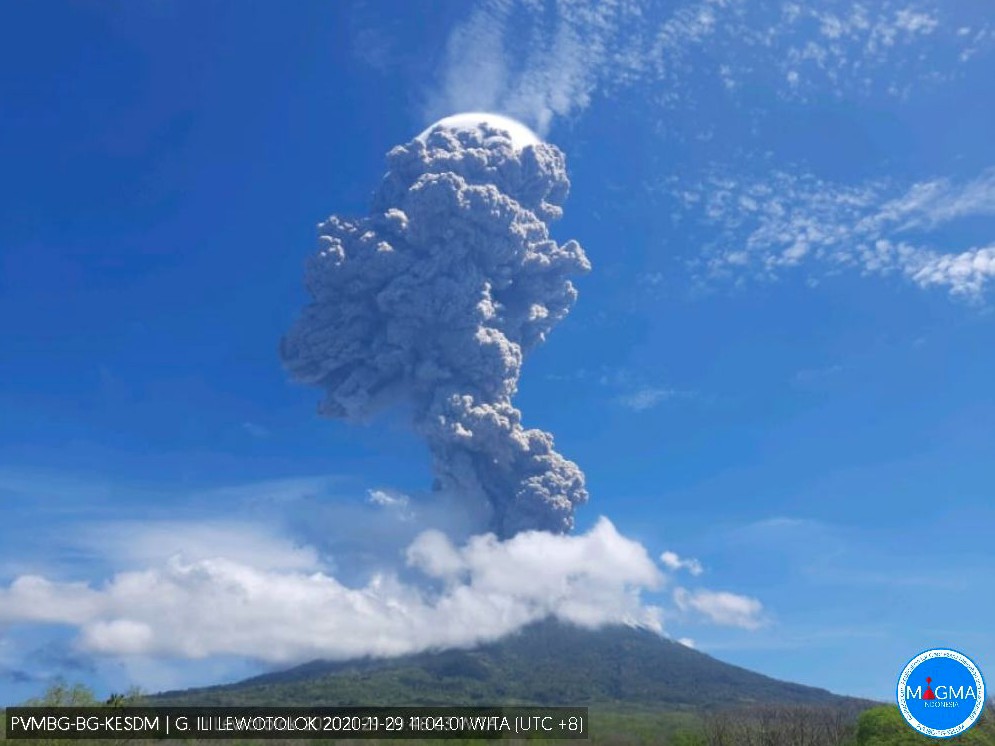
Image credit: MAGMA Indonesia
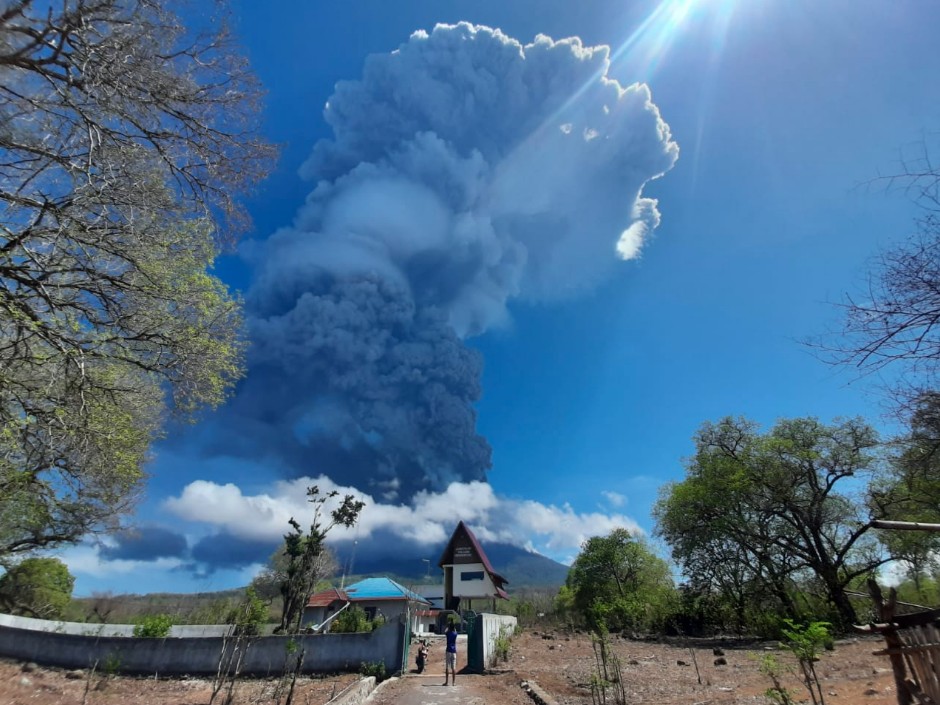
Image credit: Dr. Devy Kamil Syahbana


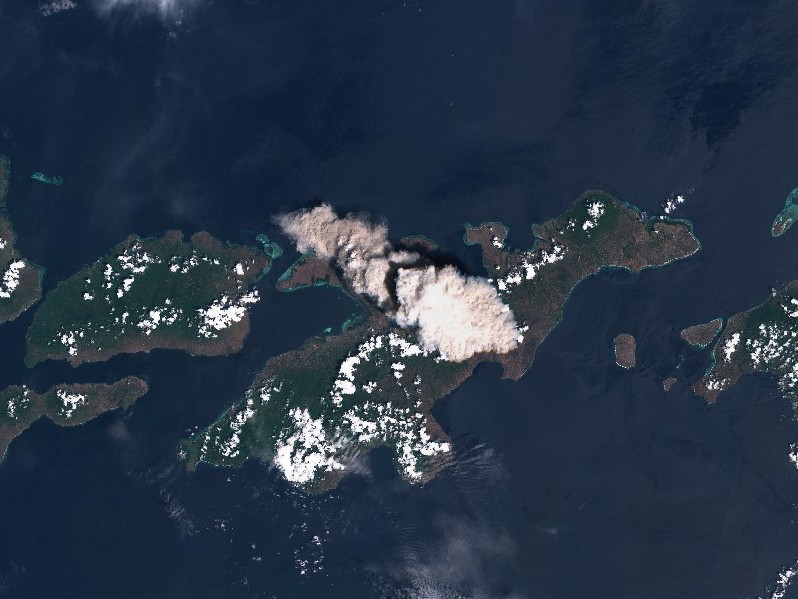
Ash rising above Lewotolo volcano on November 29, 2020. Credit: Copernicus EU/Sentinel-2, TW
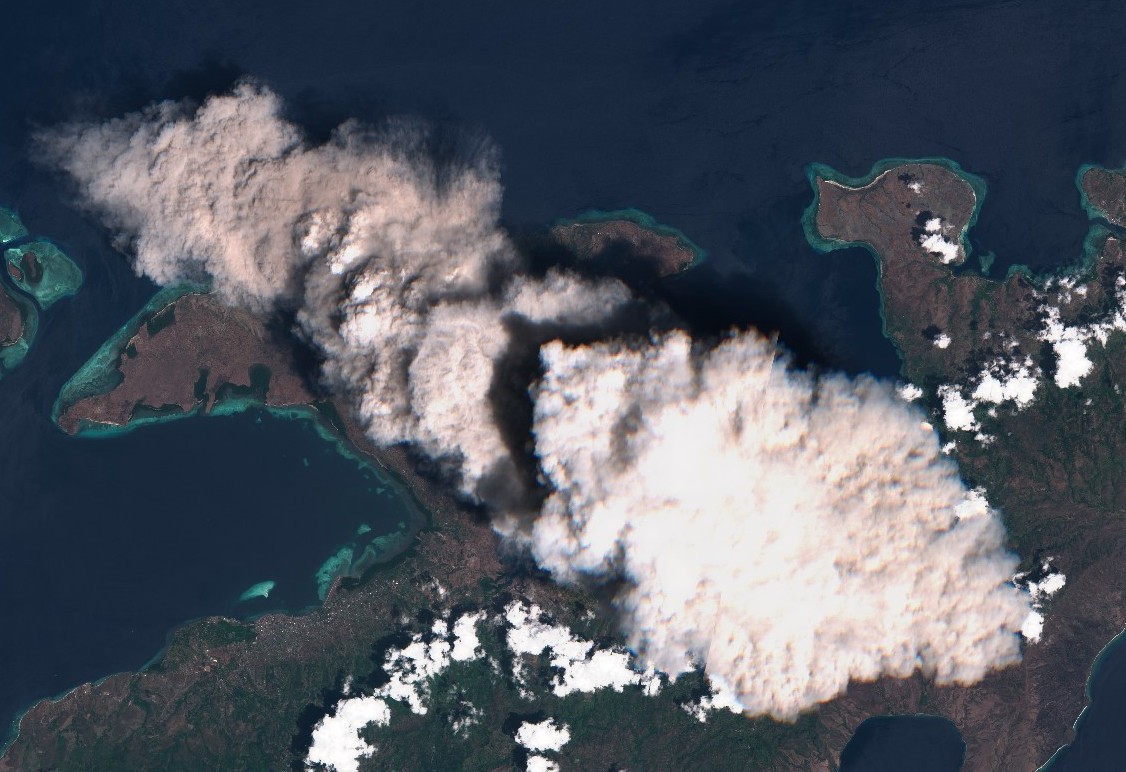
Ash rising above Lewotolo volcano on November 29, 2020. Credit: Copernicus EU/Sentinel-2, TW
Eruptions at Lewotolok were recorded in 1660 (VEI 3), 1819 (VEI 2), 1849 (VEI 2), 1852 (VEI 2), 1864 (VEI 2), 1899 (VEI 2), 1920 (VEI 2), 1951 (VEI 2), and 2012 (VEI 1).
Geological summary
Anchoring the eastern end of an elongated peninsula that is connected to Lembata (formerly Lomblen) Island by a narrow isthmus and extends northward into the Flores Sea, Lewotolo rises to 1 423 m (4 668 feet).
Lewotolo is a symmetrical stratovolcano as viewed from the north and east. A small cone with a 130-m-wide (426 feet) crater constructed at the SE side of a larger crater forms the volcano's high point. Many lava flows have reached the coastline.
Historical eruptions, recorded since 1660, have consisted of explosive activity from the summit crater.

Teo Blašković founded The Watchers in 2011 and edited it until 2026, covering seismic and volcanic activity, extreme weather, space weather and near-Earth objects. Articles on this page are his archive.
Published in the last 24 hours
- Strong El Niño reinforces above-normal winter precipitation outlook across southern and eastern U.S.
- A fog linked to about 12 000 excess deaths in London in 1952 puzzled scientists for decades, until researchers reconstructed how coal smoke formed acidic haze Epicenter
- In 2012, cameras filming a thunderstorm in western China caught ball lightning by accident, and its 1.64-second glow carried iron, silicon, and calcium from the soil it rose out of Epicenter
- Strong M6.8 earthquake hits Kepulauan Barat Daya, Indonesia, near Timor-Leste

@Jamal, I wish that would happen. Perhaps that would lead to “global cooling”. In my area of the nation the month of November had record warmth, many days 10 centigrade (!) above historical norms.
In the coming days and weeks many other volcanoes will erupt including Yellowstone supervolcano