
Tropical Storm “Beta” forms in the Gulf of Mexico, heavy rainfall expected along northwest Gulf Coast
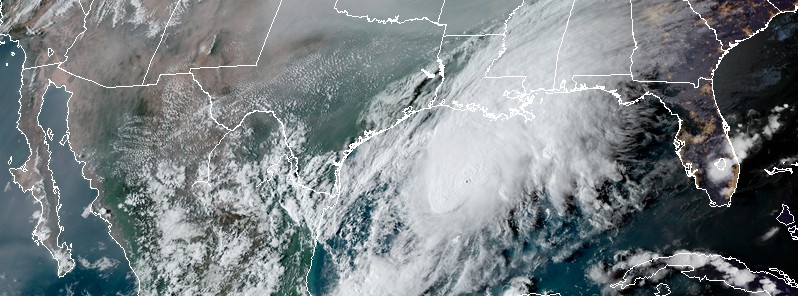
Featured image: Tropical Storm "Beta" at 22:40 UTC on September 19, 2020. Credit: NOAA/GOES-16, RAMMB/CIRA
Tropical Storm "Beta" formed in the Gulf of Mexico at 21:00 UTC on Friday, September 18, 2020. This is the 23rd named storm of the 2020 Atlantic hurricane season and the 10th so far this month — a record for September.
Storm Surge and Tropical Storm or Hurricane Watches will likely be required for portions of the western Gulf coast tonight or on Saturday, NHC forecasters said.
- The storm is currently moving NNE at 15 km/h (9 mph). However, a slow-motion toward the west is expected by Saturday night (LT), September 19, and into the next week.
- Heavy rainfall and flooding is expected along the northwest Gulf Coast starting Sunday, September 20, and lasting for several days as the storm tracks slowly toward and along or offshore of the coast.
- Beta could briefly strengthen into a hurricane as it approaches the western coast of the Gulf of Mexico late Sunday or Monday, September 21.
Beta's center was located about 545 km (335 miles) ENE of Tampico, Mexico, and 450 km (280 miles) ESE of the mouth of the Rio Grande at 21:00 UTC on September 18. The storm had maximum sustained winds of 65 km (40 mph) and a minimum central pressure of 1 004 hPa.
Swells are expected to increase and reach the coast of Texas and the Gulf Coast of Mexico over the weekend, generated by a combination of Beta and a cold front entering the northern Gulf of Mexico. These swells are likely to cause life-threatening surf and rip current conditions.
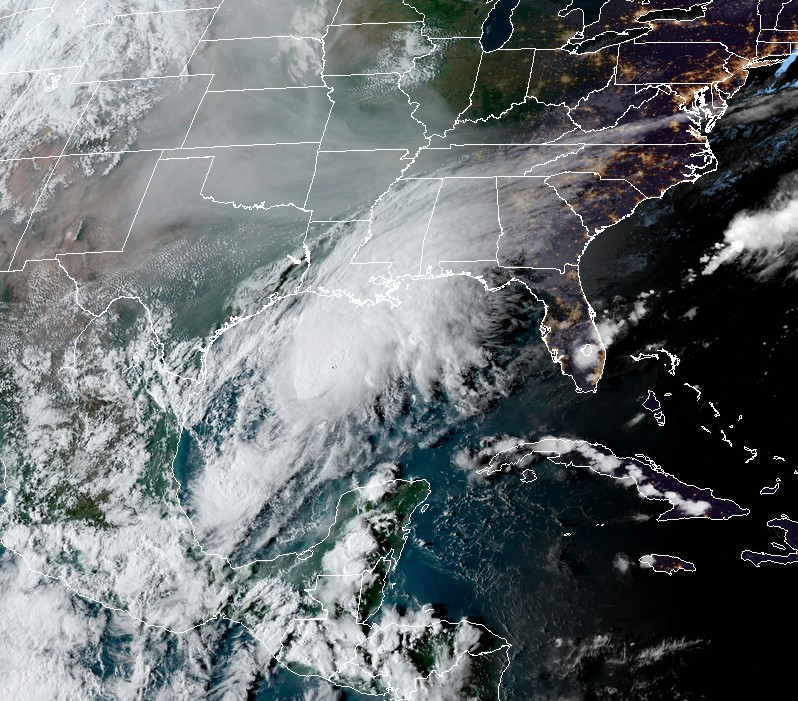
Tropical Storm "Beta" at 22:40 UTC on September 19, 2020. Credit: NOAA/GOES-16, RAMMB/CIRA

Teo Blašković founded The Watchers in 2011 and edited it until 2026, covering seismic and volcanic activity, extreme weather, space weather and near-Earth objects. Articles on this page are his archive.
Published in the last 24 hours
- In January 2000, chunks of ice weighing up to 6 pounds fell out of clear blue skies over Spain for 10 days. One smashed through a car windshield, and scientists still can’t fully explain where they came from Epicenter
- El Niño reaches 2.0°C on NOAA’s index, a tenth of a degree behind 1997–98 at the same point, as forecasters expect it to challenge the all-time record this winter
- The fastest wind gust ever measured on Earth, 253 mph, hit an oil island off Australia during Cyclone Olivia in 1996, and nobody noticed for more than a decade, until experts reading old data quietly took the record from New Hampshire's Mount Washington Epicenter
- In 1954, a grapefruit-sized meteorite crashed through a roof in Sylacauga, Alabama, and struck Ann Hodges as she napped on her couch Epicenter

we know the number of hurricanes will go up in 2020. Can the wind speed go up?. If the hurricane is in the Gulf of Mexico, can the wind reach 200mph ?