
Unseasonal rain and hailstorms ravage more than 32 000 ha (79 000 acres) of crops, Bihar

Image credit: Today Bihar News/YouTube
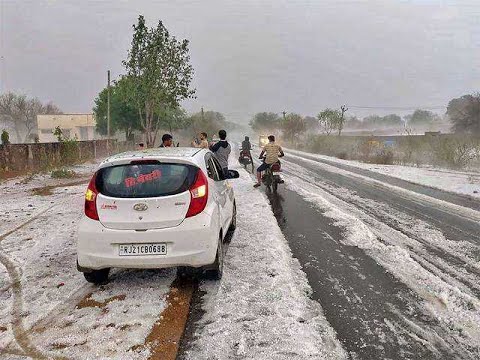
Unseasonal downpour and hailstorms during the last week of February caused major damage to more than 32 000 hectares (80 000 acres) of crops in 11 districts of India's Bihar state. Several other states in the northern region also saw widespread crop damage.
Severe storms hit Bihar during the last week of February, damaging wide swaths of crops, including wheat, sugarcane, litchi, and mango blossoms, agriculture minister Prem Kumar reported on Friday, March 6, 2020.
Hailstones up to 20 mm (0.8 inches) in diameter were reported in parts of Kaimur, Rohtas, and Aurangabad; while strong winds ravaged mango trees.
"We are finished," said Badhauna village farmer Amit Singh. "The rabi crop was our last hope for survival. Heavy rain in November, December and January destroyed our paddy crops."

Around 60 crore rupees or 8 million dollars were allotted by the state disaster management department as compensation, Kumar confirmed. Farmers whose crops were severely affected were invited to place their applications online beginning March 9.

Kumar remarked that the applicants will be thoroughly screened, and once the verification is done, the payment will be made within a month to farmers in districts that sustained 33 percent of crop damage or more.
Several other states in northern India, including Uttar Pradesh and Rajasthan, were also pounded by heavy rain and hailstorms, resulting in similar widespread damage.


Published in the last 24 hours
- How did one flash of lightning, lasting about seven seconds, stretch 829 km across five US states, beat the previous record by 61 km, and only be recognized as the longest ever measured nearly eight years later?
- A meteorite blew a crater beside a village near Lake Titicaca in 2007, and dozens of villagers who went to see it got headaches and nausea, though tests found nothing the rock had added to the water Epicenter
- The people who pay closest attention to the weather are the ones storms have already cost the most, a study of 946 students found, with one damaging storm making little difference to how much attention a student paid, but two or more making a clear one Epicenter
- The sea is falling in Juneau, Alaska, because land freed from melted glaciers is rising about 0.6 inches a year Epicenter
