
Potential meteorite-producing event over the Mediterranean Sea

Featured image: Potential meteorite-producing event over the Mediterranean Sea on July 9, 2018. Credit: Meteoroides.net
A bright fireball flew above the coast of Almeria, Span and the Mediterranean Sea at 03:13 UTC on July 9, 2018. The object was recorded by several SMART Project detectors. It is possible that this was a meteorite-producing event.
According to the preliminary analysis by the SMART Project's Principal Investigator, Professor Jose Maria Madiedo of the University of Huelva, Spain, this fireball was produced by the atmospheric entry of a fragment detached from an asteroid.
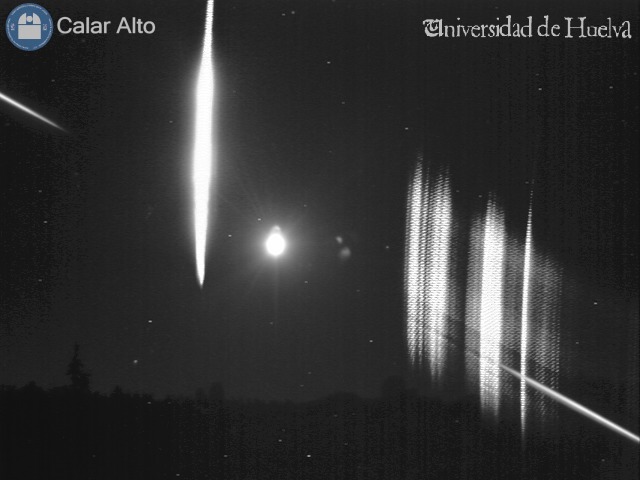
Fireball's spectrum emission. Image credit: Calar Alto/University of Huelva
The object impacted our atmosphere at a speed of about 65 000 km/h (40 400 mph). The fireball began at an altitude of around 89 km (55 miles) over the province of Almeria and ended at a height of about 31 km (19 miles) over the Mediterranean Sea.
Madiedo's analysis suggests this was a potential meteorite-producing event. However, meteorites would have fallen into the sea, with a mass of just a few grams.


Teo Blašković founded The Watchers in 2011 and edited it until 2026, covering seismic and volcanic activity, extreme weather, space weather and near-Earth objects. Articles on this page are his archive.
Published in the last 24 hours
- Male toads abandoned a pond in Italy five days before a deadly 2009 earthquake, while a scientist was counting them Epicenter
- An asteroid was spotted 19 hours before it exploded over Sudan in 2008, and students picked its pieces off the desert Epicenter
- A wave up to 3 m (10 feet) high rose out of Lake Michigan on a sunny June morning in 1954 and swept fishermen off Chicago’s piers, and when a second came 10 days later, warnings had cleared the shore Epicenter
- Just 12 inches of rushing water can carry away most cars, and more than half of US flood drownings happen to people who drive into flood water Epicenter
