
Earthquake 6,6 hit volcanic arc south of Kermadec Islands
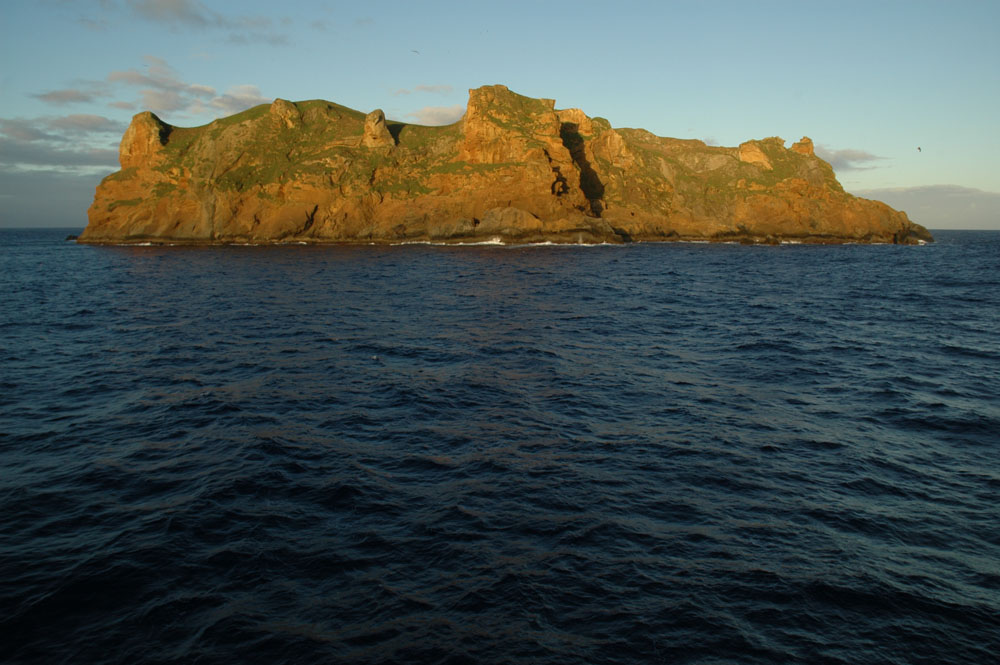
Image credit: TW
6.6 magnitude earthquake struck in the South Pacific on Monday, the U.S. Geological Survey said. The epicenter was south of the Kermadec Islands, about 340 miles (550 kilometers) east-northeast of Auckland, New Zealand, the survey said.
The earthquake had a preliminary magnitude of 6.4, but the U.S. Geological Survey later increased that to 6.6. The Pacific Tsunami Warning Center said it does not expect the quake to generate “a destructive, Pacific-wide tsunami.”
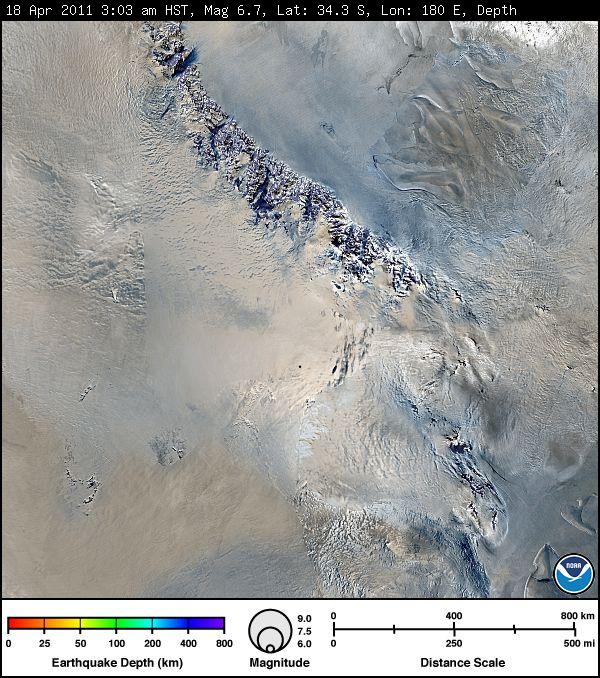
Volcanic activity appears to be intensifying along the underwater volcanic arc near the North Island of New Zealand. Major earthquakes have struck Tonga and Kermadec in a week. An increase in volcanic activity means more seismic unrest for New Zealand. (TheExtinctionProtocol)

The Kermedec region includes outstanding examples of major stages in the geological evolution of the Earth. In geological terms, its value includes an entire cross section of the collision of two tectonic regions (the Pacific Plate and the Australian Plate), a large portion of the deepest sea-floor region in the southern hemisphere, and a major chunk of the longest submarine volcanic arc on the planet.
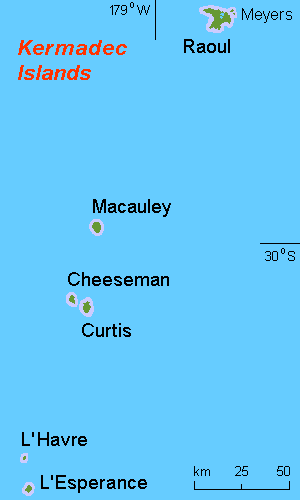 The volcanic islands of Raoul, Macauley, Curtis and L’Esperance are the emergent summits of large, complex stratovolcanoes that form part of a volcanic arc and subduction system extending from temperate New Zealand to tropical Tonga as part of the Pacific Ring of Fire.
The seabed around the islands is extremely deep – 95% of it descends to over 1,000 m and 33% to over 5,000 m. The Kermadec – Tonga Trench drops to over 10,000 m – deeper than the 8,848 m Mount Everest is high. It is the deepest ocean sea-floor region in the southern hemisphere.
The Kermadec Islands and associated submarine volcanoes along the Kermadec Arc are superlative natural phenomena. They display significant ongoing geological processes in the development of arc-styled volcanism, submarine hydrothermal venting and geomorphic features. In addition, the arc’s seamounts include a variety of volcanic landforms such as cones and calderas.
In recent years, six deep-sea expeditions have been undertaken to describe and survey the area in detail. Since 2002, several sea-floor geological voyages have mapped all the larger volcanoes of the Kermadec Arc from White Island in the Bay of Plenty to the Kermadec Island group (including the submarine flanks of Macauley and Raoul islands), and northward to southern Tonga. More than 50 new submarine volcanoes have been discovered in the past decade.
Many of the Kermadec submarine volcanoes are comparable in size and form to the more visible terrestrial New Zealand volcanoes, such as Mount Taranaki and Mount Ruapehu. At least eight of the Kermadec seamounts are over 2,000 m in elevation. One rises to within 65 m of the sea surface, while the summits of others reach no higher than 1,500 m below the surface. The largest volcano is 25 km in diameter, and at least 16 are more than 10 km in diameter. Macauley Island is part of a large volcanic complex at least 35 km in diameter. The island itself represents less than 5% of the emergent portion of the volcano, and the rim is capped by more than 30 vent cones that have emitted recent lava flows both into the caldera and down the outer-rim flanks.

Published in the last 24 hours
- Male toads abandoned a pond in Italy five days before a deadly 2009 earthquake, while a scientist was counting them Epicenter
- An asteroid was spotted 19 hours before it exploded over Sudan in 2008, and students picked its pieces off the desert Epicenter
- A wave up to 3 m (10 feet) high rose out of Lake Michigan on a sunny June morning in 1954 and swept fishermen off Chicago’s piers, and when a second came 10 days later, warnings had cleared the shore Epicenter
- Just 12 inches of rushing water can carry away most cars, and more than half of US flood drownings happen to people who drive into flood water Epicenter
