
Rare snowfall blankets Santiago, causing power outages for over 200 000, Chile
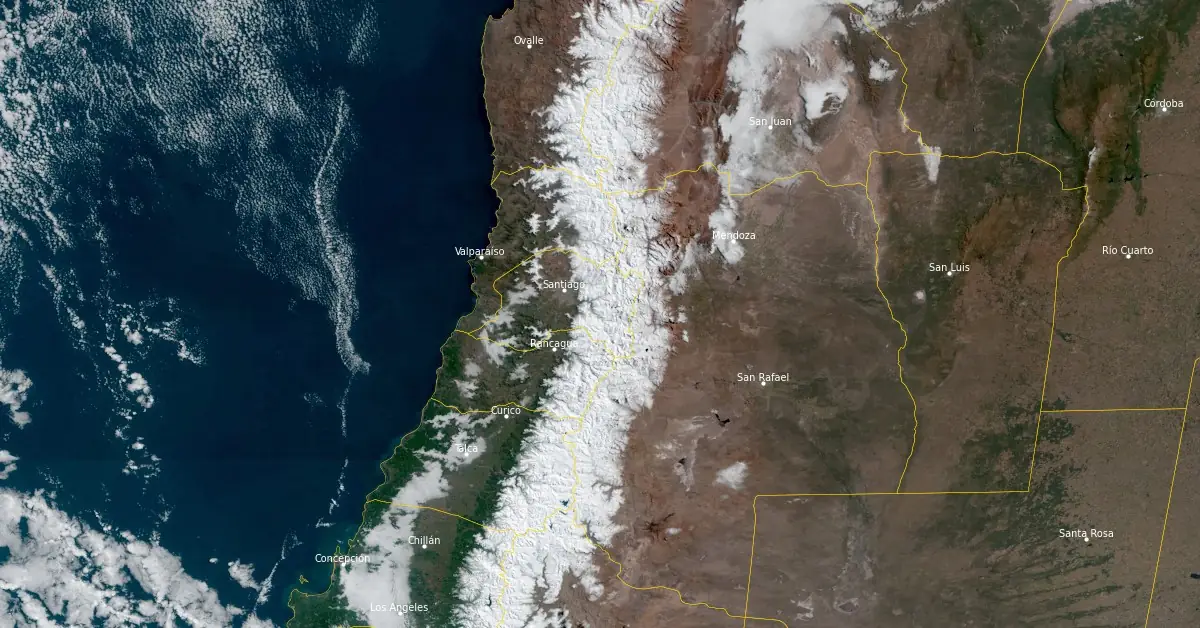
Image credit: NOAA/GOES-East, RAMMB/CIRA, The Watchers. Acquired at 14:10 UTC on May 8, 2024
A rare snowfall blanketed several parts of the Santiago Metropolitan Region, Chile on Tuesday, May 7, 2024, causing widespread power outages and prompting local authorities to issue safety guidelines. The last time it snowed in Santiago was in 2020, although much later in the season.
On May 7, snow was reported in parts of the Lo Barnechea, Las Condes, Vitacura, Puente Alto, La Reina, and Pirque communes, affecting the Santiago Metropolitan Region. Residents have been advised to dress warmly and drive carefully due to slippery conditions on the roads.
According to data from the Office of the Superintendent of Electricity and Fuels, the snowfall disrupted electricity for 225 000 people.
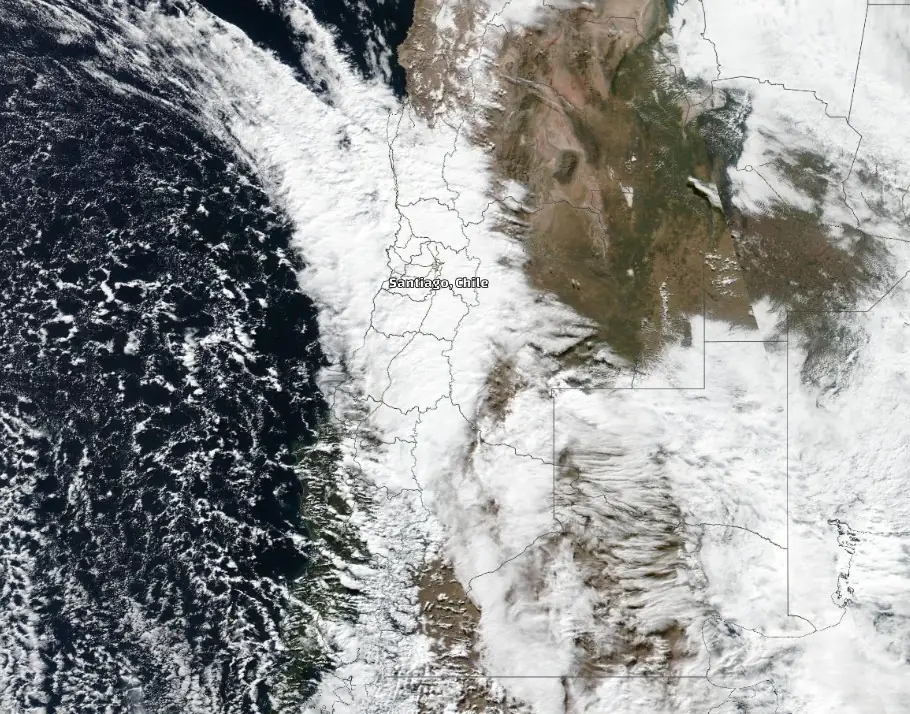
This event was part of a broader weather pattern affecting much of Chile this week.
The frontal system, seen in the satellite image below, has impacted various towns across the country, forcing the closure of roads and suspension of classes.

Santiago is rarely at a below-freezing temperature and rarely experiences snow due to its temperate semi-arid climate (with Mediterranean patterns) and its relatively low altitude. The city typically experiences mild winters with cool temperatures and rain.
The snowfall on May 7 is even more unusual as it’s early in the Southern Hemisphere winter season when temperatures are generally not cold enough for snow.
Most past instances of snowfall in Santiago have occurred much later in the winter. In July 2020, snow fell in the eastern part of Santiago, particularly in Lo Barnechea.
A more significant event in July 2017 blanketed much of the city, leading to widespread power outages similar to yesterday’s disruption.
Authorities urge caution as they assess the damage and work to restore essential services.
References:
1 Rare snow blankets Chile’s capital – Reuters – May 8, 2024

Teo Blašković founded The Watchers in 2011 and edited it until 2026, covering seismic and volcanic activity, extreme weather, space weather and near-Earth objects. Articles on this page are his archive.
Published in the last 24 hours
- In September 1859, a solar storm lit up the night sky so brightly that gold miners in the Rocky Mountains woke up after midnight and started cooking breakfast, convinced the aurora glowing over their camp was the sunrise Epicenter
- A patch of warm Pacific water that could become the strongest El Niño in more than 70 years sits thousands of miles from any American town, yet it is already the main reason NOAA expects a wetter winter across the South and a milder one across the North
- A 19-year-old Nebraska teacher reportedly tied her pupils together with twine and led them to safety through a blizzard in January 1888 Epicenter
