• Model explains the formation of Stealth CMEs

    An international team of scientists has developed a model that simulates the evolution of Stealth CMEs, solar storms that puzzled scientists for their lack of typical warning signs as they seem to come from nowhere. Such computer models can help researchers better…

  • New model could help predict major earthquakes

    A Nagoya University-led team reveals the mechanisms behind different earthquakes at a plate boundary on the west coast of South America, shedding light on historical seismic events and potentially aiding prediction of the future risk from these natural disasters….

  • New insights into how eruptions occur on the Sun

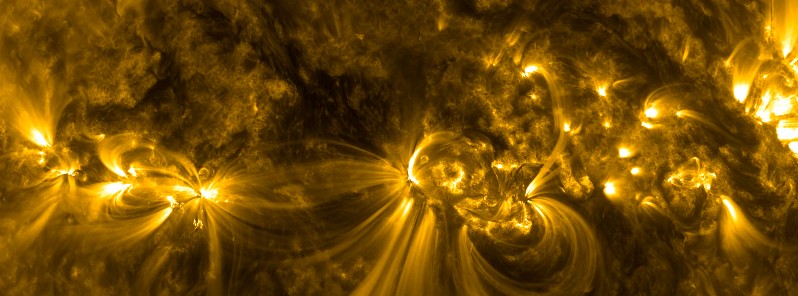
    Scientists have gained new insights into how eruptions occur on the Sun and, through 3-D computer simulation, identified a universal process that explains eruptions of every size, from tapered jets to massive explosions of solar material and energy. In a new study…

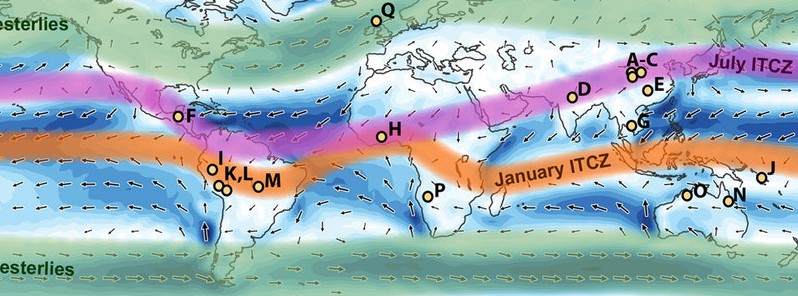
  • How Little Ice Age displaced the tropical rain belt

    In the most comprehensive reconstruction of rainfall patterns within the Intertropical Convergence Zone for the past 2000 years, a team of researchers led by ETH Zurich describe how even small changes in global temperature can trigger a migration of the tropical…

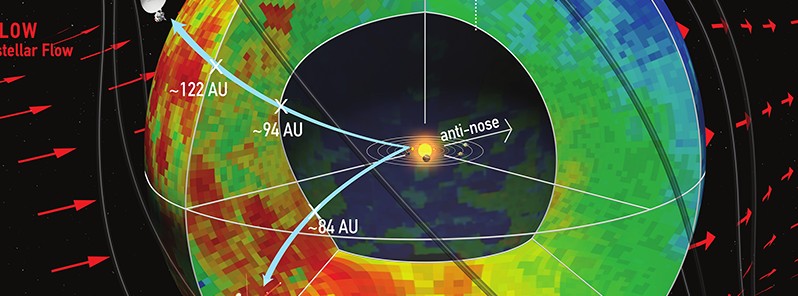
  • New data show heliosphere is nearly round and symmetrical

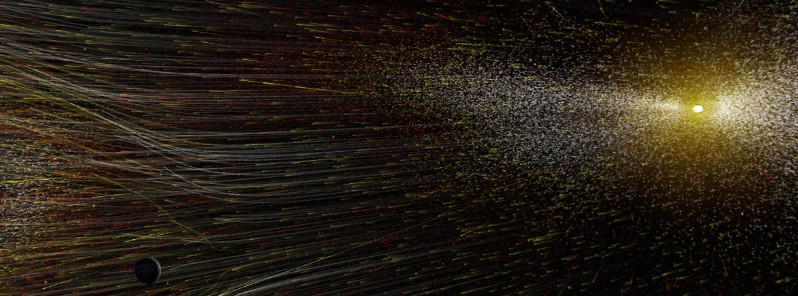
    New data covering an entire 11-year solar activity cycle suggest that Sun and planets in our solar system are surrounded by a giant, spherical system of magnetic field from the Sun, calling into question the current view of the solar magnetic fields trailing behind…

  • Ancient texts provide insight into past solar storms

    In a collaborative effort between the arts and sciences, researchers at Kyoto University and Japan's National Institute of Polar Research (NIPR) and National Institute of Japanese Literature (NIJL) have used historical documents to garner better insight into the…