• Chemical reactions triggered by Hunga Tonga eruption led to severe stratospheric ozone depletion

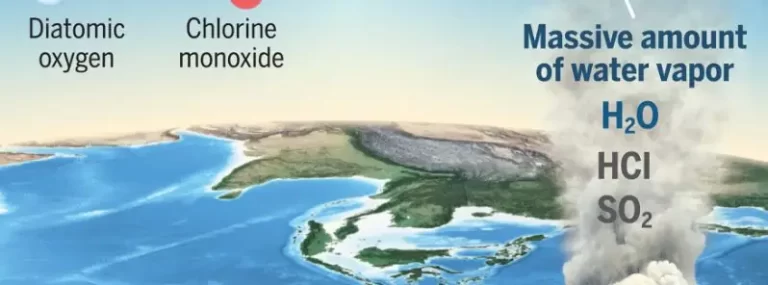
    On January 15, 2022, the Hunga Tonga–Hunga Ha’apai underwater volcanic eruption led to a sudden and significant loss of stratospheric ozone. This event occurred over the tropical southwestern Pacific and Indian Ocean region. Researchers found that the eruption injected an unprecedented amount of water vapor into the stratosphere, causing chemical reactions that resulted in rapid ozone depletion.
  • New Zealand’s massive Taupō eruption dated by Antarctic ice core study

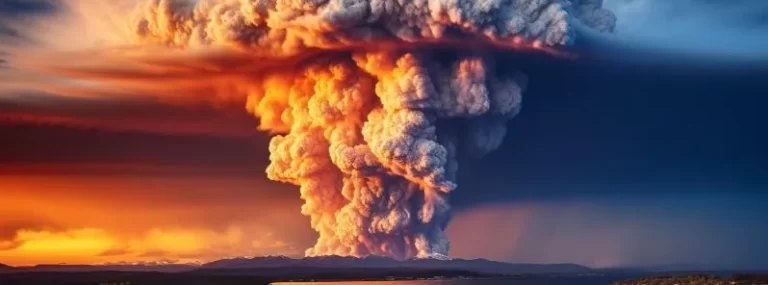
    A recent study published in Scientific Reports discovered volcanic debris from the Taupō eruption approximately 1 800 years ago deeply embedded in Antarctic ice. The findings, made at a depth of 279 m in West Antarctica, offer a precise date for the historical New Zealand eruption.

  • Data confirms robust weakening of the Gulf Stream

    A recently published study in the journal Geophysical Research Letters has revealed that the Gulf Stream transport of water through the Florida Straits has weakened by approximately 4% over the past 40 years. Researchers state with 99% certainty that this is more than what would be expected from random variations, marking the first definitive evidence of significant change in the current.

  • Intense earthquake swarm in Noto Peninsula linked to ancient or hidden magmatic activity, Japan

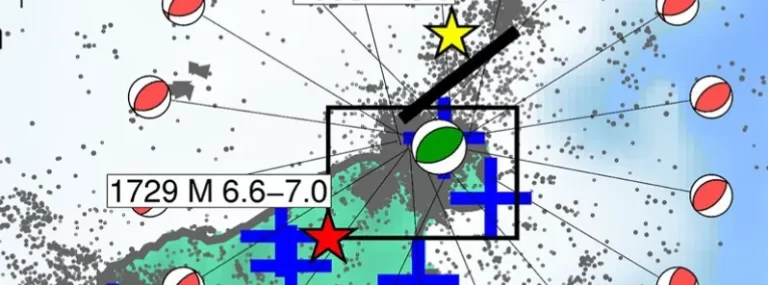
    An intense earthquake swarm that began around the end of 2019 in the northeastern Noto Peninsula, Japan, has been tied to fluids released by ancient, or possibly unknown modern, magmatic activity. This finding, published in JGR Solid Earth, challenges previous assumptions that such seismic activity could not occur in areas devoid of volcanic activity for over 10 million years.

  • Researchers at Yale propose a solution to the magnetic meteorite mystery

    In a breakthrough study, Yale scientists Zhongtian Zhang and David Bercovici have proposed that the magnetism observed in certain meteorites may originate from asteroid collisions. Their research, published in the Proceedings of the National Academy of Sciences, suggests that under specific conditions, these violent impacts could generate a magnetic field in metallic asteroids, with fragments bearing traces of this magnetism eventually falling to Earth.

  • Lightning strikes in European eastern Alps doubled over the past 40 years

    A team of researchers from the Departments of Geosciences, Atmospheric Sciences, and Statistics at Innsbruck has reported a doubling in the number of detected lightning strikes in the high altitudes of the European Eastern Alps over the last 40 years.

  • First observation of a polar cyclone on Uranus

    NASA scientists have confirmed the presence of a polar cyclone at the north pole of Uranus. The data, gathered between 2015 and 2022 using the Very Large Array in New Mexico, revealed warmer and drier air circulating below the planet’s clouds, a key indicator of cyclonic activity. The findings were published in Geophysical Research Letters.

  • Dual magma chambers discovered beneath Great Sitkin volcano, Alaska

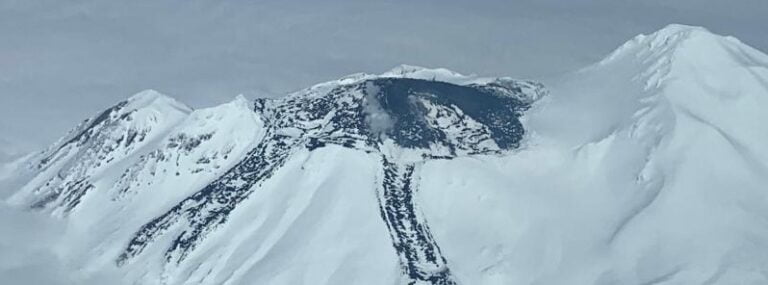
    A study conducted by scientists at Purdue University reveals that the Great Sitkin volcano, one of the most active in Alaska, has two magma chambers. This discovery explains the changing locations of seismic activity that has perplexed scientists since the volcano began erupting in May 2021.