• How humans adapted to increased cosmic radiation during geomagnetic excursion 41 000 years ago

    Around 41 000 years ago, Earth’s magnetic field weakened by up to 90 percent during a geomagnetic excursion known as the Laschamps event. This rare event reduced the planet’s natural shielding against solar and cosmic radiation, exposing the surface to increased ultraviolet energy. A new study combining space weather modeling and archaeological evidence shows that early humans adapted to these extreme conditions through the use of ochre, clothing, and caves, while Neanderthals may have lacked such protective strategies, which may have contributed to their extinction.

  • Ice Age research provides crucial insight into climate ‘tipping points’ caused by AMOC

    Recent research on the Dansgaard-Oeschger event provides a better understanding of climate tipping points during the last Ice Age. The researchers used multiple ice cores collected across Greenland with data spanning up to 120 000 years, providing a new understanding of these abrupt events, how they unfold, and what that might mean for the future. It is really important to understand such tipping points in the climate, because they may result in catastrophic and irreversible change, the lead author of the study said.

  • Decade of Swarm satellite data unveils new insights into Earth’s magnetic field and core dynamics

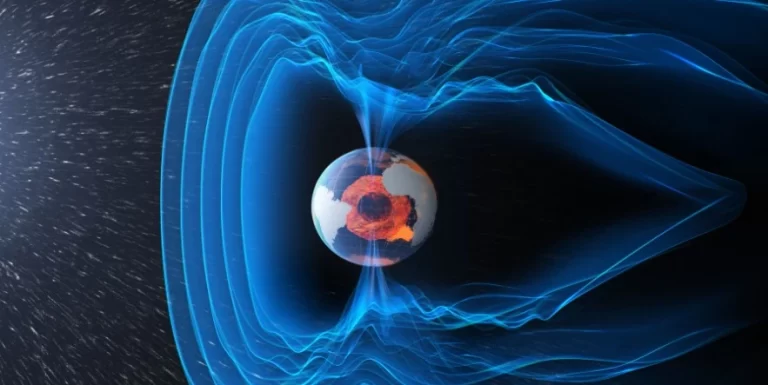
    Launched in 2013, the European Space Agency’s (ESA) Swarm mission, consisting of three satellites, has provided a decade of invaluable data on Earth’s magnetic field and core dynamics. This data has enabled significant advances in understanding the mechanisms behind the magnetic field’s slow changes, as detailed in a recent ESA-funded project report.

  • World’s longest recorded earthquake lasted for 32 years

    The devastating M8.5 earthquake that shook Sumatra, Indonesia, in 1861 was long believed to be a sudden rupture on a previously quiescent fault. However, new research showed that tectonic plates below the island had been slowly crashing against each other for 32…

  • Electromagnetic anomalies occurring before large earthquakes

    A new study published in Earth, Planets and Space sheds new light on the electromagnetic anomalies occurring before large earthquakes. The research supports the hypothesis that fault rupture progresses just before an earthquake, and the invading gas is charged and…