• 2024 on track to become Canada’s second-worst fire season in two decades

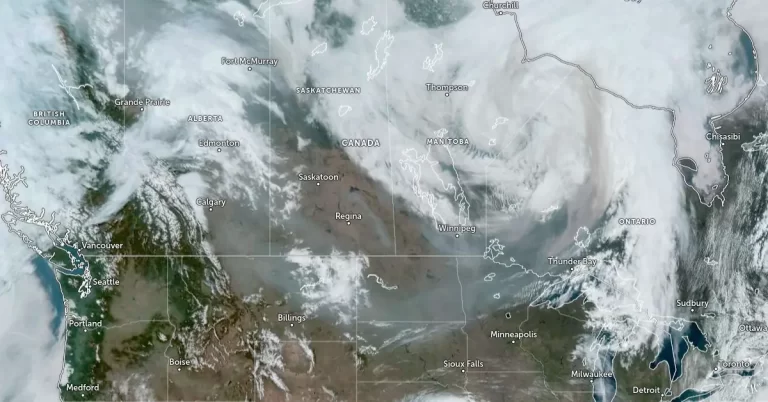
    Wildfires are ravaging parts of Canada, with 2024 on track to become the second-worst fire season in two decades. Satellite data indicates that carbon emissions from wildfires have already exceeded the 20-year average. Reports indicate that the number of wildfires in Northern Canada has increased by 50% in the last three weeks.

  • Rex block shatters multiple records in Canada

    Canada experienced a week of extraordinary weather, breaking multiple records for heat and rainfall across the country. A unique atmospheric pattern, known as a Rex block, caused temperatures to soar in the Arctic Circle, while remnants of Hurricane “Debby” brought torrential rains to Eastern Canada.

  • Wildfire devastates Jasper National Park, forces mass evacuations, Canada

    A destructive wildfire continues to engulf parts of Jasper National Park and the adjacent town of Jasper in Alberta, Canada, leading to extensive evacuations and significant structural damage. As of this morning, the fire, which started due to lightning, has destroyed an estimated 30 – 50 % of buildings in the area.

  • Wildfires in Alberta and British Columbia force evacuations, Canada

    Wildfires in northern Alberta prompted evacuations of three communities as the province contends with five significant blazes posing a severe threat to safety and infrastructure. Over 5 000 residents were affected, covering 62 000 ha (150 000 acres). Meanwhile, British Columbia is battling over 300 wildfires, exacerbated by a three-week heatwave. High temperatures and lightning have caused widespread evacuation orders, with firefighters struggling to contain the rapidly spreading flames across both provinces.

  • Newfoundland’s St. John’s breaks daily March snowfall record, Canada

    St. John’s, the capital of Newfoundland, Canada, received 53 cm (20.9 inches) of snow on March 8, 2024, breaking the previous daily March snowfall record of 50 cm (19.7 inches) registered on March 4, 2005. This marks the second storm to bury parts of the region in less than a month.