• Mars bombarded by more than 200 asteroids per year

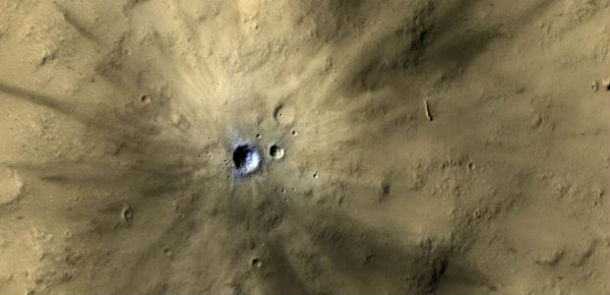
    With the help of images acquired by NASA's Mars Reconnaissance Orbiter, scientists have estimated that the Red Planet is bombarded by more than 200 small asteroids or fragments of comets every year which form craters at least 3.9 meters wide. During the past

  • Water in Jupiter’s atmosphere came from 1994 comet impact

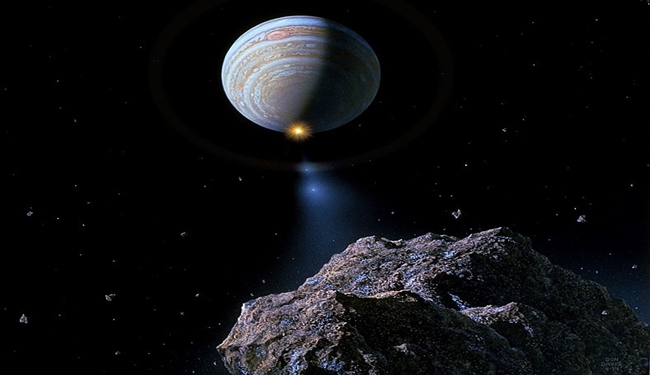
    Observations by ESA's Herschel space observatory have revealed origin of water's mysterious presence in Jupiter's atmosphere. Using sensitive spectral imaging, researchers were able to confirm that water came from historic comet impact in July

  • The growing threat of space debris

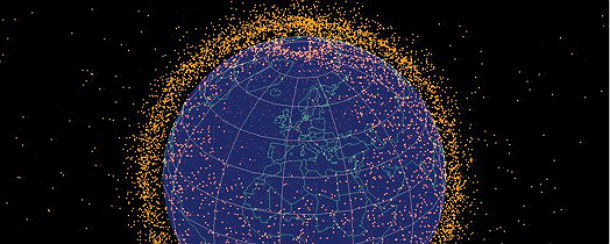
    There is a continuing increase in space debris that poses a growing threat to economically vital orbital regions. Many experts like satellite operators around the world, including those flying telecom, weather, navigation, broadcast and climate-monitoring missions,

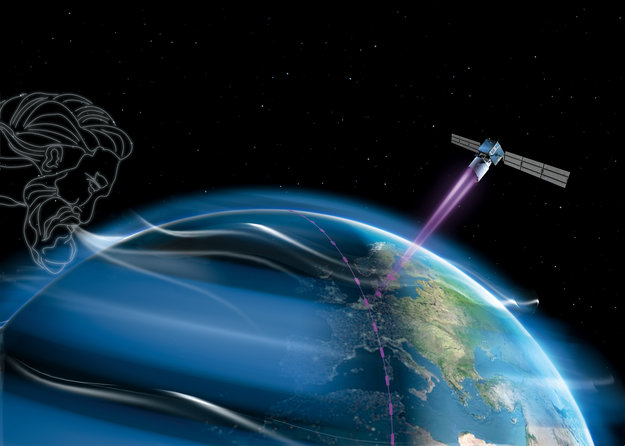
  • ESA's Aeolus mission – profiling winds around the globe with UV laser

    ESA's wind mission ADM-Aeolus is going to probe global atmosphere using novel UV laser technique. Undergone rigorous testing, the Aeolus satellite is equipped with innovative instruments to improve weather forecasts and contribute to climate research.

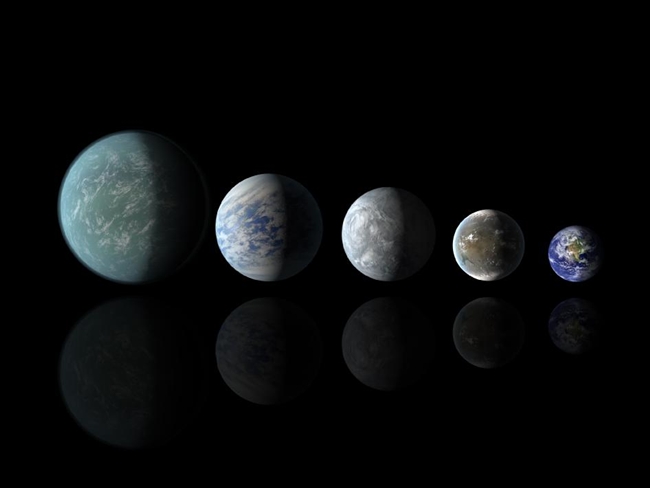
  • Kepler mission finds 2 most Earth-like planets

    Continuing its hunt for habitable planets, Kepler mission has discovered 3 new planets in “habitable zones” of their solar system, NASA revealed on Thursday, April 18, 2013. Two of the newly discovered planets are most Earth-like planets found to date. They belong to

  • The Global Precipitation Measurement – Our Wet Wide World

    The Global Precipitation Measurement (GPM) is an international satellite mission to provide next-generation observations of rain and snow worldwide every three hours. NASA and the Japan Aerospace Exploration Agency (JAXA) will launch a "Core" satellite

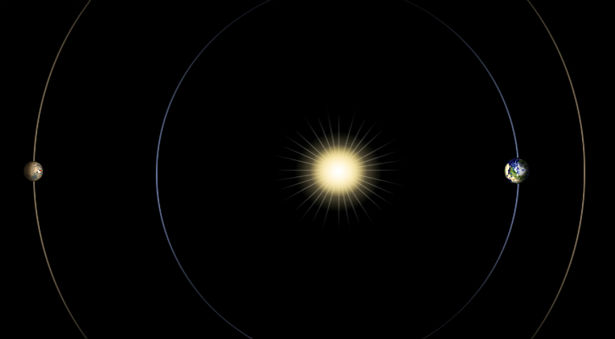
  • Earth-Mars communications affected by a Mars solar conjunction

    This month communication between Mars and Earth may be disrupted due to a planetary arrangement called Mars solar conjunction, where Mars will be passing almost directly behind the sun from Earth’s perspective. Mars solar conjunction happens once about every 26

  • Discovering the unknown with the Alpha Magnetic Spectrometer

    The Alpha Magnetic Spectrometer (AMS) is a cosmic ray particle physics detector, on the exterior of the International Space Station. It was launched to the Space Station on the space shuttle Endeavour's STS-134 mission on May 16, 2011.The first results of the AMS

  • MAVEN gets magnetometers to study the Red planet's magnetic field

    Could Mars have supported life? Many scientists think that long ago it had a denser atmosphere, cloudy skies that supported liquid water flowing over the surface. They propose the red planet lost its atmosphere due to sputtering as it eroded by