Very bright fireball observed over Dargaville, New Zealand
A very bright fireball was seen streaking over the skies of Dargaville, New Zealand, at 15:12 UTC on October 1, 2025.

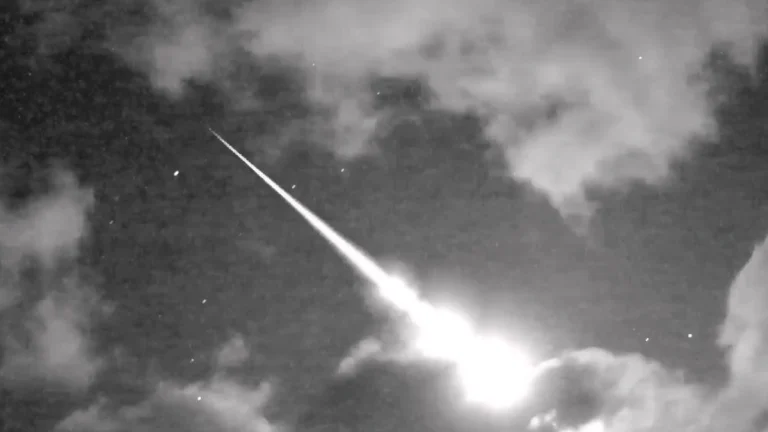
A very bright fireball was seen streaking over the skies of Dargaville, New Zealand, at 15:12 UTC on October 1, 2025.

A previously unknown meteor shower, the gamma-Horologii, was detected in the southern hemisphere between September 15 and 26, 2025. The outburst is ongoing, with the radiant located near the star gamma Horologii.
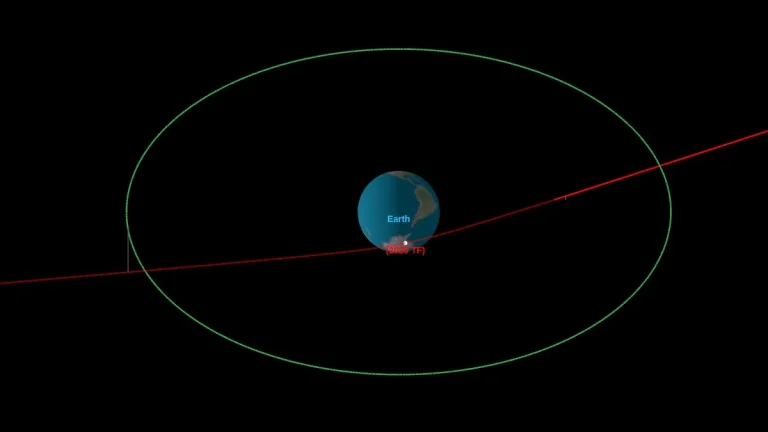
A newly-discovered asteroid designated 2025 TF made an extremely close approach to Earth at 00:49 UTC on October 1, 2025, reaching a nominal distance of 0.02 LD (0.00005 AU / 6 790 km / 4 220 miles) from Earth’s center — equivalent to about 419 km (260 miles) above the surface over Antarctica. At this distance, it is now classified as the second-closest asteroid flyby ever recorded.

The interstellar object 3I/ATLAS showed no measurable non-gravitational acceleration between May and September 2025, implying a nucleus mass above 33 billion tons and a diameter larger than 5 km (3 miles), according to a study co-authored by Harvard Professor Avi Loeb and published on September 24.
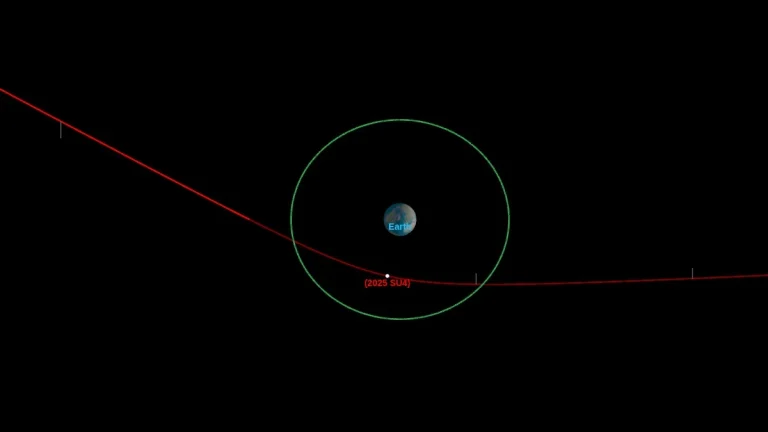
A newly discovered asteroid designated 2025 SU4 flew past Earth at just 0.06 lunar distances (0.00015 AU / 22 380 km / 13 906 miles) from the center of our planet at 08:34 UTC on September 24, 2025.
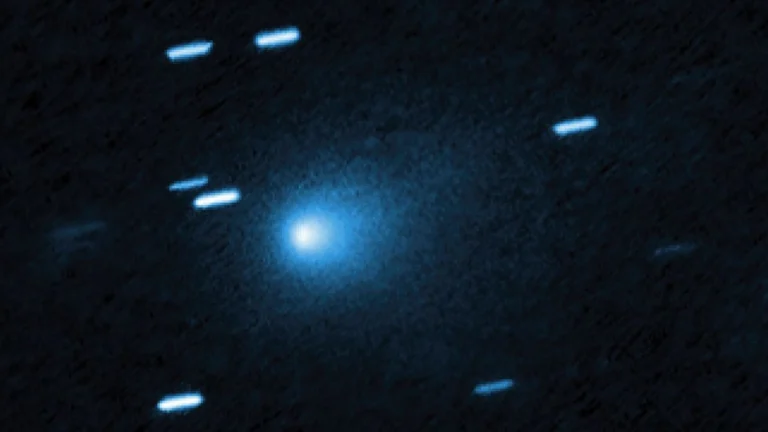
A coronal mass ejection (CME) launched from the Sun on September 19 is forecast by NASA’s ENLIL model to strike interstellar Comet 3I/ATLAS on September 24 or 25, an extremely rare event that comes as the comet brightens 40-fold and prepares to disappear into the Sun’s glare.
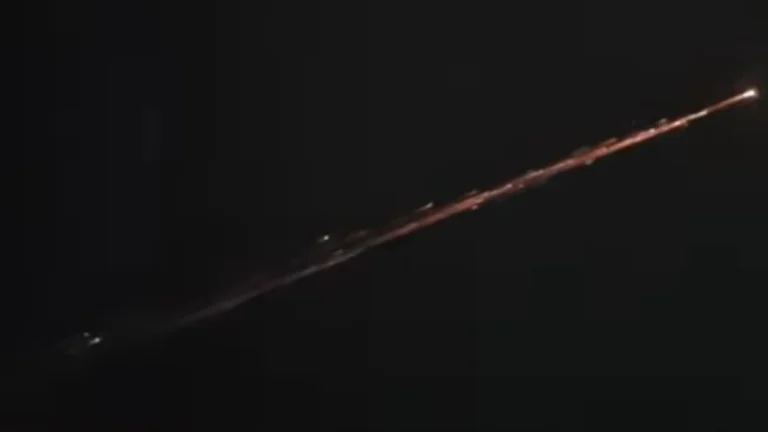
A bright fireball crossed the skies of northern India at around 01:20–01:30 IST on September 20 (19:50–20:00 UTC on September 19). The object was widely observed across Delhi, Gurugram, Noida, Ghaziabad, Faridabad, Dwarka, and Aligarh, where it fragmented into multiple pieces before fully disintegrating in the atmosphere. Although several initial reports described the object as…
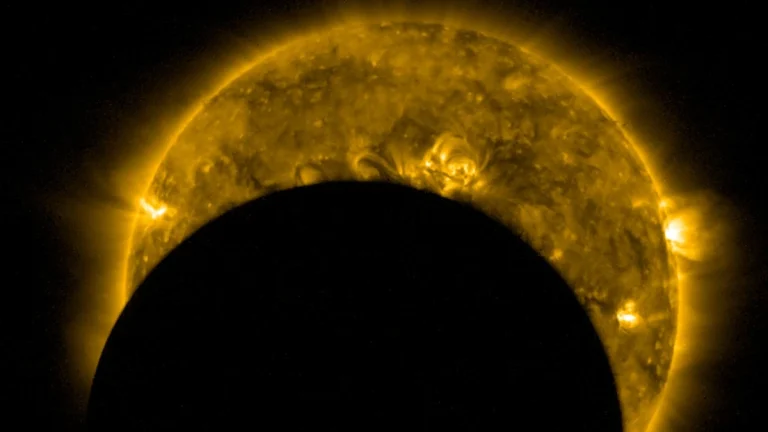
A very deep partial solar eclipse will occur at 19:43 UTC on September 21, 2025, visible across Antarctica, New Zealand, and parts of southern Australia. At maximum, the Moon will cover up to 85% of the Sun’s diameter, with obscuration reaching nearly 80% of the solar disk.
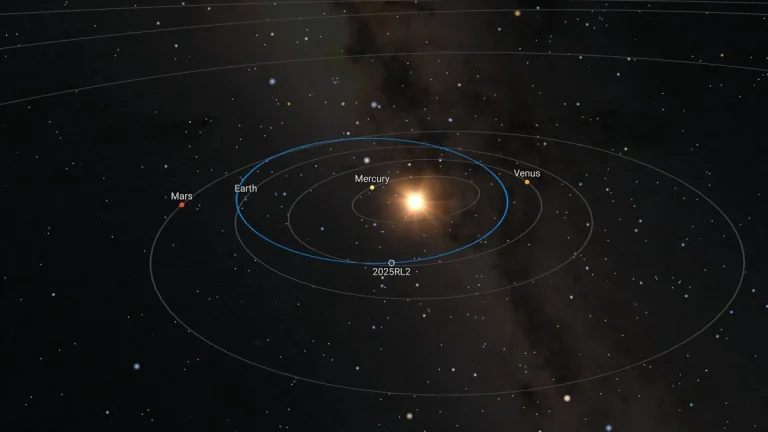
A newly discovered asteroid designated 2025 RL2 is expected to fly past Earth at a distance of 0.56 lunar distances (0.00145 AU / 216 563 km / 134 566 miles) at around 08:57 UTC on September 19, 2025. The object has an absolute magnitude (H) of 26, with an estimated diameter between 17 and 37 m (56 and 121 feet), comparable in size to the Chelyabinsk meteor.
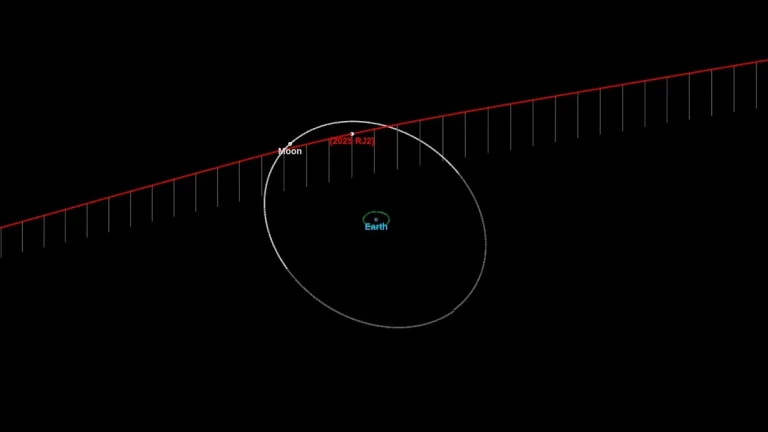
Newly discovered asteroid designated 2025 RJ2 will fly past Earth at a distance of 0.78 LD (0.002 AU / 301 334 km / 187 241 miles) at 20:18 UTC on Monday, September 15, 2025.
