Meteor disintegrates over Dallas, seen in Arkansas, Louisiana, Oklahoma, and Texas
A bright meteor was observed over Dallas at 03:32 UTC on Friday, June 22, 2024, visible in Arkansas, Louisiana, Oklahoma, and Texas.


A bright meteor was observed over Dallas at 03:32 UTC on Friday, June 22, 2024, visible in Arkansas, Louisiana, Oklahoma, and Texas.
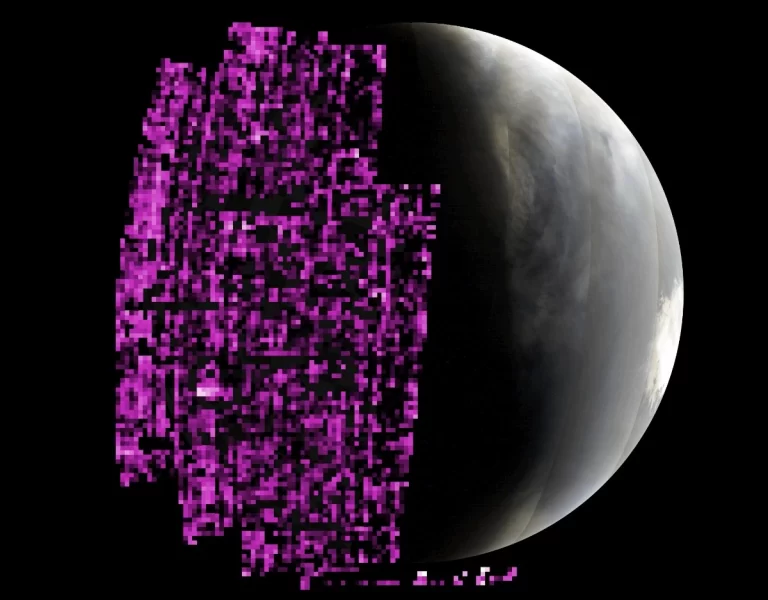
May 2024 saw increased solar activity, leading to numerous significant events including a rare G5 – Severe geomagnetic storm and a powerful solar flare directed at Mars on May 20. This event, estimated at X12, sent X-rays, gamma rays, and charged particles toward the red planet, providing valuable data for future Mars missions.

A new study published in Nature Astronomy provides evidence that our solar system passed through a dense interstellar cloud 2 – 3 million years ago, exposing Earth to higher cosmic radiation and altering the climate. The discovery suggests that the Sun’s location in space might shape Earth’s history more than it was previously considered.

A new auroral phenomenon, potentially a twin of the STEVE aurora, was discovered in Norway on December 28, 2021. The finding, confirmed by ESA’s Swarm satellite data, reveals an eastward stream of hot gases at dawn, similar to the westward stream seen at dusk.

A newly-discovered asteroid designated 2024 LH1 flew past Earth at a distance of just 0.021 LD / 0.00005 AU (8 098 km / 5 032 miles) from the center of our planet at 14:02 UTC on June 6, 2024.
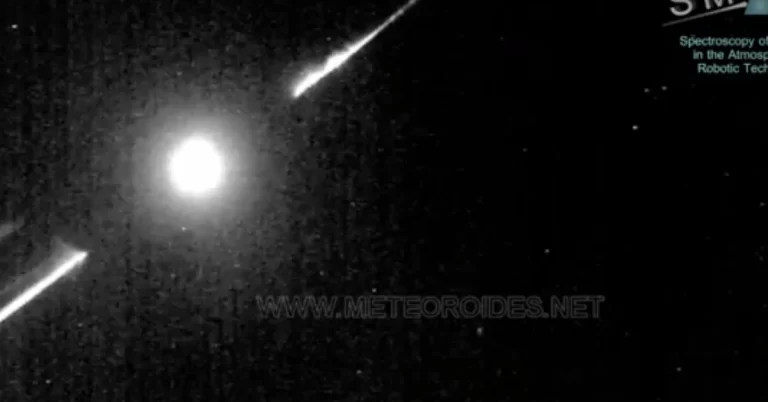
A bright fireball was recorded over Spain at 21:03 UTC (23:03 LT) on May 29, 2024, caused by a meteoroid from an asteroid entering Earth’s atmosphere at 57 000 km/h (35 400 mph). The fireball was seen over the province of Cuenca.

A bright green fireball illuminated the night sky over Montana, U.S., at approximately 05:45 UTC on May 21, 2024 (23:45 LT, May 20).

An exceptionally bright meteor was seen over Spain and Portugal at 22:46 UTC on May 18, 2024 (00:46 local time, May 19), lighting up the night sky with a bright blue glow for several seconds and leaving a persistent trail in its wake.

A newly-discovered asteroid designated 2024 JN16 will fly past Earth at a very close distance of 0.06 LD / 0.00017 AU (24 912 km / 15 480 miles) from the center of our planet at 09:50 UTC on May 14, 2024. This takes it just about 18 500 km (11 500 miles) from the surface, well within orbits of geostationary satellites — ~36 000 km (22 000 miles).

A newly-discovered asteroid designated 2024 JT3 will fly past Earth at a distance of just 0.07 LD / 0.00017 AU (24 710 km / 15 976 miles) from the center of our planet at 09:34 UTC on May 9, 2024.
