Bright green fireball over Turkey
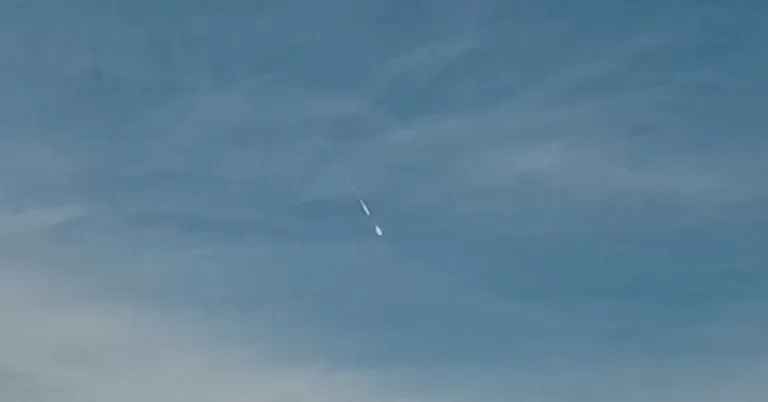
A very bright fireball streaked through the night sky over several cities in Turkey on July 5, 2024. The object was burning long enough to change color from bright green to bright blue.

A very bright fireball streaked through the night sky over several cities in Turkey on July 5, 2024. The object was burning long enough to change color from bright green to bright blue.

Researchers from the Massachusetts Institute of Technology (MIT) investigated the significant impacts and scientific insights from the May 2024 G5 – Extreme geomagnetic storm and how it impacted satellite operations and atmospheric activities.

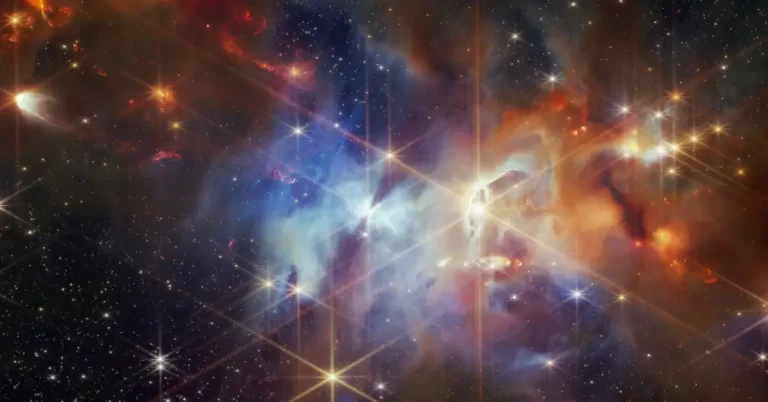
NASA’s NIRCam has directly captured the alignment of bipolar jets in a group of protostellar outflows in Serpen’s North region of the Serpens nebula, finally confirming long-standing theories about star formation.

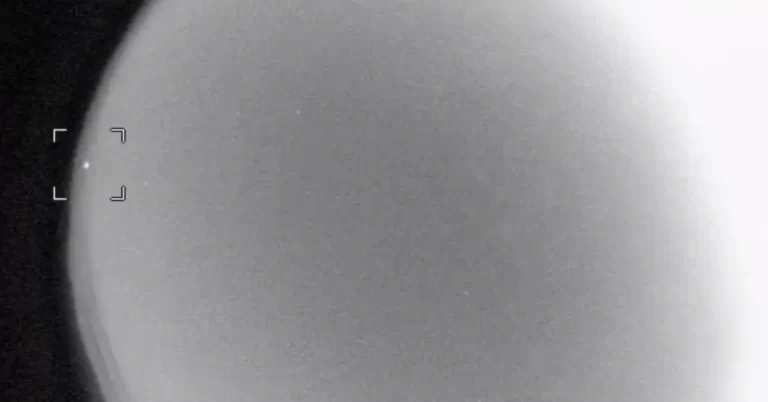
A new study published in Nature Astronomy combined orbital imagery with seismological data from NASA’s Mars InSight lander to derive a new impact rate for meteorite strikes on Mars.

Russian decommissioned satellite Resurs-P1 broke up in orbit on June 26, 2024, releasing roughly 100 pieces of trackable debris. The number rose to 180 by the end of June 27 and is expected to keep rising, according to Leo Labs. Following the breakup, NASA instructed the 9 astronauts aboard the International Space Station (ISS) to take shelter in their respective spacecraft as a standard precautionary measure.

A bright fireball streaked through the night sky over the North Carolina – Virginia border region at 01:30 UTC on June 26, 2024 (21:30 EDT on June 25).

The Geostationary Operational Environmental Satellite-U (GOES-U) was successfully launched on June 25, 2024, from NASA’s Kennedy Space Center. This marks the completion of the Extreme Ultraviolet and X-ray Irradiance Sensors (EXIS) program, led by the University of Colorado Boulder’s LASP, enhancing space weather monitoring.

A bright meteor was observed over Dallas at 03:32 UTC on Friday, June 22, 2024, visible in Arkansas, Louisiana, Oklahoma, and Texas.

May 2024 saw increased solar activity, leading to numerous significant events including a rare G5 – Severe geomagnetic storm and a powerful solar flare directed at Mars on May 20. This event, estimated at X12, sent X-rays, gamma rays, and charged particles toward the red planet, providing valuable data for future Mars missions.

A new study published in Nature Astronomy provides evidence that our solar system passed through a dense interstellar cloud 2 – 3 million years ago, exposing Earth to higher cosmic radiation and altering the climate. The discovery suggests that the Sun’s location in space might shape Earth’s history more than it was previously considered.