• Exoplanets: detection, atmospheres and habitability

    In this 8th session of the internet-based live lectures between Universities and Institutes, Dr Heike Rauer gives an overview on the current status of exoplanet detections with focus on terrestrial planets in and near the habitable zone, detected by different

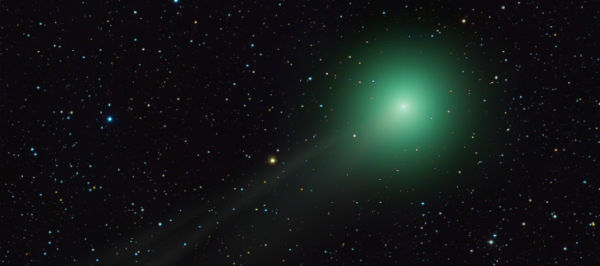
  • Comet Lemmon greens up in southern hemisphere's nightsky

    Comet Lemmon (C/2012 F6) is visiting  the inner solar system after almost 11,000 years. Comet Lemmon (C/2012 F6) is visible from the southern hemisphere at distance about 92 million miles (0.99 AU) from Earth. Northern hemisphere observers will get their

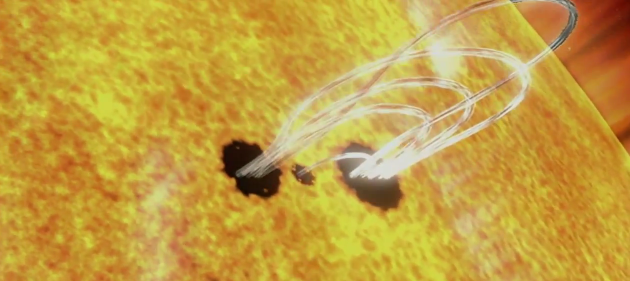
  • First sightings of how a Coronal Mass Ejection (CME) forms

    On July 18, 2012, a fairly small explosion of light burst off the lower right limb of the sun. Such flares often come with an associated eruption of solar material, known as a coronal mass ejection or CME – but this one did not.Something interesting did happen,

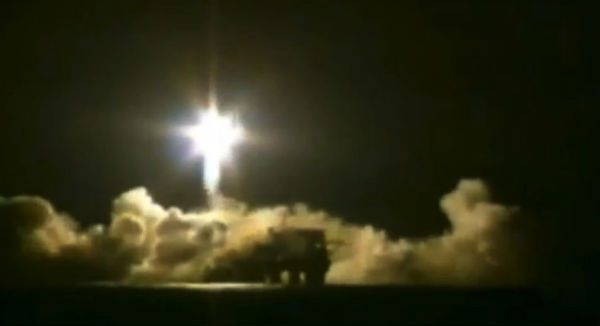
  • Sea Launch Rocket fails during liftoff

    A commercial Sea Launch rocket failed 40 seconds after liftoff from its floating launch platform in the Pacific Ocean on February 1, 2013 destroying the Intelsat IS-27 telecommunications satellite. Sea Launch already experienced one failure in January 2007.Sea Launch

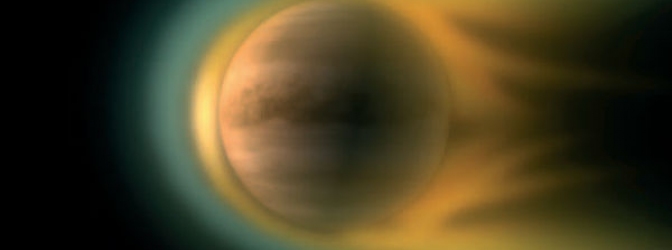
  • Venus Express reveals new facts about Venus’ ionosphere

    On January 29, 2013, ESA revealed observations made by the spacecraft in August 2010, when it studied the effect of reduced solar wind on planet's ionosphere. Researchers found that planet’s ionosphere ballooned outward on the planet’s…

  • New ISS timelapse: From night to day to night again

    The latest video from the International Space Station (courtesy of the crew of Expedition 34) shows the view from ISS when crossing from night into day, and then slips back into night again. ISS cross the terminator and experience this day-night cycle 16 times a day.

  • Iran successfully sends a monkey to space and back

    According to country’s media outlets Iranian Defense Ministry’s aerospace department issued a statement on January 28, 2013 confirming that Iran had “successfully launched a capsule, code-named Pishgam (“Pioneer”), that contained a monkey.” The statement said the