• Solar science meets art: Solar storm heading for Earth

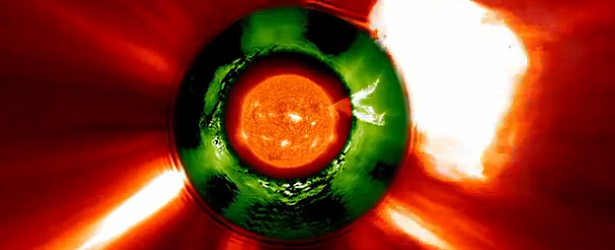
    ESA’s Space Science website released an unique portrait of a solar storm heading straight for Earth, based on data collected by the ESA/NASA SOHO space observatory during a coronal mass ejection. Imagery shows a huge cloud of magnetised plasma ejected

  • Annular solar eclipse on May 9/10, 2013

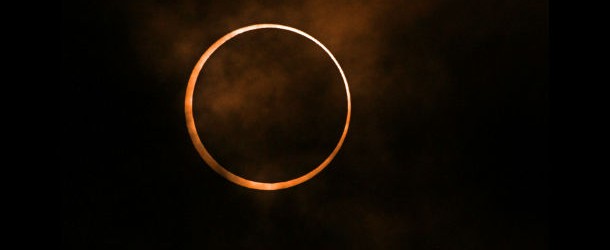
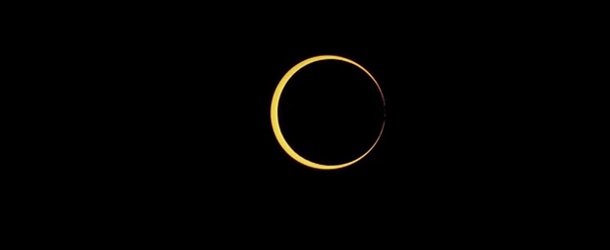
    An annular solar eclipse will take place on May 9/10, 2013, with a magnitude of 0.9544. A solar eclipse occurs when the Moon passes between Earth and the Sun, thereby totally or partially obscuring the image of the Sun for a

  • Is Comet ISON just an ordinary comet?

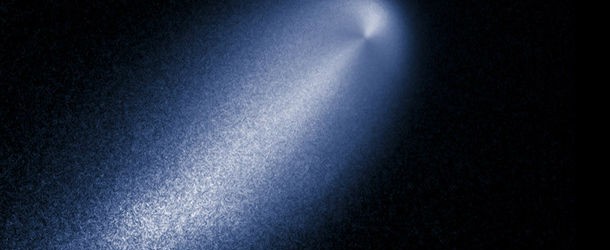
    Well, if you ask the question from the title, most people who are even remotely interested in astronomy and comets will most likely answer – NO – Comet ISON ( Comet C/2012 S1) is not an ordinary comet! In fact, it is a very interesting comet with

  • The annual Eta Aquarids meteor shower peaks on May 6, 2013

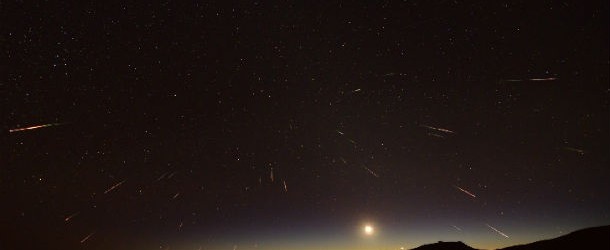
    The Eta Aquarid meteors usually provide a solid display at the beginning of May. Few annual meteor showers provide a decent show for the southern hemisphere observers as the Eta Aquarid do. That is because the radiant is very near a Y-shaped asterism in northern

  • Massive hurricane-like storm on Saturn

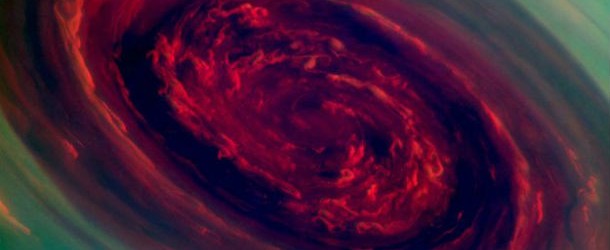
    The international Cassini spacecraft has found a behemoth hurricane swirling around Saturn’s north pole, surrounded by the curious rotating hexagonal band of clouds. This storm has been churning since at least 2006.

    The images Cassini took on November 27,

  • Solar watch – Huge prominence eruption May 1, 2013

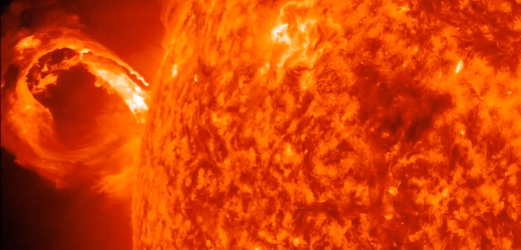
    A spectacular prominence eruption was observed on the Sun on May 1, 2013 at 02:30 UTC. The event was classified as a farside eruption from active region located beyond eastern limb. This was the largest such event in quite some time now.

    Powerful blast was unleashed

  • May 2013 Skywatching guide

    May 2013 brings few interesting sky events. This years Eta Aquarid meteor shower will peak on May 6 with expected zenith hourly rate of 55 meteors per hour. We are about to experience annular solar eclipse on May 9/10. Annularity will be visible from

  • How did this year’s Lyrids perform?

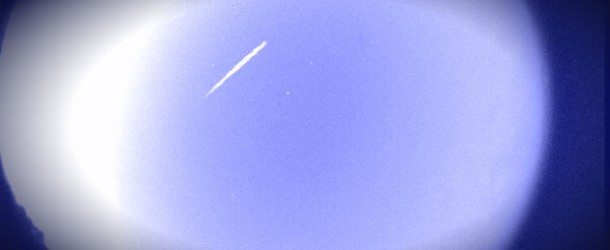
    During the last week, our planet has been passing through debris from Comet Thatcher, source of the annual Lyrid meteor shower. On the nights around April 22nd, while the peak of this years meteor shower was, All Sky Fireball Network (NASA) reported more than 30

  • Saturn and Earth line up for an amazing view of the golden planet

    If you have any interest in astronomy you have probably seen dozens if not hundreds of breathtaking images of the universe and our Solar System. Those images are usually acquired by some of Earth’s best spacecrafts, like Hubble, Cassini, Messenger and others who beam