• Rocket experiment redefines what scientists think of as galaxies

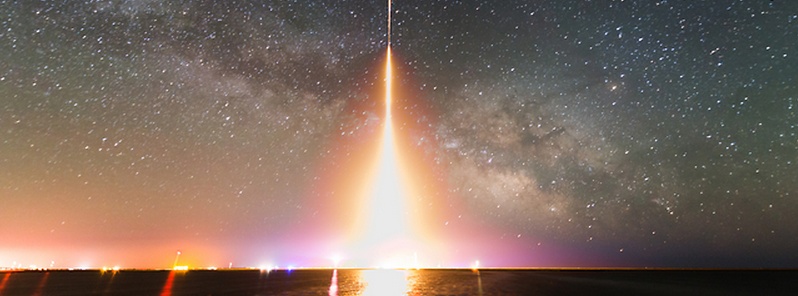
    NASA's sounding rocket experiment has detected a surprising surplus of infrared light in the dark space between galaxies, a diffuse cosmic glow as bright as all known galaxies combined. The glow is thought to be from orphaned stars flung out of galaxies. The finding

  • Five years of soil moisture and ocean salinity

    The Soil Moisture and Ocean Salinity (SMOS) has orbited more than one billion kilometers around Earth for the past five years observing Earth's water cycle changes over the years. ESA's Earth Explorer SMOS mission was launched on November 2, 2009 from Plesetsk

  • Night sky guide for November 2014

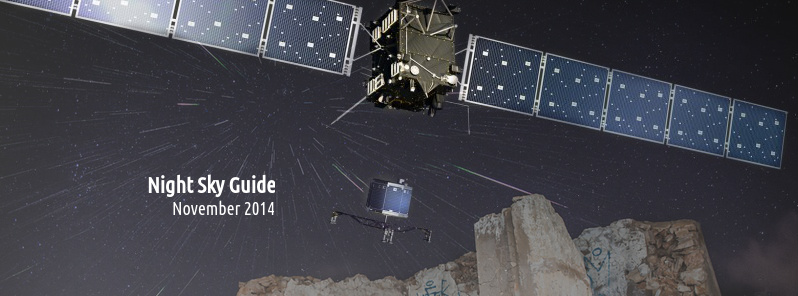
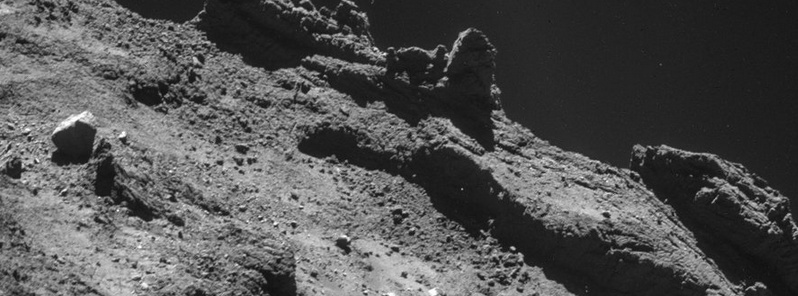
    It doesn't quite fit in a night sky guide, but this month might also be called "Rosetta's" month. After years of traveling through the solar system and finally reaching comet 67P/Churyumov–Gerasimenko in August 2014, ESA will attempt humanity&#39

  • Partial solar eclipse on October 23, 2014

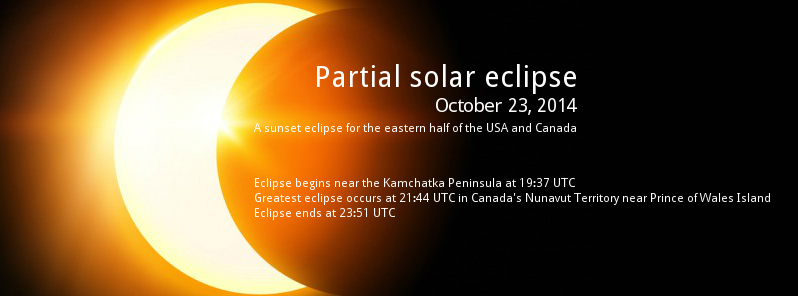
    The final eclipse event of 2014 occurs at the Moon's ascending node in southern Virgo on Thursday, October 23, 2014. This will be a partial solar eclipse almost exclusively visible from Canada and the USA. Except for the far northeast, a sunset eclipse will be visib

  • Rosetta could change science forever

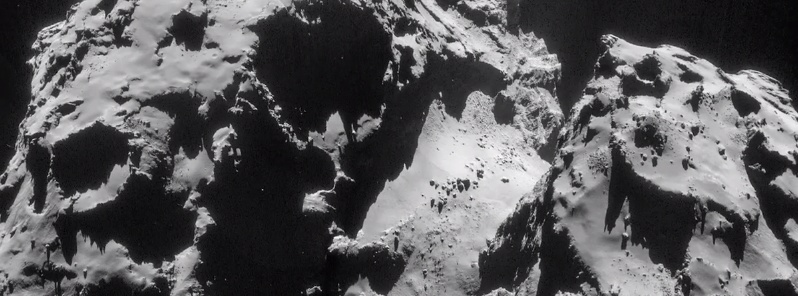
    Human beings around the world may be witnessing one of the most significant dramas in the modern history of the space sciences. The ESA’s Rosetta mission to the comet 67P has shattered the theoretical predictions of standard comet science.For many decades, we

  • Observing Comet Siding Spring flyby Mars – Sunday, October 19, 2014

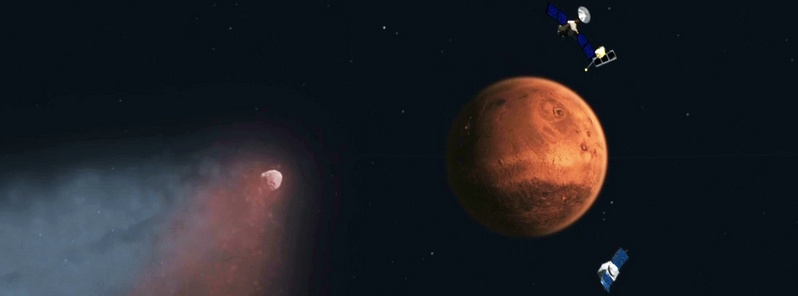
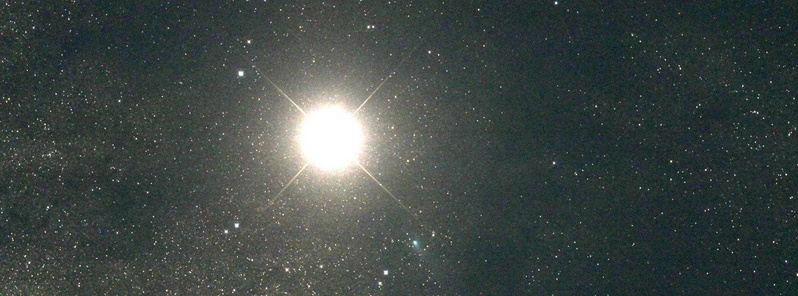
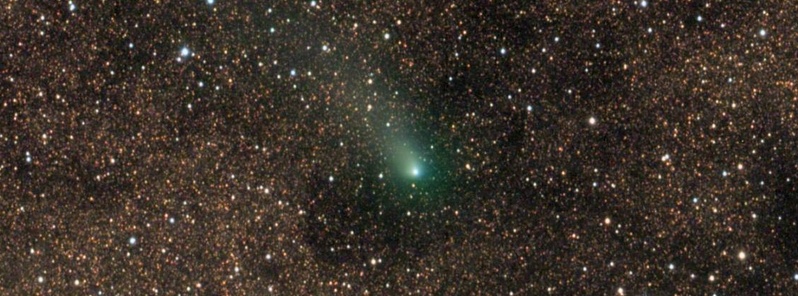
    Comet Siding Spring will make its historic approach to Mars around 18:27 UTC on Sunday, October 19, 2014, and pass within 139 500 km (88 000 miles) away from planet's surface. That is less than half the distance between Earth and its moon and less than one-tenth

  • LRO finds young volcanic deposits on the Moon

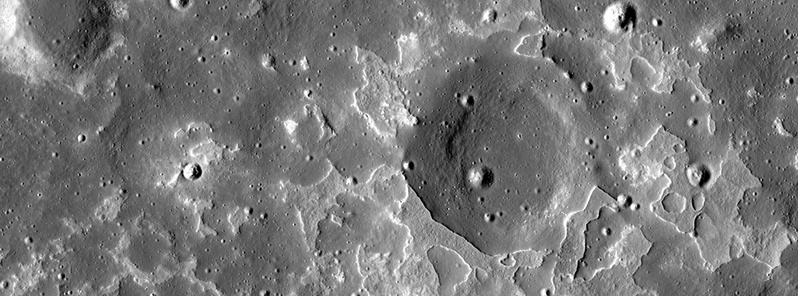
    NASA’s Lunar Reconnaissance Orbiter (LRO) found scores of young volcanic deposits estimated to be less than 100 million years old and provided researchers with strong evidence the Moon's volcanic activity slowed gradually instead of stopping abruptly a billion

  • NuSTAR discovers first ultraluminous pulsar, impossibly bright dead star

    Astronomers working with NASA's Nuclear Spectroscopic Telescope Array (NuSTAR) have found a pulsating dead star beaming with the energy of about 10 million suns. The object, previously thought to be a black hole because it is so powerful, is in fact a pulsar – the

  • Space fleet ready for Siding Spring’s historic brush with Mars

    C/2013 A1 (Siding Spring) is scheduled for a very close flyby at only about 139 500 km (88 000 miles) away from the surface of Mars on October 19, 2014 around 18:27 UTC. That is less than half the distance between Earth and its moon and less than one-tenth the distance