• NuSTAR discovers first ultraluminous pulsar, impossibly bright dead star

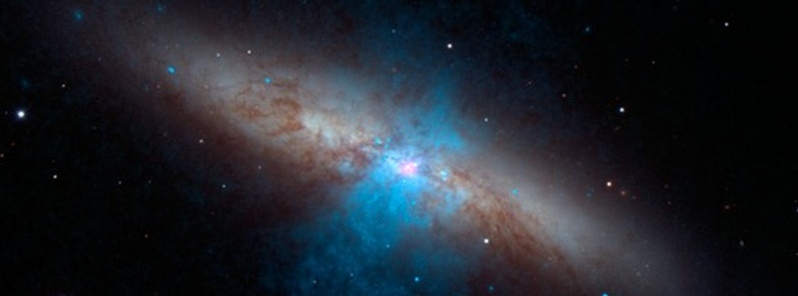
    Astronomers working with NASA's Nuclear Spectroscopic Telescope Array (NuSTAR) have found a pulsating dead star beaming with the energy of about 10 million suns. The object, previously thought to be a black hole because it is so powerful, is in fact a pulsar – the
  • Space fleet ready for Siding Spring’s historic brush with Mars

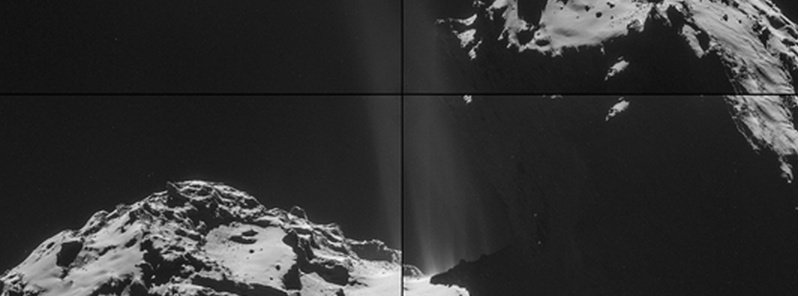
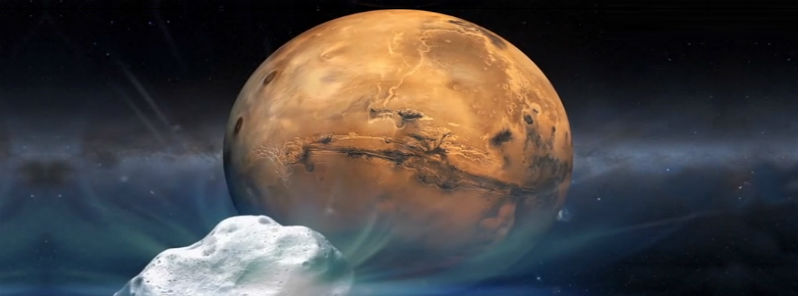
    C/2013 A1 (Siding Spring) is scheduled for a very close flyby at only about 139 500 km (88 000 miles) away from the surface of Mars on October 19, 2014 around 18:27 UTC. That is less than half the distance between Earth and its moon and less than one-tenth the distance

  • Total lunar eclipse on Wednesday, October 8, 2014

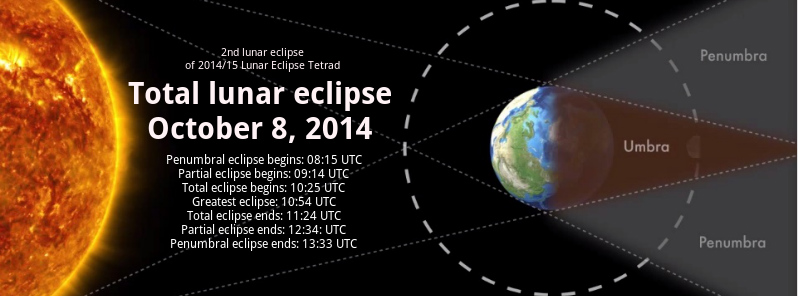
    he second total lunar lunar eclipse of 2014 and 2015 lunar-eclipse tetrad will occur on Wednesday, October 8, 2014, and will be visible from the Pacific Ocean and regions immediately bordering it. As the Moon passes completely through the Earth's dark shadow, or

  • Smallest exoplanet found to have water vapour

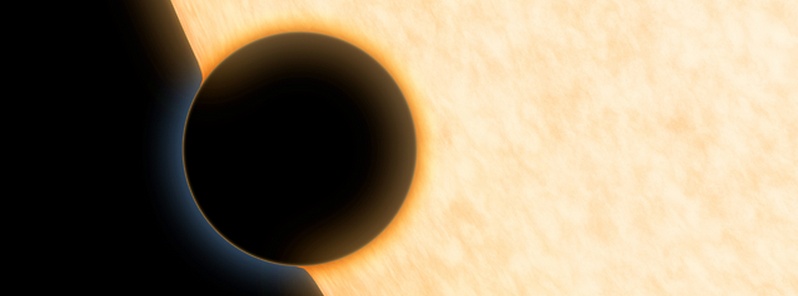
    The smallest exoplanet (about the size of Neptune) HAT-P-11b have been discovered to have clear skies and steamy water vapors as observed by astronomers using data from three of NASA's space telescopes – Hubble, Spitzer and Kepler.John Grunsfeld, assistant administr

  • Space debris or daylight meteor caught on video, Canada

    A daylight meteor or falling space debris was observed and caught on tape earlier this week over Canada.Janette Casey Ewens, who owns Labyrinth Farms north of Kamloops, was in the barn yard at 6 a.m. local time on Monday, September 29, when she saw a "thing" f

  • Night sky guide for October 2014

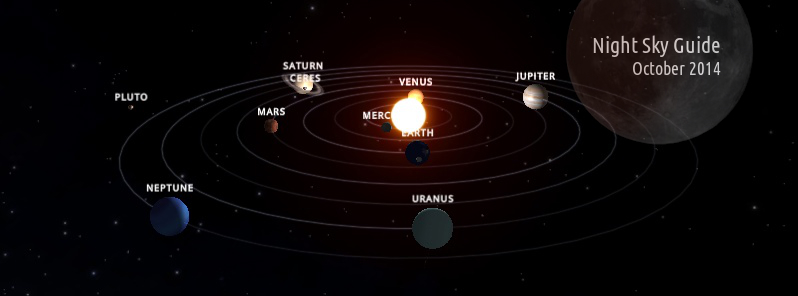
    A total lunar eclipse will be visible on October 8 throughout most of North America, South America, Asia, and Australia. The Moon will gradually get darker and then take on a rusty or blood red color. It is the latter of two total lunar eclipses in 2014, and the second

  • Swift observes mega flares from a mini star

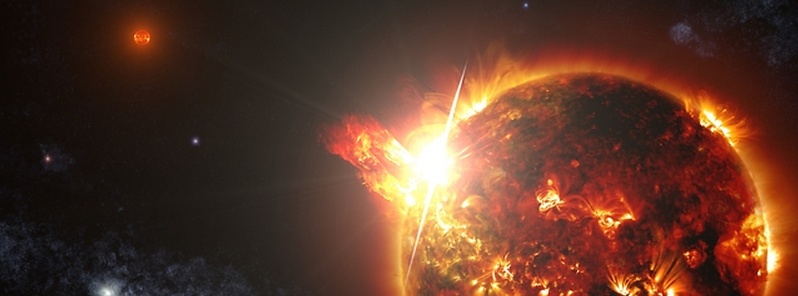
    On April 23, NASA's Swift satellite detected the strongest, hottest, and longest-lasting sequence of stellar flares ever seen from a nearby red dwarf star. The initial blast from this record-setting series of explosions was as much as 10 000 times more powerful than

  • NASA and partners target megacities’ carbon emissions

    As world leaders attended the UN Climate Summit 2014, NASA has joined others in an international initiative to monitor the greenhouse gas emissions of Earth's most populous cities.NASA recently launched Orbiting Carbon Observatory-2 (OCO-2) satellite which can detec