Superflares occur on sun-like stars roughly once per century
A study analyzing 56 450 Sun-like stars has found that superflares which are immense bursts of electromagnetic radiation, occur roughly once every 100 years.

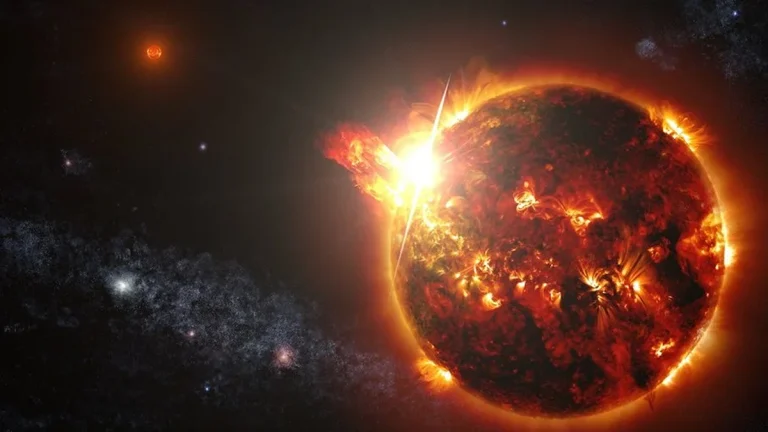
A study analyzing 56 450 Sun-like stars has found that superflares which are immense bursts of electromagnetic radiation, occur roughly once every 100 years.
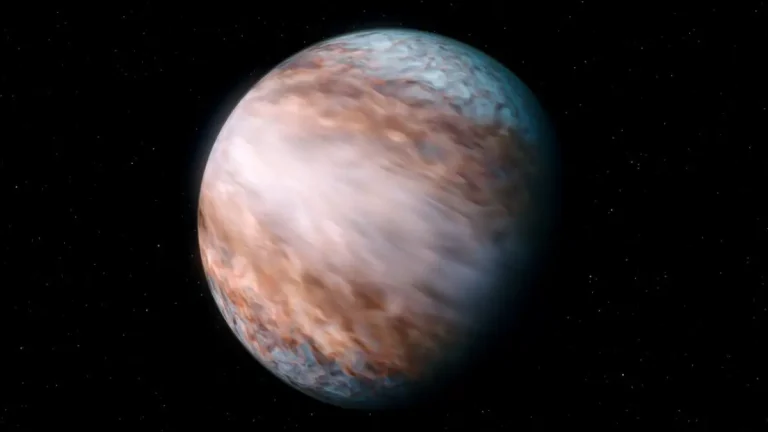
Astronomers have detected the fastest atmospheric jet stream ever recorded, with winds reaching 33 000 km/h (20 505 mph), on the gas giant exoplanet WASP-127b, located over 500 light-years from Earth.

Comet C/2024 G3 (Atlas), which made its closest approach to Earth on January 14, 2025, and reached perihelion a day later, is creating spectacular photographic opportunities as it brightens in the night sky. Astronomers and skywatchers in the Southern Hemisphere have reported a visible coma and an extended tail, making it one of the most striking comets of recent years.

Debris from SpaceX’s Starship scattered over the Gulf of Mexico on Thursday, January 16, 2025, after the spacecraft broke apart mid-flight. SpaceX conducted its 7th Starship test flight from Boca Chica, Texas, at 17:00 LT (22:00 UTC) on January 16, 2025.

A meteorite now named Charlottetown Meteorite crashed into a walkway in Marshfield, Prince Edward Island, Canada, in July 2024. The incident was the first time in recorded history that both the impact and sound of a meteorite strike were captured on camera.

A meteorite measuring approximately 2 cm (0.8 inches) in diameter smashed the windscreen of a parked Toyota in the town of Stratford-upon-Avon near Birmingham, UK on December 26, 2024.

Comet ATLAS (C/2024 G3) is rapidly approaching the Sun, with its perihelion expected at 10:15 UTC on January 13, 2025, promising a dazzling spectacle as it brightens to a potential magnitude of -5, twice as bright as Venus. The comet has entered the ESA/NASA LASCO C3 field of view at around 07:00 UTC today.

A very bright fireball was observed over the skies of Spain outshining the Moon in the night sky on Thursday, January 9, 2025. The preliminary analysis of this event shows a small part of the meteoroid survived and reached the ground as a meteorite.

A large piece of space debris measuring 2.5 m (8.2 feet) and weighing 500 kg (1 102 pounds) fell in Mukuku Village, Makueni County, Kenya, on December 30, 2024. Such incidents are rare, with only a few large debris objects surviving reentry each year and an even smaller number impacting populated areas.

A very bright fireball was observed over the skies of Washington, U.S. and British Columbia, Canada at around 02:17 UTC on Sunday, December 29, 2024. Observers noted that the fireball was particularly bright and visible through heavy cloud cover, displaying hues of white, green, and red with some reports of yellow and light blue.
