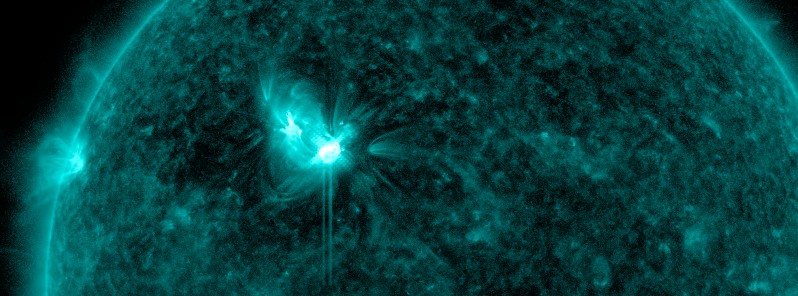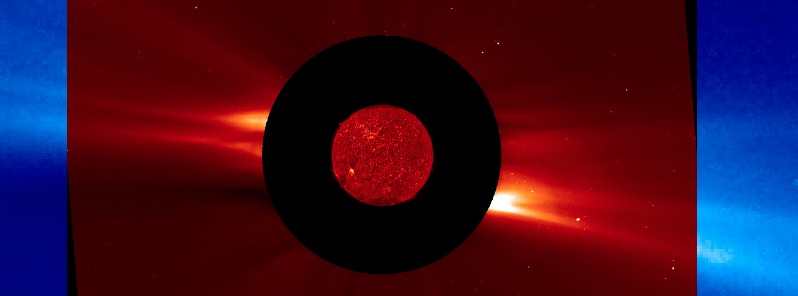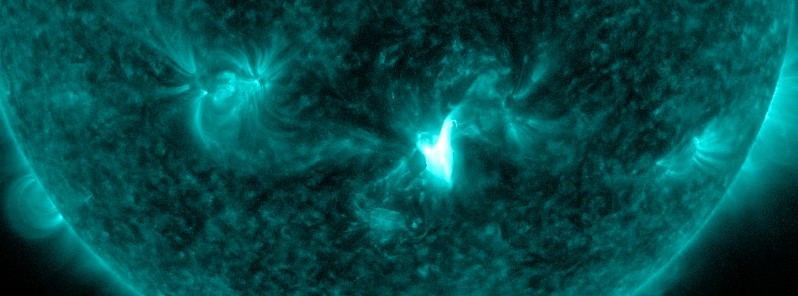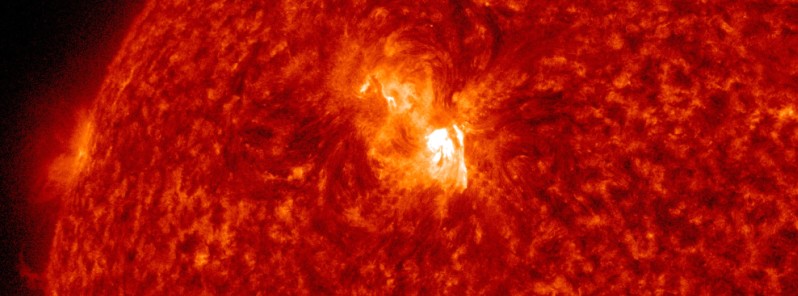
• Solar wind parameters indicate the arrival of a slow-moving CME

    Solar wind parameters over the past 12 hours indicated the arrival of a slow-moving Coronal Mass Ejection (CME), likely produced on April 10. A period of G1 – Minor storming began at 08:59 UTC on April 15. Another enhancement in parameters is expected on April 16…

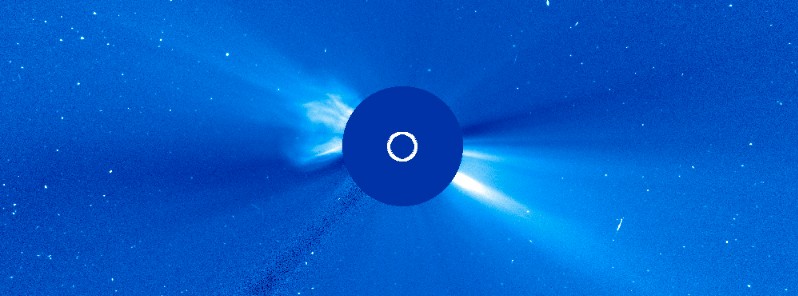
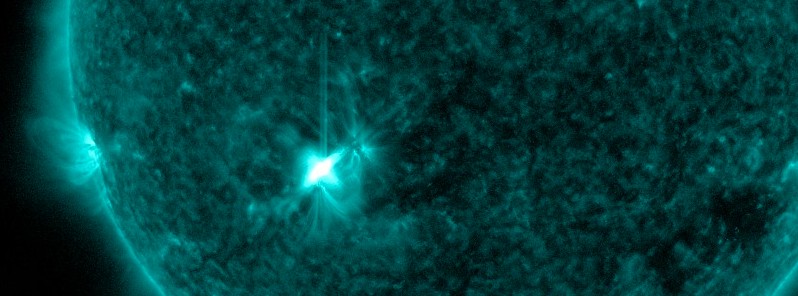
  • Moderately strong M4.4 solar flare erupts, CME produced

    A moderately strong solar flare measuring M4.4 at its peak erupted at 13:11 UTC on November 29, 2020, from a region about to rotate into Earth view. The event started at 12:34 and ended at 13:41 UTC. This is the strongest solar flare in more than 3 years. A Type II…

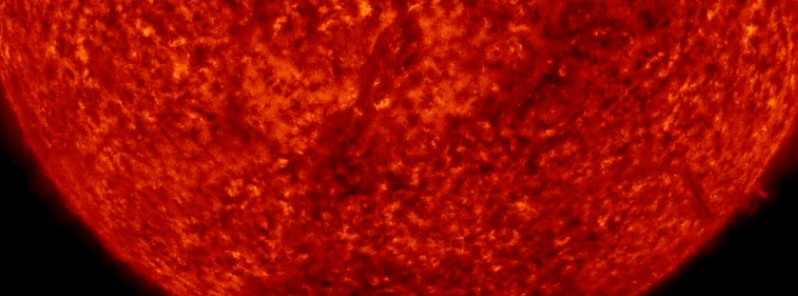
  • Glancing blow CME possible on November 1

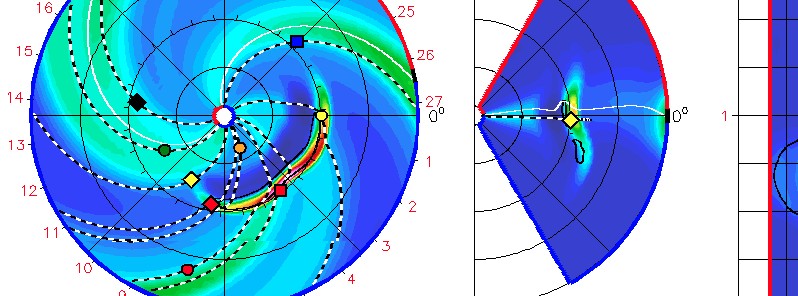
    A Coronal Mass Ejection (CME) produced by a C4.3 flare at 06:16 UTC on October 27, 2020, was analyzed by the SWPC and determined to be a possible glancing blow on November 1. The source of the flare was a large AR 2778 which produced multiple B- and C-class flares…

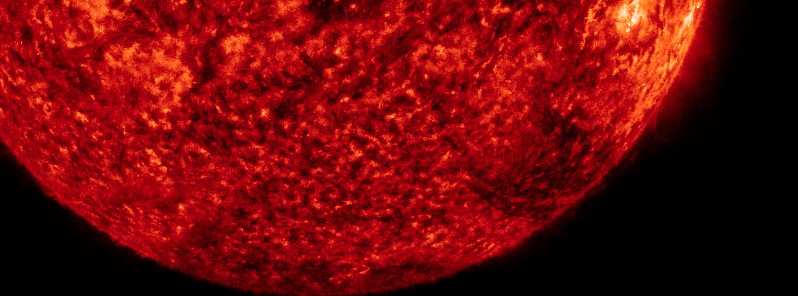
  • Glancing-blow expected after weak B1.2 solar flare

    A weak solar flare measuring B1.2 at its peak erupted on August 16, 2020, producing a coronal mass ejection (CME). Consensus model results suggest an arriving glancing blow on August 20 — producing unsettled to active geomagnetic field conditions, with a chance for…

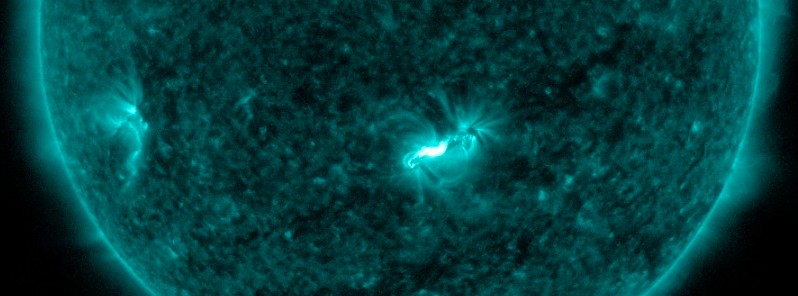
  • Solar storm hits Earth, sparking active geomagnetic conditions

    Our Sun launched two solar storms this week, one of which was Earth-directed, Space Weather Physicist Dr. Tamitha Skov reports in her latest space weather forecast released July 14, 2020. The storm has hit, right on time, and all through the night people have been…