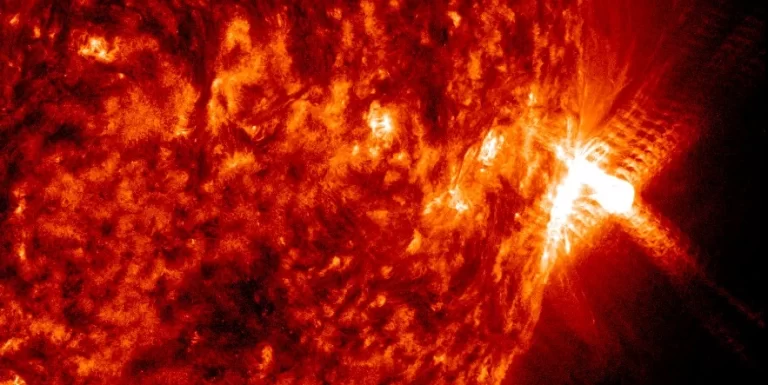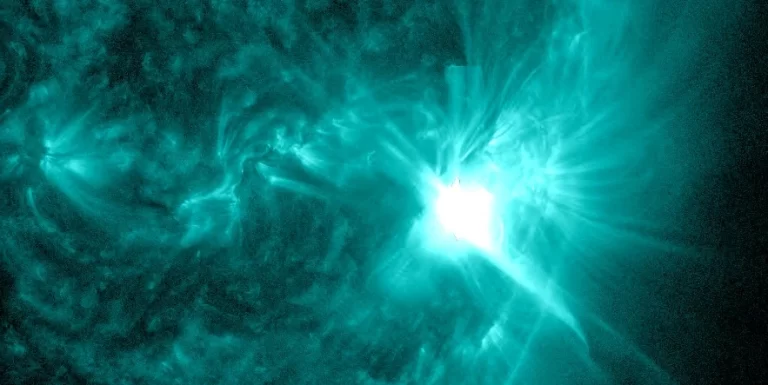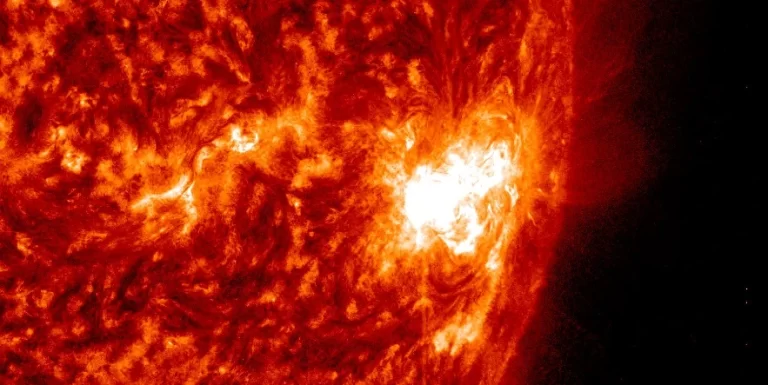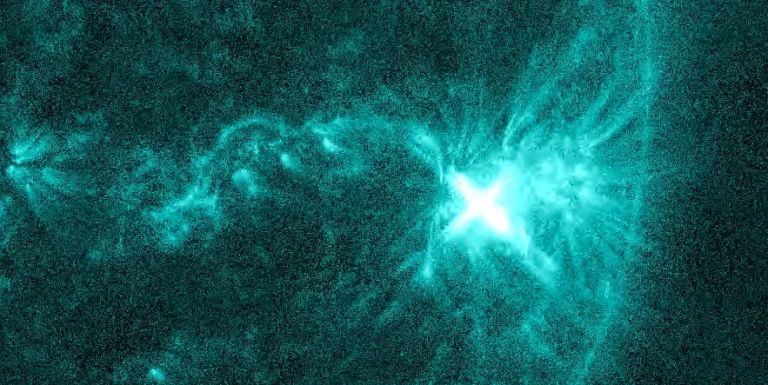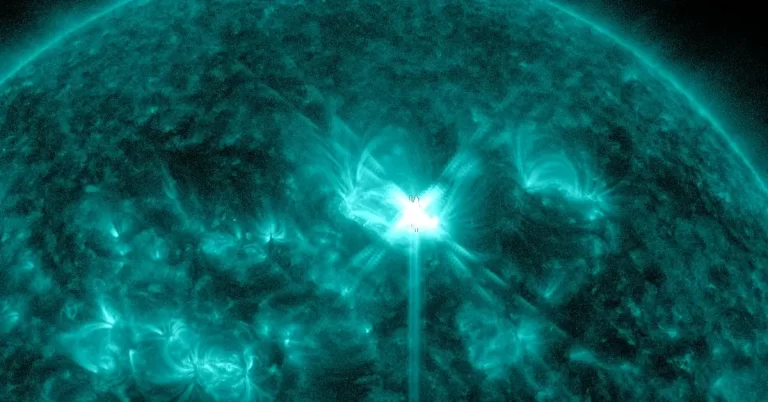
Long-duration M9.4 solar flare erupts from Region 3615
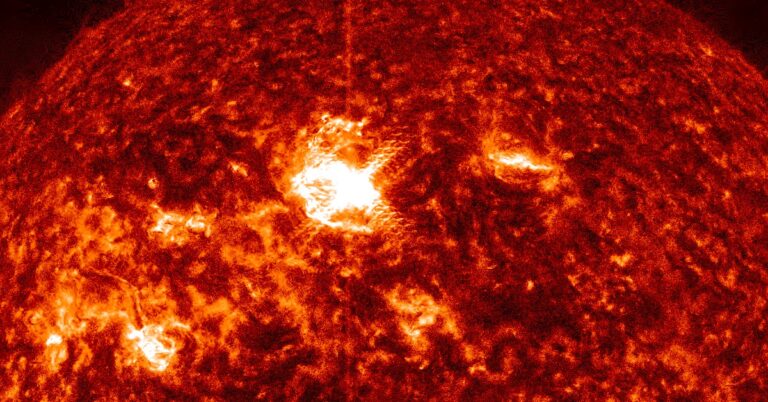
A long-duration solar flare measuring M9.4 erupted from Active Region 3615 (beta-gamma-delta) at 21:16 UTC on March 30, 2024. The event started at 21:01 and ended at 22:15 UTC.

A long-duration solar flare measuring M9.4 erupted from Active Region 3615 (beta-gamma-delta) at 21:16 UTC on March 30, 2024. The event started at 21:01 and ended at 22:15 UTC.

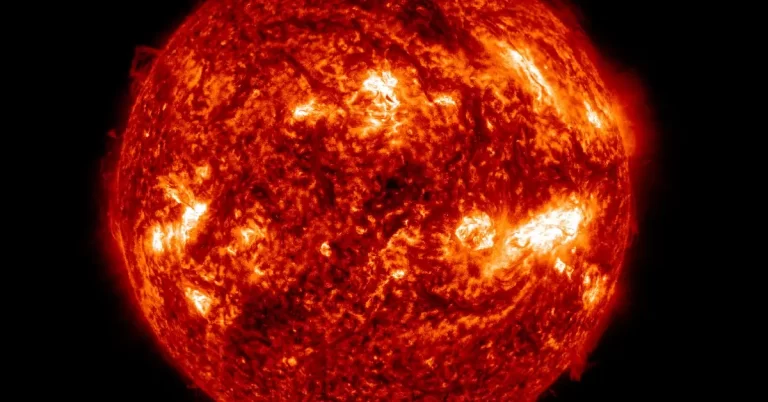
A strong X1.1 solar flare erupted from Active Region 3615 at 20:56 UTC on March 28, 2024. The event started at 20:50 and ended at 21:01 UTC.

A strong solar flare measuring M6.1 erupted from Active Region 3615 (beta-gamma-delta) at 15:56 UTC on March 28, 2024. The event started at 15:40 and ended at 16:03 UTC. This is the second M6+ solar flare of the day after M7.1 at 06:29 UTC.

A strong solar flare measuring M7.1 erupted from Active Region 3615 at 06:29 UTC on March 28, 2024. The event started at 06:16 UTC and ended at 06:36.

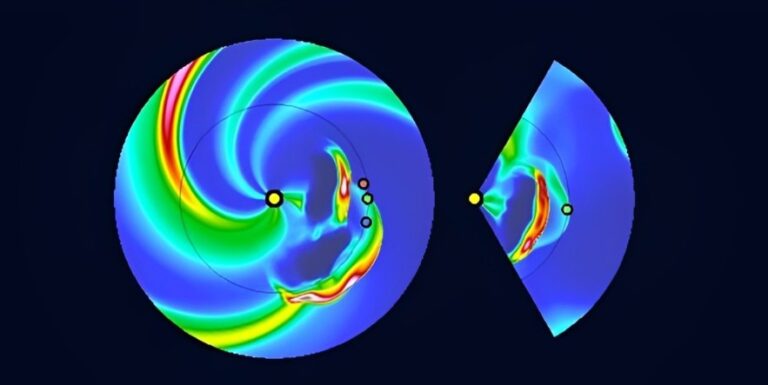
A major, long-duration solar flare measuring X1.1 erupted from Active Region 3614 at 01:33 UTC on March 23, 2024. The event started at 00:58 and ended at 02:21 UTC. A halo CME was produced, with impacts to Earth likely late March 25 or early March 26.

A strong solar flare measuring M7.4 erupted from Active Region 3615 at 07:36 UTC on March 20, 2024. The event started at 07:23 and ended at 07:47 UTC.

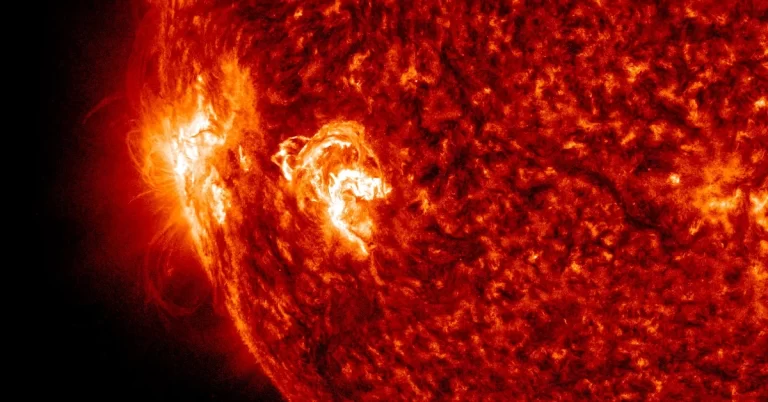
A strong solar flare measuring M6.7 erupted from a new region emerging on the SE limb (AR 3615) at 19:19 UTC on March 18, 2024. The event started at 19:02 UTC and ended at 19:28 UTC.

A filament channel eruption, approximately 35 degrees in length, began at around 01:00 UTC on March 17, 2024, producing two coronal mass ejections (CMEs).

A moderately strong solar flare registered as M3.5 erupted from the southeast limb of the Sun at 16:35 UTC on March 16, 2024. The event started at 16:22 and ended at 16:44 UTC. This flare was partially eclipsed by the edge of the Sun, which means it was much stronger than M3.5.

Although solar activity was at low levels over the past 24 hours, multiple long-duration C-class solar flares, associated with activity from Region 3599 as it rotated beyond the west limb, produced coronal mass ejections (CMEs) that sent proton flux rising to S1 – Minor levels.