• Strong and shallow M6.1 earthquake hit Easter Island region

    A strong and shallow earthquake measuring M6.1 on the Richter scale was registered off the coast of Easter Island, Chile, on September 6, 2014. USGS is reporting depth of 10 km (6.2 miles). EMSC is reporting M6.3 at depth of 10 km.Epicenter was located 50

  • Strong and shallow M6.0 earthquake hit Tonga

    A strong and shallow earthquake measuring M6.0 on the Richter scale hit Tonga region on September 4, 2014, at 05:33 UTC. USGS is reporting depth of 11.8 km (7.4 miles). Geoscience Australia is reporting M6.1 at depth of 9 km. EMSC is reporting M6.0 at depth of 2 km.&nbs

  • Inside the “South Napa” M6.0 earthquake

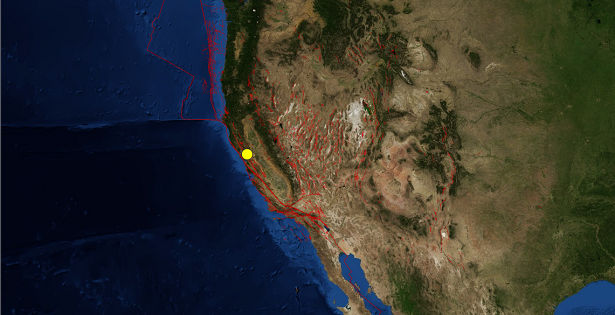
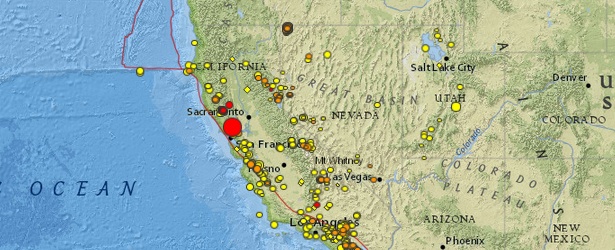
    On August 24, 2014, the northern San Francisco Bay Area was struck by the largest earthquake to impact the Bay Area since the 1989 M6.9 Loma Prieta earthquake. "South Napa" M6.0 earthquake occurred west of mapped traces of the West Napa Fault, the most

  • Very strong and dangerous M6.9 earthquake hit central Peru

    A very strong earthquake measuring M6.9 (USGS) on the Richter scale struck central Peru on August 24, 2014, at 23:21 UTC (18:21 local time). USGS is reporting depth of 101 km (62.8 miles). EMSC is reporting M7.0 and depth of 60 km.Epicenter was located 42 km (

  • Very strong earthquake M6.4 hit Valparaiso, Chile

    A very strong earthquake measuring M6.6 on the Richter scale struck Valparaiso, Chile, on August 23, 2014, at 22:32 UTC (18:32 local time). Both USGS and EMSC report the same magnitude in their preliminary reports. USGS reports depth of 32 km (19.9 miles), EMSC is repor

  • Extremely dangerous M6.2 earthquake struck Iran-Iraq border region

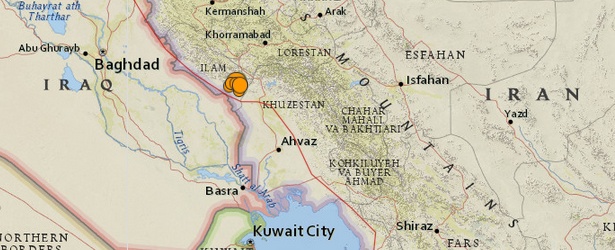
    Strong and shallow earthquake measuring M6.2 (EMSC/USGS) on the Richter scale struck Iran-Iraq border region at 02:32 UTC (07:02 local time) on Monday, August 18, 2014. Both EMSC and USGS report shallow depth of 10 km.According to the Iranian Seismological Center (ISC),

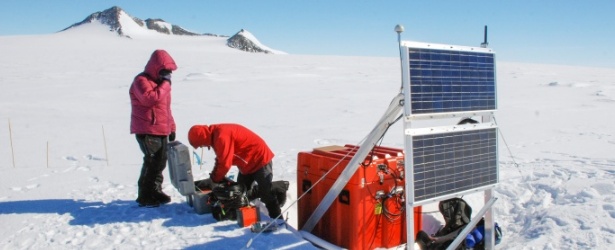
  • Antarctic icequakes triggered by 2010 magnitude 8.8 Chile earthquake

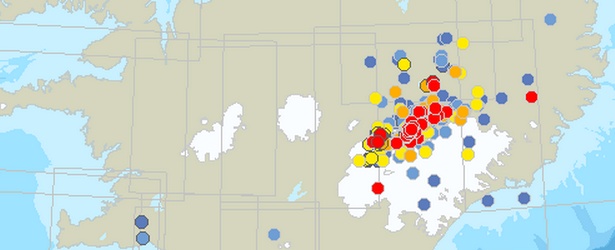
    Sections of Antarctica's frozen desert can experience hundreds of micro-quakes an hour due to ice deformation. These quakes are also called icequakes and they are a usual occurrence on Antarctica. However, after the 8.8-magnitude earthquake that hit C