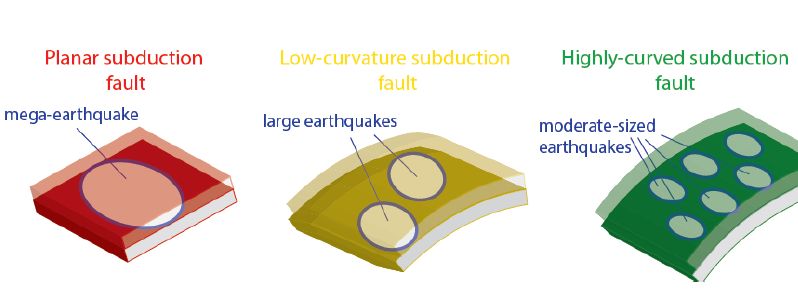
• Mega-earthquakes more frequent in flat subduction zones

    A new study, conducted by the scientists from the University of Oregon and Géoazur laboratory, suggest the mega-earthquakes are the most frequent on the flattest regions of subduction zones, instead of evenly distributed. The research aims at contributing to…
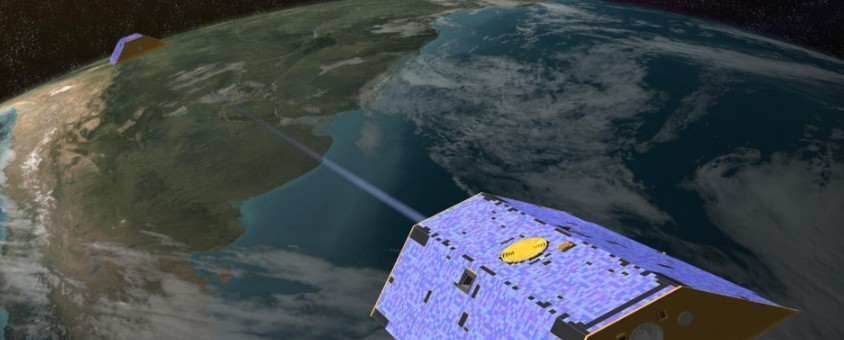
  • Earth’s seasonal gyration mass motion detected for the first time

    A new research, performed by the scientist from the University of Newcastle (UON) suggests the Australian continent gyrates in response to seasonal mass change across the globe. This is the first time such a discovery has been made and it is expected to have a…

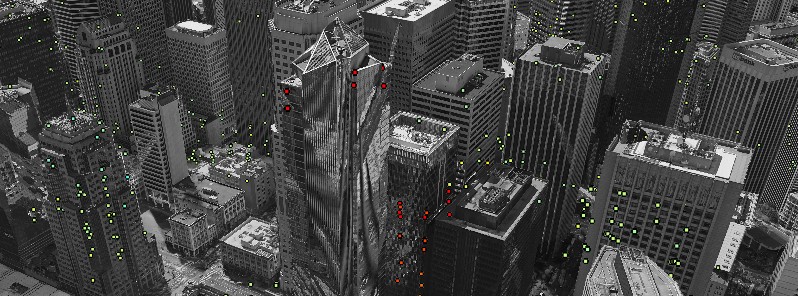
  • San Francisco Millennium Tower sinking 5 cm (2 inches) per year

    According to new data gathered by the Sentinel-1 satellites, the Millennium Tower skyscraper, San Francisco, appears to be sinking at a rate of a few centimeters per year. This and similar studies are aiming at improving the quality of monitoring of the urban ground…

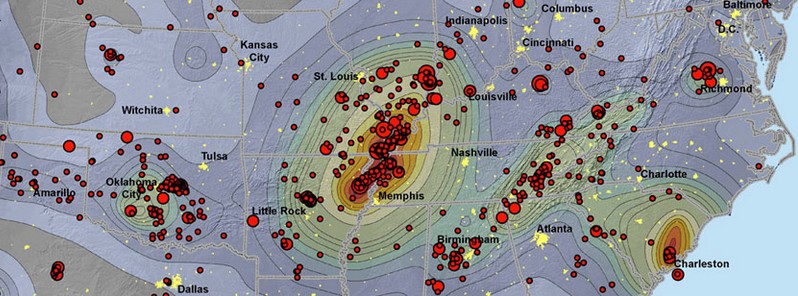
  • 4000% increase in Oklahoma earthquakes induced by fluid injection

    A record number of 907 earthquakes of magnitude greater or equal to 3.0 was reported in Oklahoma during 2015. A new study investigated the relationship between seismic activity and wastewater injection in the hope of aiding the regulators in reducing a risk of…

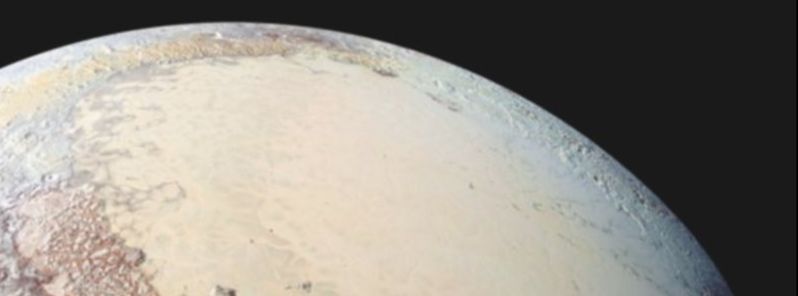
  • Ice accumulations tilt Pluto and rearrange its surface

    New research suggests the Sputnik Planitia basin on Pluto may have assumed its current location because of the change in the spin of the dwarf planet. The Sputnik Planitia is a 1 000 km (621.4 miles) wide basin situated in the heart-shaped region of the Pluto's…

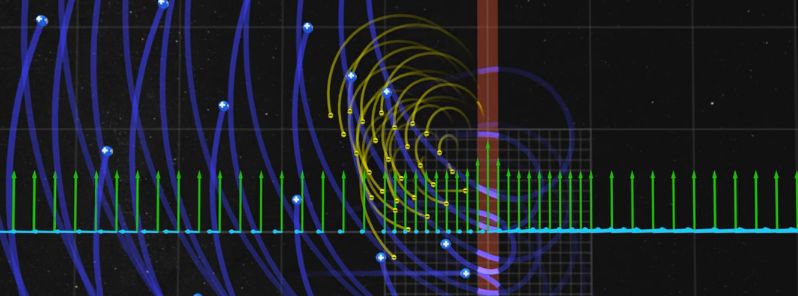
  • New insight into Earth’s magnetic field

    NASA's new observations of the Earth's magnetic field indicate that its foreshock region is capable of accelerating electrons to almost the speed of light. Earth's magnetic field deflects the incoming charged particles from the Sun. In regions outside…

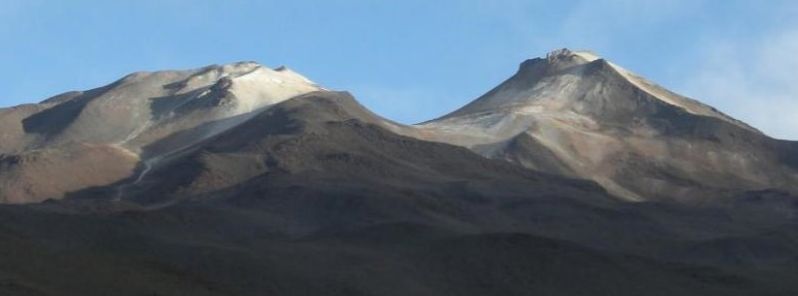
  • Huge magmatic lake lurking under dormant Bolivian volcano

    An international team of scientists discovered a massive magmatic lake, lying 15 km (9.32 miles) below the Cerro Uturuncu dormant volcano in Bolivia. According to Jon Blundy, a professor from the School of Earth Sciences at the University of Bristol, despite no…

  • Physicists calculate the mass of dark matter

    A team of scientists from Germany and Hungary used a supercomputer simulation to predict the mass of axions particles, promising candidates for dark matter. The dark matter is an invisible matter, the existence of which has so far manifested only through its…

  • Troposphere ozone pollution highest near the equator

    A new research, conducted by the University of North Carolina (UNC), shows the pollution emissions are increasing in the area close to the equator where they produce a much greater impact on the ozone formation. The air pollution across the globe has increased since…

  • Study claims new ‘Little Ice Age’ already underway

    The Head of Space Research Laboratory at the Pulkovo Observatory of the Russian Academy of Sciences in St. Petersburg, Dr. Habibullo Abdussamatov, announced the new Little Ice Age started at the end of 2015. According to the new research, our Sun has been in the…