• Organic computers – scientists build interfaces for brain networks

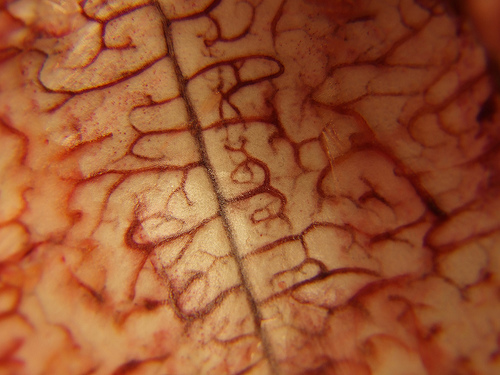
    Researchers at Duke University linked brains of rats across continents via internet in a demonstration of what they call the world’s first  ‘organic computer’. Surprisingly, rats were able to share sensory information through interfaces developed by researchers and

  • New research to focus on energy distribution in upper atmosphere

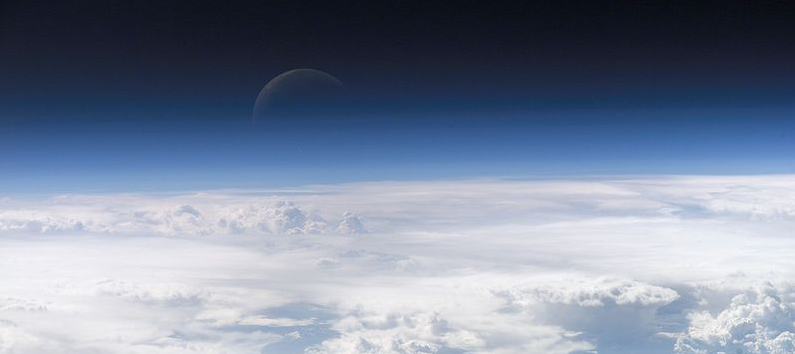
    “Understanding interaction between the Earth’s magnetic field, or magnetosphere, and its upper atmosphere – known as the thermosphere/ionosphere – is especially important this year and in 2014, said Yue Deng, an assistant physics professor at University of Texas.

  • Researchers demonstrate algorithm for practical quantum computing

    In a major advancement in quantum computing, for the first time researchers successfully demonstrated a quantum algorithm that performs a true calculation. Quantum circuit built for this demonstration didn’t require knowing answer in advance, hence did a true

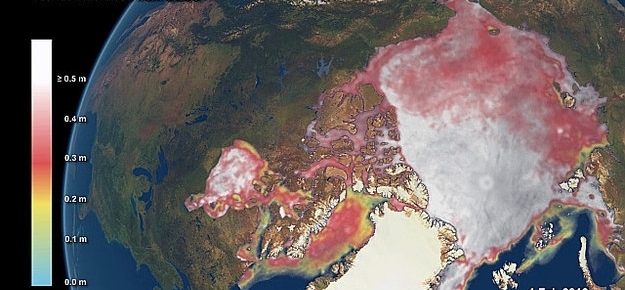
  • Dimishing Arctic sea ice – CryoSat reveals facts about ice volumes

    An international team of scientists led by University College London provided insight into decline of Arctic sea ice volume and generated estimates of the sea-ice volume for the 2010–11 and 2011–12 winters over the Arctic basin using data from ESA’s CryoSat

  • Scientists produce hydrogen by mixing silicon and water

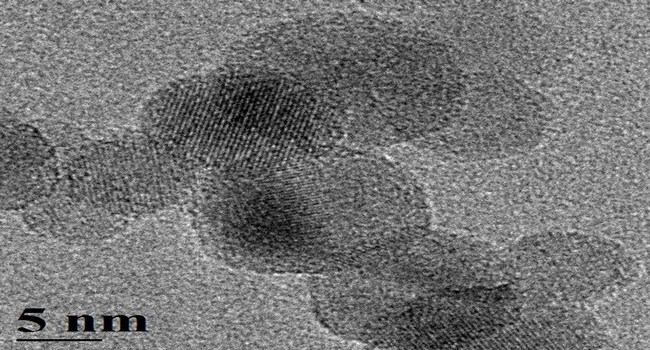
    Hydrogen is a zero-emission fuel and arguably an excellent candidate of alternative energy. Use of  hydrogen extracted from water  to generate electricity is a topic of an ongoing debate. Recent experiments by University at Buffalo researchers revealed how silicon

  • Giant magnetized outflows from our Galactic Center

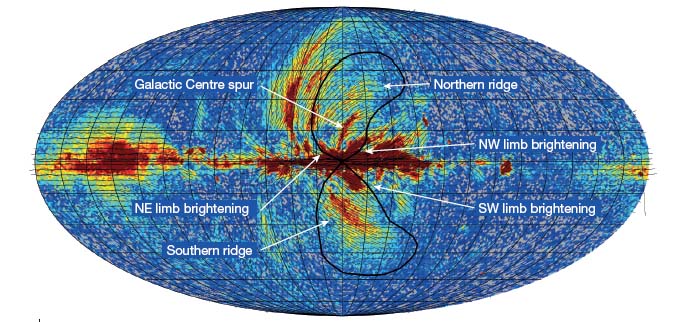
    Two years ago, CfA astronomers reported the discovery of giant, twin lobes of gamma-ray emission protruding about 50,000 light-years above and below the plane of our Milky Way galaxy, and centered on the supermassive black hole at our galaxy’s core.The scientists