• Total lunar eclipse on Wednesday, October 8, 2014

    he second total lunar lunar eclipse of 2014 and 2015 lunar-eclipse tetrad will occur on Wednesday, October 8, 2014, and will be visible from the Pacific Ocean and regions immediately bordering it. As the Moon passes completely through the Earth's dark shadow, or

  • Deadly Typhoon “Phanfone” made landfall in central Japan

    Typhoon Phanfone made landfall in Shizuoka with winds reported gusting up to 164 km/h (102 mph). The Japan Meteorological Agency reported Typhoon Phanfone officially made landfall near the city of Hamamatsu in Shizuoka Prefecture around 8 a.m. local time.260 000 people

  • Pyroclastic flows continue at Sinabung volcano, Indonesia

    Lava extrusion continues at Indonesian Sinabung volcano. A series of small to moderately sized pyroclastic flows occurred this morning at the volcano. Whether the apparently more intense activity is a sign of increased lava effusion is difficult to say, VolcanoDiscovery

  • Phanfone reaches super typhoon status

    Typhoon Phanfone rapidly intensified on October 2, with its strength increasing from a Category 1 hurricane to a Category 4 hurricane in 12 hours. On October 4, 2014 JMA reports maximum wind gusts of 250 km/h which means that Phanfone reached super typhoon status

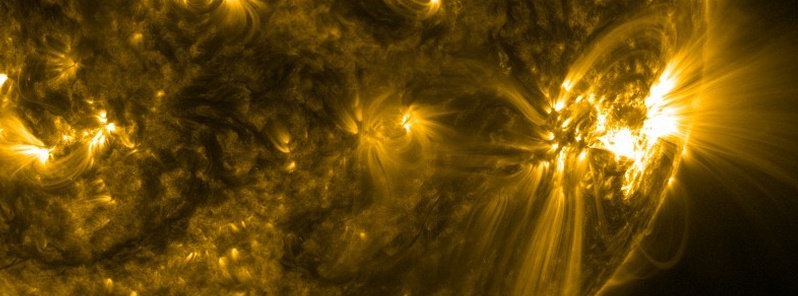
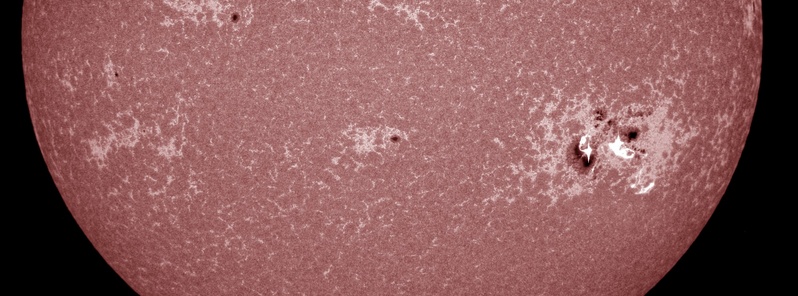
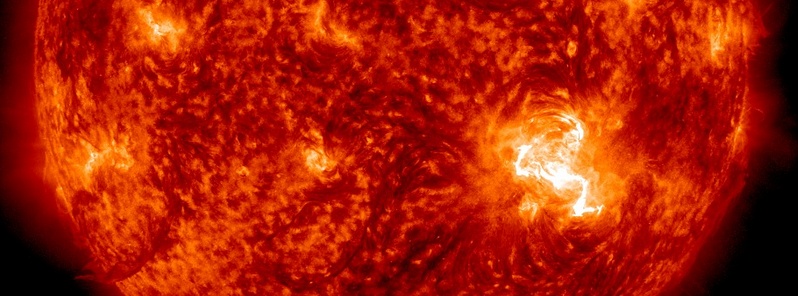
  • Strong M7.3 solar flare erupted from southwest limb

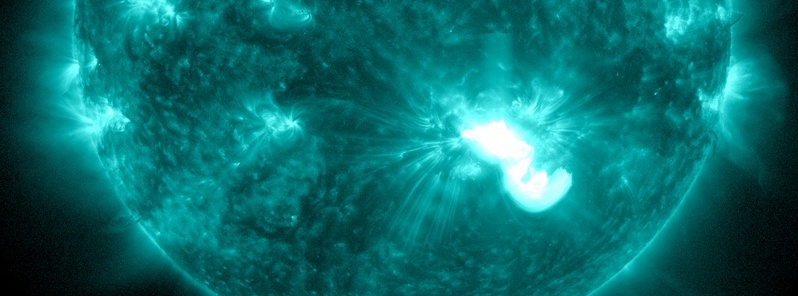
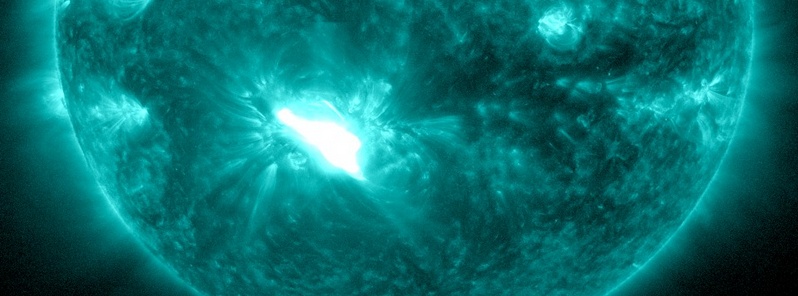
    Departing region 2173 erupted with strong M7.3 solar flare at 19:01 UTC on October 2, 2014. The event started at 18:49 and ended at 19:14 UTC.Due to the location of this region Earth directed Coronal Mass Ejection (CME) is not expected. SWPC forecasters estimate 45% cha

  • Night sky guide for October 2014

    A total lunar eclipse will be visible on October 8 throughout most of North America, South America, Asia, and Australia. The Moon will gradually get darker and then take on a rusty or blood red color. It is the latter of two total lunar eclipses in 2014, and the second

  • Swift observes mega flares from a mini star

    On April 23, NASA's Swift satellite detected the strongest, hottest, and longest-lasting sequence of stellar flares ever seen from a nearby red dwarf star. The initial blast from this record-setting series of explosions was as much as 10 000 times more powerful than