• Slow-moving daylight fireball recorded over Houston, US

    A slow-moving daylight fireball was seen over Houston skies (Texas, US) late Sunday, January 18, 2015 and recorded by Jordan Sterling. The sighting raised a lot of questions after images and videos started appearing on social media, KHOU 11 News reports. Patricia Reiff,

  • Fast radio burst from a distant source captured in real-time

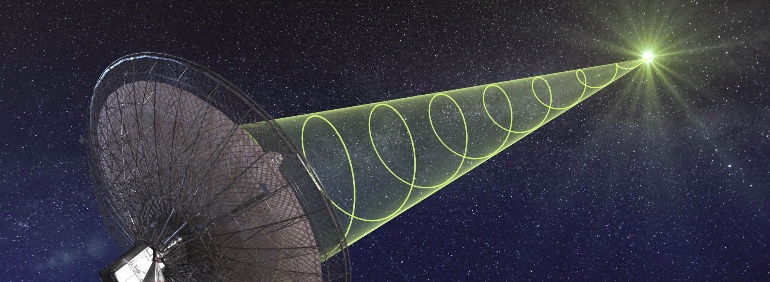
    A short, sharp flash of radio waves from a mysterious source up to 5.5 billion light years from Earth has been detected in real-time by CSIRO’s Parkes radio telescope in eastern Australia. Swinburne University of Technology PhD student, Emily Petroff,

  • A yearlong look at asteroids and comets by NEOWISE

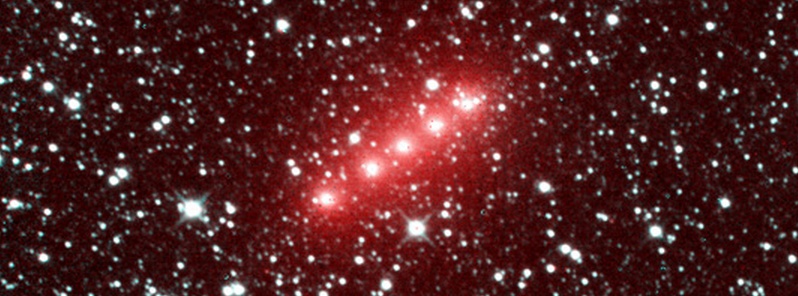
    NASA's Near-Earth Object Wide-field Survey Explorer or NEOWISE spacecraft, a space telescope that scans the skies for asteroids and comets, discovered and characterized 40 near-Earth objects (NEOs) in the first year after the mission was re-started in December

  • Active volcanoes in the world: January 7 – 13, 2015

    New activity was observed at 5 volcanoes from January 7 – 13, 2015. During the same period, ongoing activity was reported for 16 volcanoes.New activity/unrest: Chirpoi, Kuril Islands (Russia) | Colima, Mexico | Etna, Sicily (Italy) | Hunga Tonga-Hunga Ha'apai, Tonga

  • Hubble captures the Pillars of Creation twenty years on

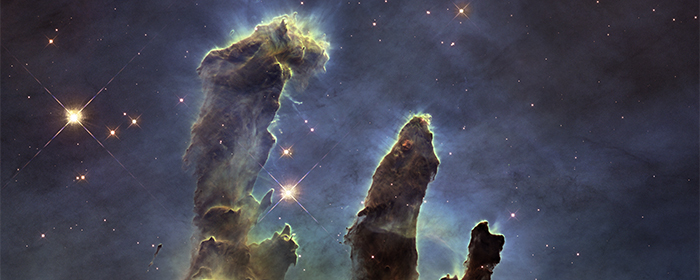
    The NASA/ESA Hubble Space Telescope has captured many breathtaking images of the Universe, but one snapshot stands out from the rest: the Eagle Nebula’s Pillars of Creation.In 1995 Hubble’s iconic image revealed never-before-seen details in the giant columns

  • NASA observatories take an unprecedented look into superstar Eta Carinae

    Eta Carinae, the most luminous and massive stellar system within 10 000 light-years of Earth, is known for its surprising behavior, erupting twice in the 19th century for reasons scientists still don't understand.A long-term study led by astronomers at NASA's Go

  • Huge new astronomy database now available to the public

    Penn State University astronomers are among the scientists of the Sloan Digital Sky Survey (SDSS) who this week are releasing to the public a massive collection of new information about the universe. "This set of observations is one of the largest astronomical data

  • Comet Lovejoy (C/2014 Q2) makes closest approach to Earth

    Comet C/2014 Q2 (Lovejoy), a long-period comet discovered by Australian astronomer Terry Lovejoy on August 17, 2014, is making closest approach to our planet today, at some 70 million kilometers (43.5 million miles / 0.469 AU) away.This comet is now a naked eye object a

  • Hubble captures the sharpest ever view of neighbouring Andromeda galaxy

    Hubble Space Telescope has captured the sharpest and biggest image ever taken of the Andromeda galaxy, known as Messier 31. The enormous image is the biggest Hubble image ever released and shows over 100 million stars and thousands of star clusters embedded in a