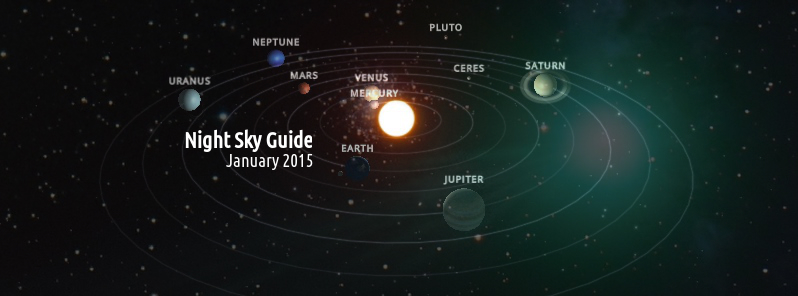
• Night sky guide for January 2015

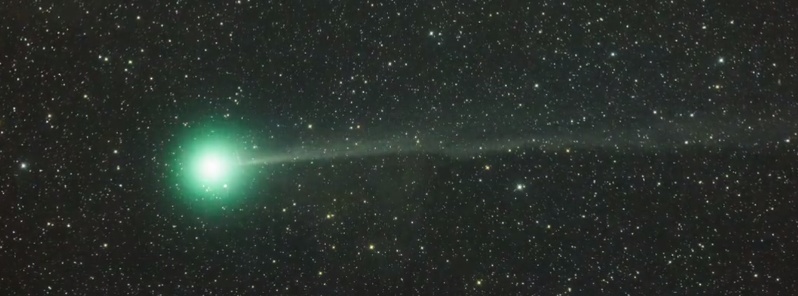
    As far as the meteor showers are concerned the year starts with an above average Quadrantids, unfortunately the nearly full moon will block out most of the show. Quadrantids will peak this year on the night of January 3rd and the morning of 4th.Brilliant comet C/2014 Q2

  • Study hints that ancient Earth made its own water

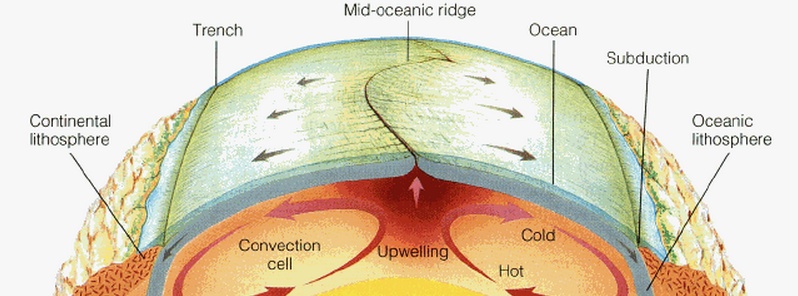
    A new study is helping to answer a longstanding question that has recently moved to the forefront of earth science: Did our planet make its own water through geologic processes, or did water come to us via icy comets from the far reaches of the solar system?The answer i

  • Alexander Gerst’s Earth timelapses

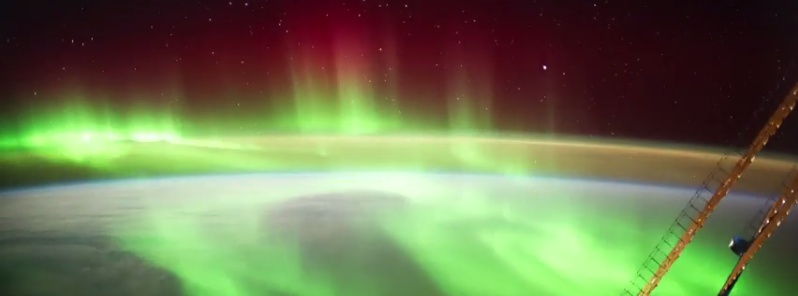
    Watch Earth roll by through the perspective of ESA astronaut Alexander Gerst in this six-minute timelapse video from space. Combining 12 500 images taken by Alexander during his six-month Blue Dot mission on the International Space Station this Ultra High Definition vid

  • Satellites measure increase of Sun’s energy absorbed in the Arctic

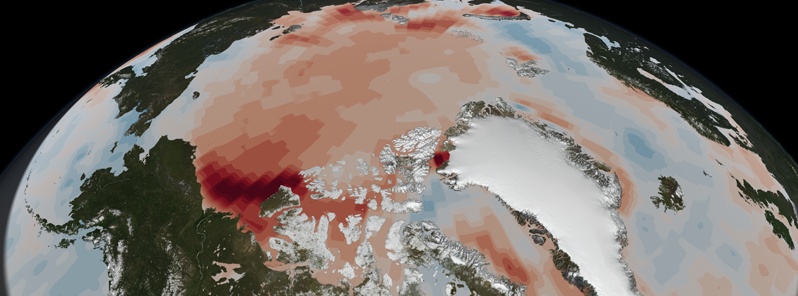
    NASA satellite instruments have observed a marked increase in solar radiation absorbed in the Arctic since the year 2000 – a trend that aligns with the steady decrease in Arctic sea ice during the same period.While sea ice is mostly white and reflects the sun&rsqu

  • NOAA and BGS update World Magnetic Model (WMM)

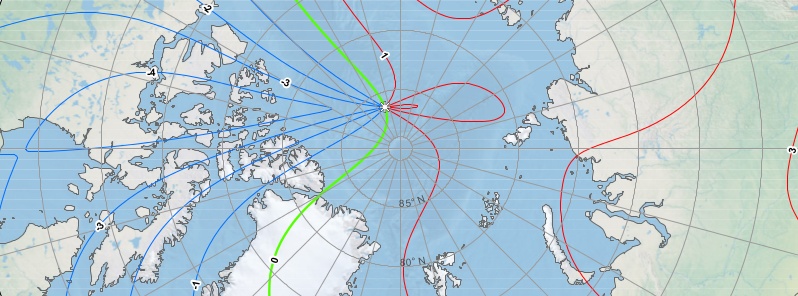
    NOAA officials announced yesterday the World Magnetic Model (WMM), a representation of Earth’s large-scale magnetic field and an indispensable complement to GPS devices used by NATO, the United States and United Kingdom militaries, as well as civil applications ra

  • Scientists observe the Earth grow a new layer under an Icelandic volcano

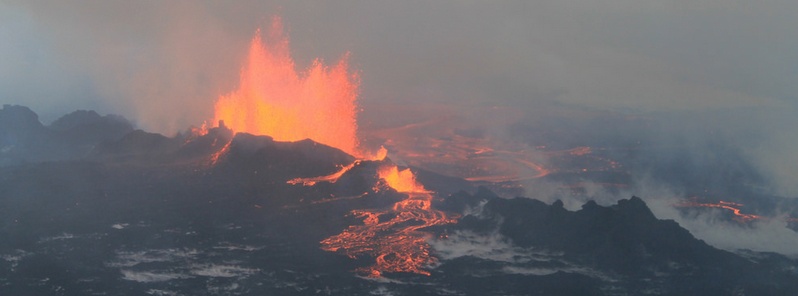
    New research into an Icelandic eruption has shed light on how the Earth's crust forms, according to a paper published today in Nature. When the Bárðarbunga volcano, which is buried beneath Iceland's Vatnajökull ice cap, reawakened in August

  • Geminids – the king of meteor showers peaks this weekend

    Geminid meteor shower, the king of meteor showers, peaks during the night and early morning hours of December 13 and 14 as our planet passes through a debris field left by asteroid, or a possible "rock comet", named 3200 Phaethon.Geminids are considered by man

  • Active volcanoes in the world: December 3 – 9, 2014

    New activity/unrest was observed at 6 volcanoes from December 3 – December 9, 2014. Ongoing activity was observed at 14 volcanoes. New activity/unrest: Asosan, Kyushu (Japan) | Chirinkotan, Kuril Islands (Russia) | Fogo, Cape Verde | Sinarka, Shiashkotan Island (Russ