I'm a dedicated researcher, journalist, and editor at The Watchers. With over 20 years of experience in the media industry, I specialize in hard science news, focusing on extreme weather, seismic and volcanic activity, space weather, and astronomy, including near-Earth objects and planetary defense strategies. You can reach me at teo /at/ watchers.news.

  • Heavy lake-effect snow creates whiteout conditions, disrupts travel south of Chicago

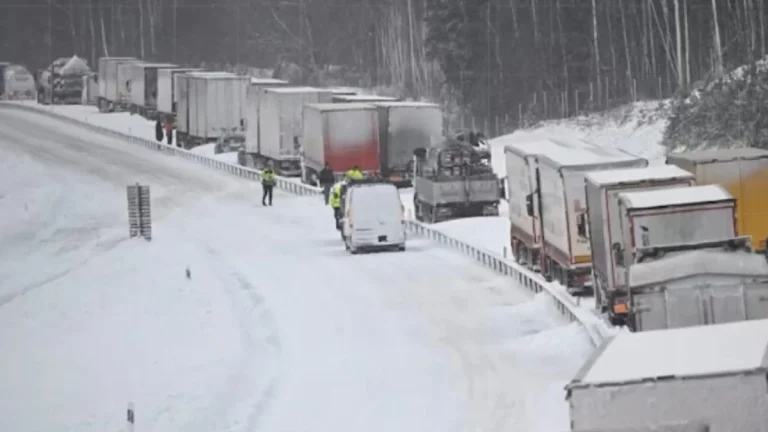
    Powerful bands of lake-effect snow brought traffic on parts of Interstate 57 (I-57) south of Chicago, Illinois, to a standstill amid whiteout conditions on the morning of November 10, 2025. The National Weather Service (NWS) warned drivers to use extreme caution as snowfall rates exceeded 7 cm/h (3 in/h) in localized bands, producing near-zero visibility and hazardous travel across portions of northeastern Illinois.

  • Rio Bonito do Iguaçu tornado upgraded to EF-4, placing Brazil among sites of 2025’s most violent tornadoes worldwide

    A new assessment by MetSul Meteorologia confirms that the deadly tornado that struck Rio Bonito do Iguaçu, Paraná, Brazil, on November 7, 2025, reached EF-4 intensity on the Enhanced Fujita Scale, with estimated wind speeds between 250 km/h and 300 km/h (155 mph to 186 mph). The event killed six people, injured more than 400, and destroyed much of the city’s urban area, making it one of the most intense tornadoes recorded globally in 2025.

  • Lava overflow observed at Stromboli’s North Crater area, Italy

    A lava overflow started from Stromboli’s North Crater area at around 10:00 UTC (11:00 LT) on November 9, 2025, feeding a lava flow on the upper Sciara del Fuoco. The activity, observed by the National Institute of Geophysics and Volcanology (INGV) through surveillance cameras, was accompanied by modest but continuous spattering from at least two vents in the North Crater area.

  • Record-high effusion rate measured during episode 36 of Kīlauea’s Halemaʻumaʻu eruption

    Episode 36 of the ongoing Halemaʻumaʻu eruption at Kīlauea volcano, Hawaiʻi, ended at 16:16 LT on November 9 (02:16 UTC, November 10), 2025, after just under 5 hours of continuous fountaining. The event produced record-high lava effusion rates of around 500 m³/s (650 yd³/s) and built fountains up to 330 m (1 100 feet) high, covering 60–80% of the Halemaʻumaʻu crater floor.

  • Earthquake swarm in progress along Calaveras fault near San Francisco, California

    Over 40 earthquakes were recorded along the Calaveras fault southeast of San Ramon, California, between November 9 and 10, 2025. The largest event, M3.8, occurred at 09:38 LT (17:38 UTC) on November 9 at a depth of 9.2 km (5.7 miles). Geological and seismic studies show that the Calaveras fault is capable of generating an event in the M6.5 to M7.0 range over long-term timescales.

  • Major X1.2 solar flare erupts from Region 4274 producing fast CME

    Active Region 4274 produced its second X-class solar flare since it emerged from the far side last week, this time peaking as X1.2 at 09:19 UTC on November 10, 2025. This is now the third X-class flare since the November 4 X1.8 and X1.1. A coronal mass ejection (CME) was associated with the latest event and is expected to have an Earth-directed component.

  • Super Typhoon Fung-wong (Uwan) makes nighttime landfall in northern Luzon, Philippines

    Super Typhoon Fung-wong (known locally as Uwan) made landfall over Dinalungan, Aurora, northern Luzon, at about 21:10 LT (13:10 UTC) on November 9, 2025, with maximum sustained winds near 185 km/h (115 mph) and gusts up to 230 km/h (143 mph). More than 1.1 million people were pre-emptively evacuated across 12 regions, and at least two fatalities and two injuries have already been confirmed.

  • Strong and shallow M6.8 earthquake, multiple strong aftershocks hit off the east coast of Honshu, Japan

    A strong and shallow earthquake registered by the USGS as M6.8 hit off the east coast of Honshu, Japan at 08:03 UTC (17:03 local time) on November 9, 2025. The agency is reporting a depth of 10 km (6.2 miles). The Japan Meteorological Agency (JMA) reported it as M6.7 at a depth of 10 km, while the European-Mediterranean Seismological Centre (EMSC) reported M6.8 at a depth of 5 km (3.1 miles).