Deep M6.3 earthquake hits Fiji region
A deep earthquake registered by the USGS as M6.3 hit the Fiji region at 05:44 UTC on March 1, 2026. The agency is reporting a depth of 596 km (370 miles). EMSC is reporting the same magnitude and depth.


I'm a dedicated researcher, journalist, and editor at The Watchers. With over 20 years of experience in the media industry, I specialize in hard science news, focusing on extreme weather, seismic and volcanic activity, space weather, and astronomy, including near-Earth objects and planetary defense strategies. You can reach me at teo /at/ watchers.news.
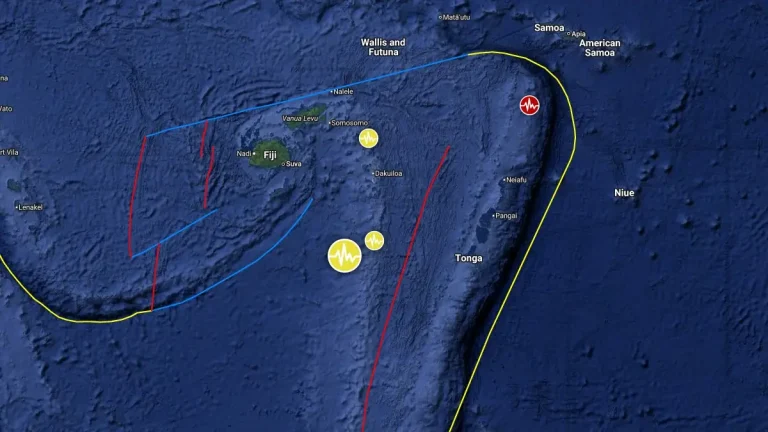
A deep earthquake registered by the USGS as M6.3 hit the Fiji region at 05:44 UTC on March 1, 2026. The agency is reporting a depth of 596 km (370 miles). EMSC is reporting the same magnitude and depth.
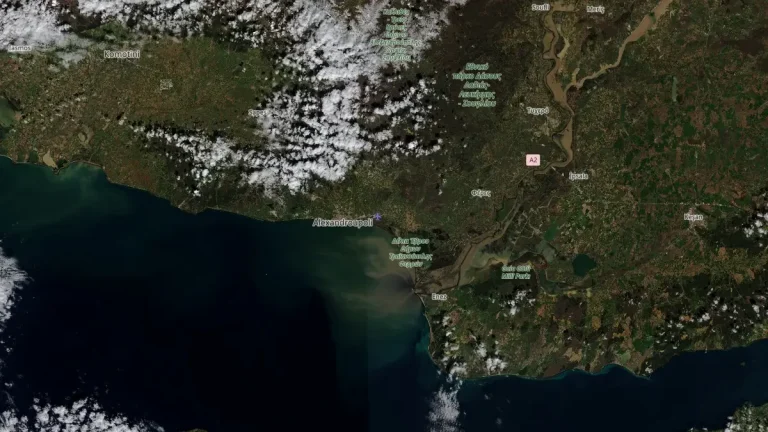
Prolonged rainfall and cross-border inflows have triggered a state of emergency across northeastern Greece, where severe flooding along the Evros River in February 2026 submerged tens of thousands of acres of farmland and destroyed wheat, barley, lentil, and alfalfa crops. No fatalities have been confirmed, but authorities warn of extensive economic losses for the region’s farm sector.

A Bolivian Air Force Lockheed C-130 Hercules transport aircraft crashed while landing at El Alto International Airport on February 27, 2026, killing at least 15 people and injuring 28. Authorities said the plane overran the runway during intense hail and lightning activity that severely reduced visibility over the high-altitude airport.
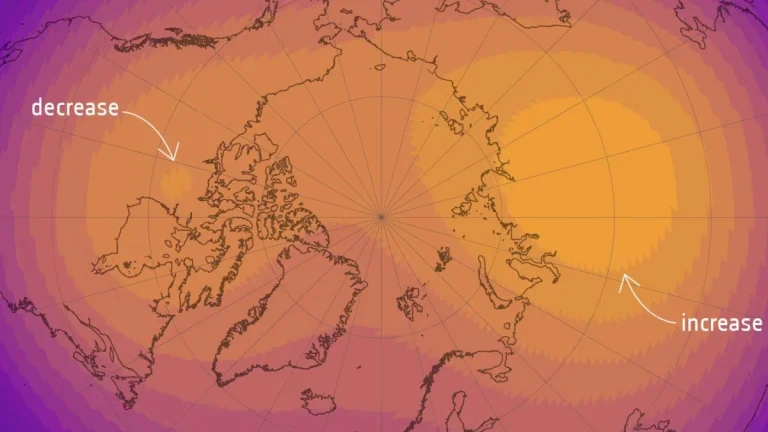
Satellite measurements from 2014 to 2025 show that the northern hemisphere’s strongest magnetic field region is shifting from Canada toward Siberia as the Canadian lobe weakens and the Siberian lobe intensifies. The redistribution is directly linked to the continued eastward drift of the north magnetic pole, now moving at about 36 km/h (22 mph), and requires updates to global navigation models. Over the same 11-year interval, the southern hemisphere’s strong-field region between Australia and Antarctica remained largely stable.
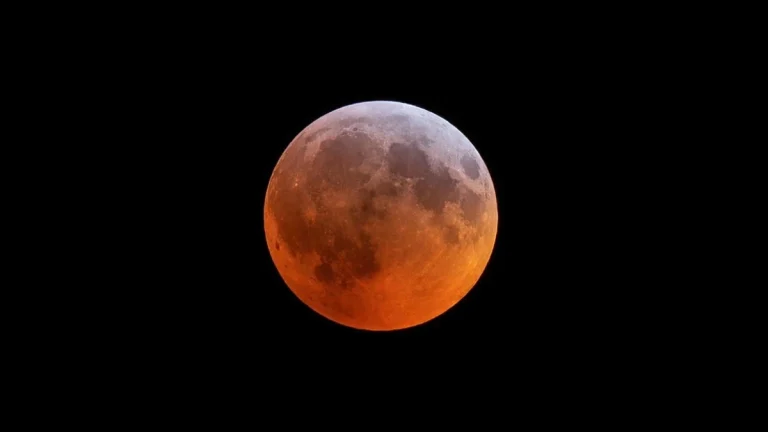
A total lunar eclipse will occur at 11:33 UTC on March 3, 2026, with totality lasting 58 minutes and 19 seconds and full visibility across East Asia, Australia, the Pacific region, and western North America. This is the only total lunar eclipse of 2026.
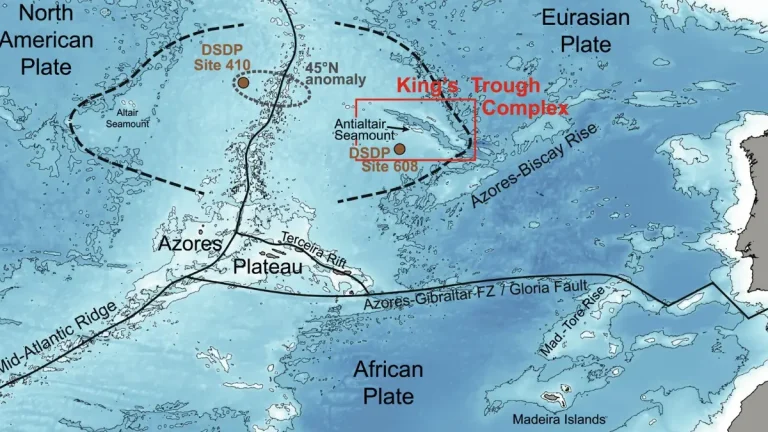
An international research team led by the GEOMAR Helmholtz Centre for Ocean Research Kiel has resolved how the King’s Trough Complex formed between 37 and 24 million years ago. The study shows it originated along a temporary plate boundary guided by an early branch of the Azores mantle plume.
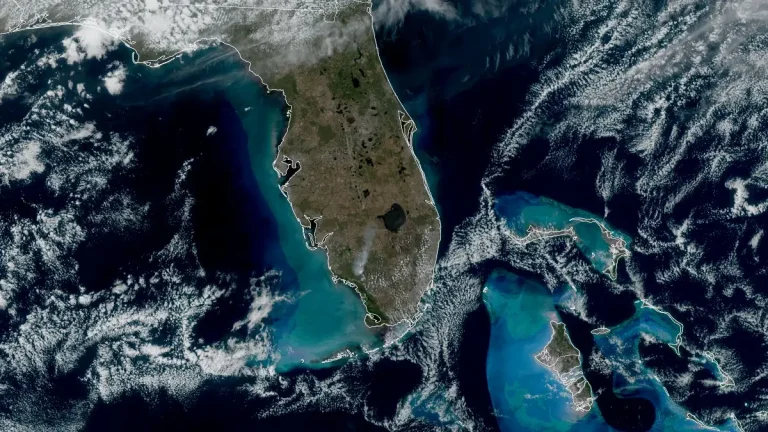
A fast-moving wildfire known as the National Fire burned approximately 10 117 ha (25 000 acres) in Big Cypress National Preserve, Collier County, Florida, between February 22 and 25, 2026, expanding from about 405 ha (1 000 acres) and remaining at 0% containment. The fire spread under extreme drought conditions, affecting nearly all of Florida. Smoke reduced visibility along Interstate 75 (Alligator Alley), State Road 29, and U.S. 41, prompting transportation advisories and area closures.
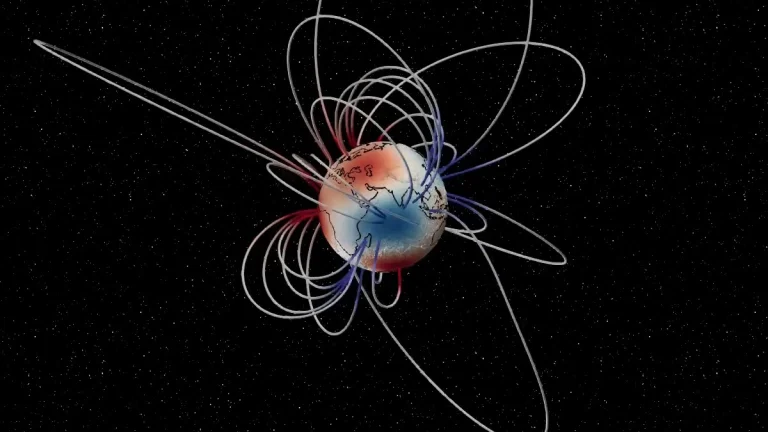
A revised statistical reconstruction of Earth’s magnetic polarity history suggests that some short-duration geomagnetic reversals may be absent from the Geomagnetic Polarity Time Scale, particularly during four intervals following the Cretaceous Normal Superchron approximately 83 million years ago. The study, published in Geophysical Research Letters in 2026, applies a cross-validated adaptive-bandwidth kernel density estimation method to analyze reversal frequency in the GPTS 2020 dataset. The results identify localized dips in modeled reversal frequency that may correspond to undocumented short-lived polarity switches.

Severe flooding and landslides struck the southeastern Brazilian state of Minas Gerais between February 23 and 24, 2026, following extreme rainfall that exceeded three times the monthly average. At least 30 people died, 39 remain missing, and more than 3 000 were displaced as torrential downpours caused the Paraibuna River to overflow in Juiz de Fora and inundate parts of Ubá.
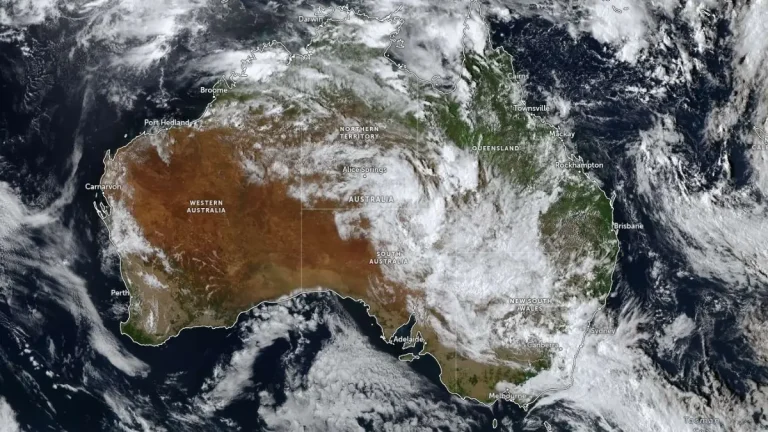
A broad low-pressure system moving through inland Australia continues to generate intense rainfall and flash flooding on February 25, 2026. Severe weather warnings remain in effect across multiple regions as the Bureau of Meteorology reports rainfall totals exceeding 200 mm (7.9 inches) in parts of South Australia.
