
At least 61 killed as fierce dust storms strike India, death toll over 200

Image credit: ANI
Fierce dust storms across northern India left at least 61 people dead on Sunday, May 13, 2018, bringing the total death toll to at least 202 since the start of the month. The weather office has warned of more thunderstorms in north, north-east and parts of south India over the next two days.
Wind speeds of up to 110 km/h (68 mph) and lightning devastated numerous villages, uprooting trees, bringing down homes and leaving at least 61 people dead and dozens injured since Sunday evening, May 13, according to BBC.
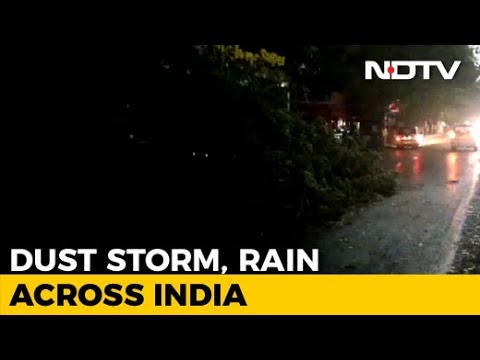
The highest death toll was reported in Uttar Pradesh, where more than 30 were injured and 39 killed on Sunday, bringing the state's dust storm death toll to 109 since the start of the month. BBC quoted officials as saying that casualties could go up further.
The storm affected both land and air traffic, officials said, adding that more than 70 incoming flights were diverted from Delhi's Indira Gandhi International Airport.
भारत में धूल भरे तूफान ने इस साल बड़ी तबाही मचाई है. चलिए जानते हैं कि क्यों आते ये तूफान. #duststorm #Duststorms https://t.co/GmRwBiBwvP pic.twitter.com/dXfRZgE3RB
— DW (Hindi) (@dw_hindi) May 14, 2018
Trees in #Delhi's Dhaula Kuan area have fallen down after heavy rainfall & thunderstorm struck the region. pic.twitter.com/7BlrRE7KC0
— ANI (@ANI) May 13, 2018
At least 60 people have died in fierce dust storms across four states#DelhiStorm #duststorm pic.twitter.com/tP6Uy15pc0
— ABP News (@abpnewstv) May 14, 2018
#WATCH: Skies in Faridabad turn dark as strong winds & dust storm hit the region. #Haryana pic.twitter.com/VRDn8AsGIP
— ANI (@ANI) May 13, 2018
Similar unseasonal powerful dust storms and thundershowers in the past two weeks have left at least 202 people dead.
IMD meteorologists said more thunderstorms in north, north-east and parts of south India are expected over the next two days.
India's Monsoon or rainy season usually begins in July and ends in September.

Teo Blašković founded The Watchers in 2011 and edited it until 2026, covering seismic and volcanic activity, extreme weather, space weather and near-Earth objects. Articles on this page are his archive.
Published in the last 24 hours
- NASA built the Opportunity rover to last 90 days on Mars, and Martian winds helped keep it alive for nearly 15 years by blowing dust off its solar panels, until a planet-wide dust storm in 2018 blocked sunlight and silenced the rover Epicenter
- In the winter of 1811–12, earthquakes near New Madrid, Missouri, shook so hard that witnesses saw the Mississippi River flow backward, and the shaking left a brand-new lake in Tennessee Epicenter
- On 28 August 1859 a solar storm shocked telegraph operators and threw sparks on other lines, and on 2 September Boston to Portland clerks unhooked their batteries and kept sending for more than two hours on the aurora's current alone. Epicenter
- In 2019, the Ronald Reagan Presidential Library hired hundreds of goats to eat 13 acres of brush around it; months later the Easy Fire surrounded the library, and the fire break the goats left behind slowed the flames before they reached the building Epicenter
