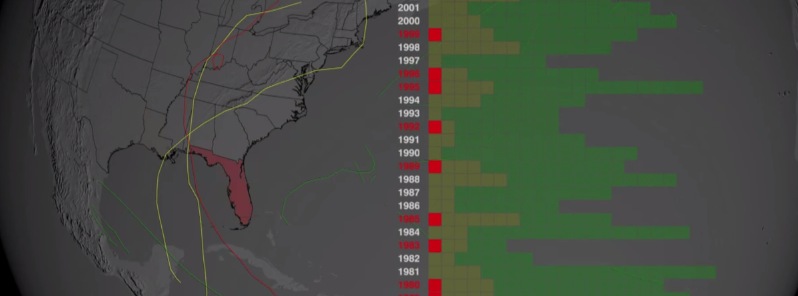
• What are the chances of another Hurricane “Katrina”?

    The US hasn’t experienced the landfall of a Category 3 hurricane or larger since 2005, when Dennis, Katrina, Rita and Wilma all hit the US coast. According to a new NASA study, a string of nine years without a major hurricane landfall in the US is Iikely to come a
  • Two Large Hadron Collider experiments first to observe rare subatomic process

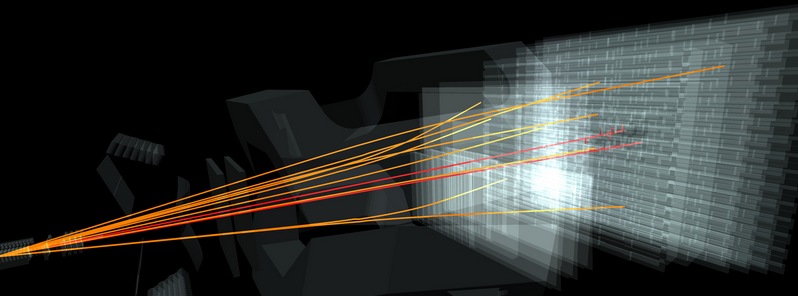
    Two experiments at the Large Hadron Collider at the European Organization for Nuclear Research (CERN) in Geneva, Switzerland, have combined their results and observed a previously unseen subatomic process.As published in the journal Nature this week, a joint analysis by

  • Etna erupting on the evening of May 13, new lava flow

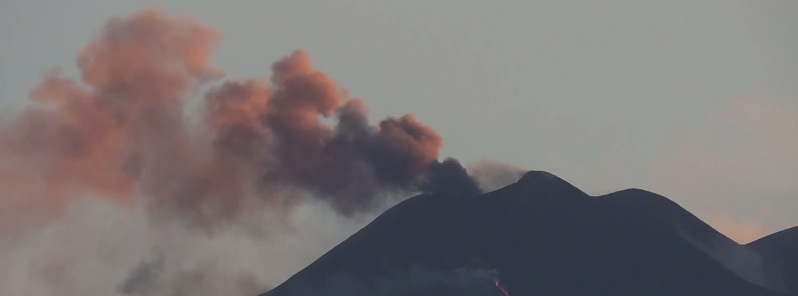
    Following almost three-and-a-half months of total quiescence Etna's New Southeast Crater is again in business.Following mild Strombolian activity that started early on May 12, 2015, the activity diminished on the afternoon of the 13th and then became again more

  • Active volcanoes in the world: May 6 – 12, 2015

    New activity/unrest was observed at 6 volcanoes from May 6 – 12, 2015. During the same period, ongoing activity was observed at 16 volcanoes.New activity/unrest: Bulusan, Luzon (Philippines) | Calbuco, Chile | Hakoneyama, Honshu (Japan) | Karangetang [Api Siau], Siau I

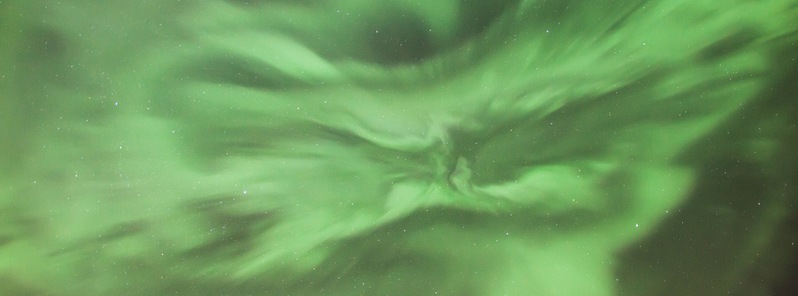
  • Geomagnetic storm reaching G2 – Moderate levels in progress

    Geomagnetic storm reaching G2 – Moderate levels is currently in progress due to continued accelerated solar wind speeds and enhanced magnetospheric activity. This activity is attributed to a well connected coronal hole located just south of the solar Equatorial plane, S

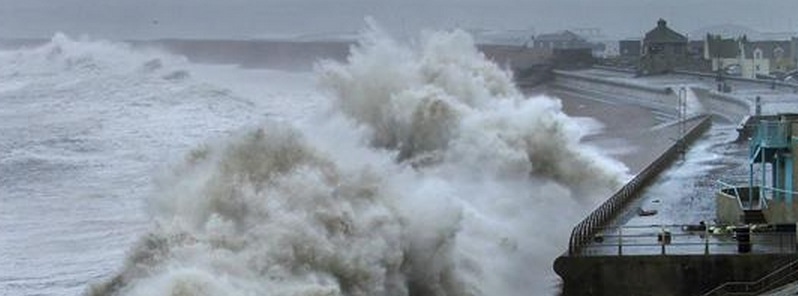
  • SurgeWatch: UK launches new national database of coastal flooding

    Researchers led by the University of Southampton have compiled a new database of coastal flooding in the UK over the last 100 years, which they hope will provide crucial information to help prevent future flooding events.The new database is available as web application

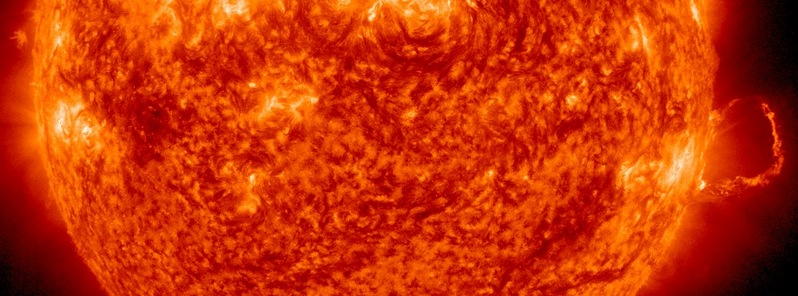
  • Filament eruption produces CME off the west limb, proton spike

    A solar filament/prominence was observed leaving the west limb of the Sun around 02:20 UTC today resulting in a Coronal Mass Ejection (CME). Although this CME has a trajectory which is away from the Sun – Earth line, and despite its relatively slow velocity, there was a

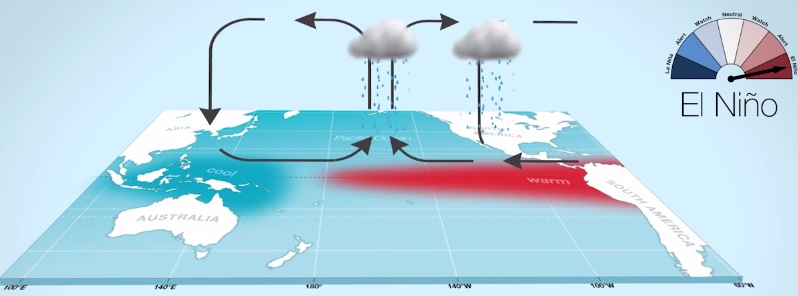
  • El Niño threshold reached in tropical Pacific

    Today's update on the El Niño–Southern Oscillation (ENSO) by Australian Bureau of Meteorology confirms El Niño thresholds have been reached in the tropical Pacific for the first time since March 2010.Assistant Director for Climate Information Ser