• Life goes on for marine ecosystems after cataclysmic mass extinction

    An international team of scientists, including Dr. Alex Dunhill from the University of Leeds, has found that although the mass extinction in the Late Triassic period wiped out the vast proportion of species, there appears to have been no drastic changes to the way…

  • Gamma rays will reach beyond the limits of light

    Researchers have discovered a new way to produce high energy photon beams. The new method makes it possible to produce these gamma rays in a highly efficient way, compared with today's technique. The obtained energy is a billion times higher than the energy of…

  • Spinning comet rapidly slowed down during close approach to Earth

    Astronomers at Lowell Observatory observed comet 41P/Tuttle-Giacobini-Kresak last spring and noticed that the speed of its rotation was quickly slowing down. A research team led by David Schleicher studied the comet while it was closer to the Earth than it has ever…

  • Volcanic eruptions linked to social unrest in Ancient Egypt

    Around 245 BCE Ptolemy III, ruler of the Ptolemaic Kingdom in Egypt, made a decision that still puzzles many historians: After pursuing a successful military campaign against the kingdom's nemesis, the Seleucid Empire, centered mainly in present-day Syria and…

  • Scientists determine source of world’s largest mud eruption

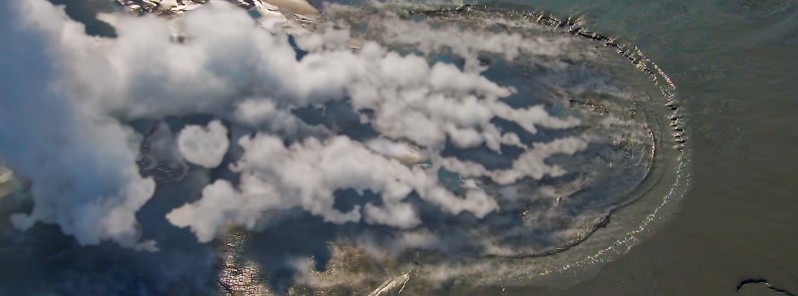
    On May 29, 2006, mud started erupting from several sites on the Indonesian island of Java. Boiling mud, water, rocks and gas poured from newly-created vents in the ground, burying entire towns and compelling many Indonesians to flee. By September 2006, the largest…

  • Winter cold extremes linked to high-altitude polar vortex weakening

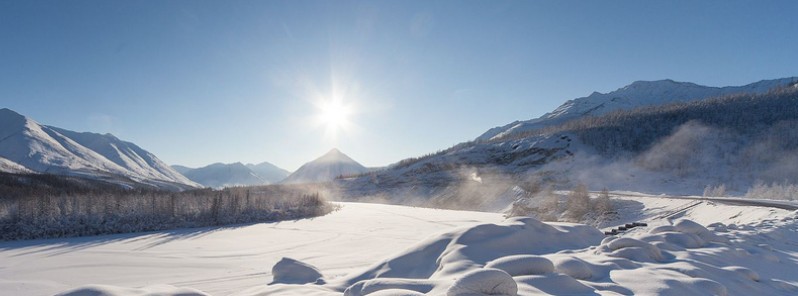
    Over the last decades, the stratospheric polar vortex has shifted towards more frequent weak states which can explain Eurasian cooling trends in boreal winter in the era of Arctic amplification. When the strong winds that circle the Arctic slacken, cold polar air…