• Night sky guide for August 2016

    The peak of this year's Perseid meteor shower, one of the most prolific annual showers, will be in "outburst" mode on August 11 and 12, the first since 2009. This means that instead of the usual 80 Perseids per hour, the rate could top 150 or 200…
  • Night sky guide for July 2016

    July brings two meteor showers under relatively dark skies. Alpha Capricornids will reach their peak on July 26 with the maximum rate of around 5 per hour. A few days later, on July 29, the Delta Aquarid meteor shower will peak with up to 20 meteors per hour. The…

  • Night sky guide for June 2016

    On June 3, planet Saturn will be at its closest approach to Earth and its face will be fully illuminated by the Sun. It will be brighter than any other time of the year and visible all night long. The best time of the month to observe faint objects such as galaxies…

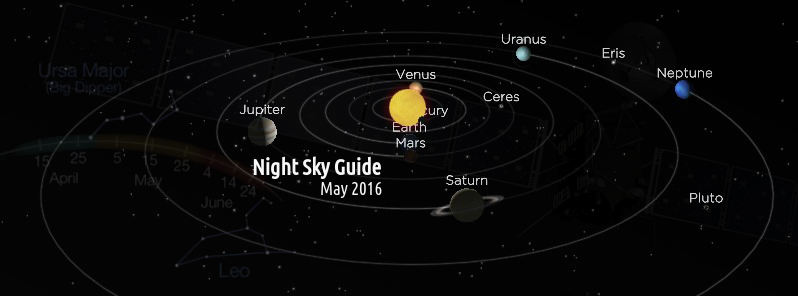
  • Night sky guide for May 2016

    May hosts an above average meteor shower – the Eta Aquarids – with its peak on the night of May 5 and the morning of May 6. This will also be the best time of the month to observe faint objects in the night sky because there is no moonlight to interfere. A rare…

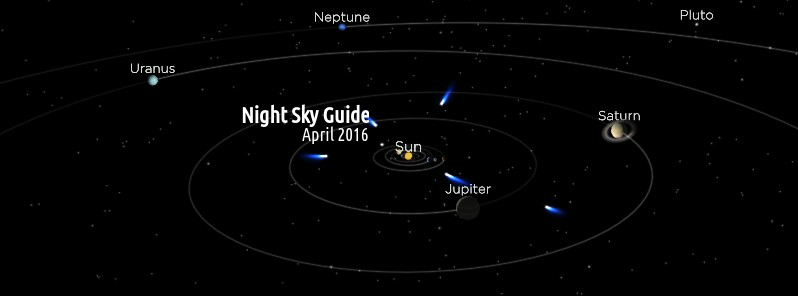
  • Night sky guide for April 2016

    April hosts two meteor showers, but only one major. The first – Virginid meteor shower – will reach its maximum rate of activity on April 12. The Moon will be 5 days old and will present minimal interference. The maximum rate of meteors expected to be visible from a…

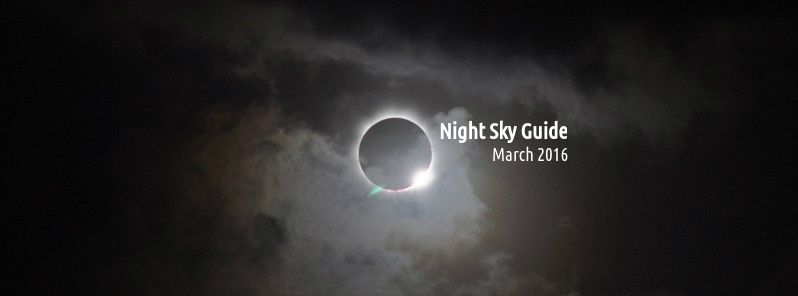
  • Night sky guide for March 2016

    There will be, at least, two special celestial events during March 2016 – total solar eclipse at 01:58 UTC on March 9 and penumbral lunar eclipse at 11:48 UTC on March 23. March Equinox, the first day of spring (vernal equinox) in the northern hemisphere and the…

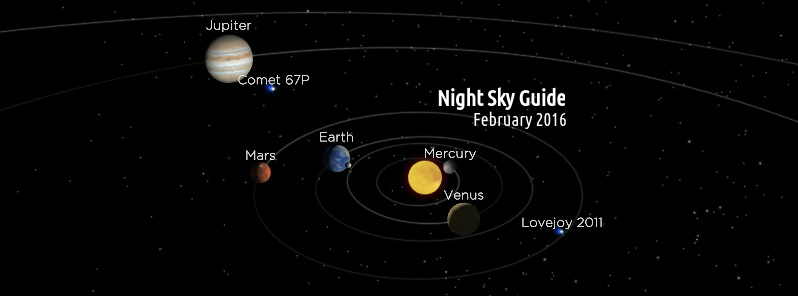
  • Night sky guide for February 2016

    February 2016 starts with the conjunction between the Moon and Mars. The pair will be located in the constellation Libra and visible to the naked eye or through a pair of binoculars on February 1. The best time of the month to observe faint objects such as galaxies…

  • Night sky guide for January 2016

    We start the year with our planet reaching perihelion – closest point to the Sun – which will happen at 22:49 UTC on January 2. At the time, Earth will be 146.6 million km (91 million miles) from the Sun. The first meteor shower of the year – Quadrantids – will…

  • Night sky guide for December 2015

    December 2015 will feature three meteor showers: the Geminids, the Puppid-Velids and the Ursids. The Geminid meteor shower is popularly known as the "king of meteor showers". This year, it is expected to produce up to 120 meteors per hour at its peak,…

  • Night sky guide for November 2015

    Out of two meteor showers scheduled for November – Taurids and Leonids – only the second one should offer a good show, with about 15 meteors per hour on November 17/18. All but the brightest Taurids, expected to peak on the night of November 5, will be blocked out…