
In February 2022, SpaceX launched 49 Starlink satellites into a solar storm so mild that forecasters rated it minor, and within days 38 of them had fallen back and burned up, because the storm had swollen the thin air they were flying through
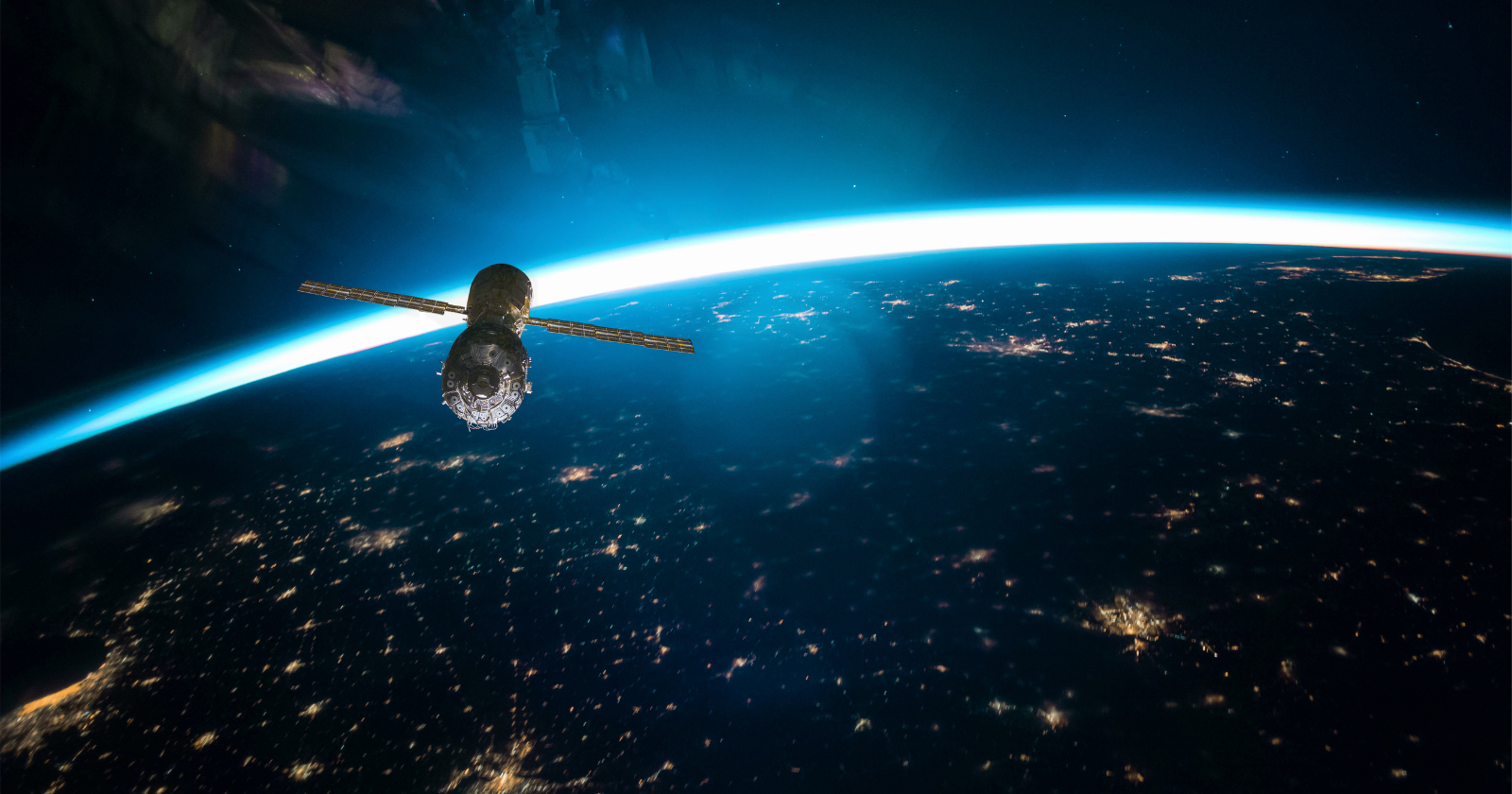
On the afternoon of February 3, 2022, a Falcon 9 rocket lifted off from Kennedy Space Center in Florida carrying 49 new Starlink internet satellites. The launch went smoothly, and the satellites were released into a low starting orbit, as planned.
A day later, the Sun’s activity changed everything. Within a week, most of those satellites were gone, burned up in Earth’s atmosphere. And the storm responsible was not a dramatic one.
A deliberately low starting orbit
SpaceX usually releases new Starlink satellites into a low orbit, dipping to about 210 kilometers, or roughly 130 miles, above Earth. From there, each satellite checks its systems and then uses its own thrusters to climb to its working orbit, which at the time was about 340 kilometers up.
The low starting point is a safety feature. Even at that height, there are still faint traces of air. They create a small amount of drag, which slowly pulls objects down. If a satellite fails its checks, drag drags it back into the atmosphere within weeks, where it burns up instead of becoming long-lived space junk.
That plan relies on drag staying predictable. In February 2022, it didn’t.
The Sun sends a modest storm
A couple of days before the launch, a burst of charged particles from the Sun, called a coronal mass ejection, reached Earth. It wasn’t a big one. As Earth passed through it, a series of geomagnetic storms developed.
Forecasters rate these storms on a scale from G1, minor, to G5, extreme. NOAA’s Space Weather Prediction Center had forecast moderate G2 conditions for February 2 and minor G1 conditions for the launch day itself. The storm that caught the satellites on February 4 was in the minor range.
Storms like this are common. They happen many times during each 11-year solar cycle, and the most noticeable effect for most people is a better chance of seeing the northern lights.
How a storm swells the air
Even a minor geomagnetic storm pours energy into Earth’s upper atmosphere. That energy heats the thin air high above us, and warm air expands upward.
As a result, more air molecules rise to the height where the new satellites were flying. SpaceX said onboard GPS data showed that atmospheric drag rose by up to 50 percent compared with earlier launches. Later scientific modeling by NOAA researchers suggested air density at those altitudes increased by roughly 50 to 125 percent.
For a satellite at 130 miles up, that’s a big change. It’s a little like trying to walk up a hill that suddenly becomes much steeper.
The satellites take cover, but can’t climb
SpaceX’s team tried to protect the satellites by putting them into a safe mode. In this position, each flat satellite flew edge-on, like a sheet of paper slicing through the air, to reduce drag as much as possible.
That bought some time, but it wasn’t enough. The added drag prevented most of the satellites from leaving safe mode and firing their thrusters to climb. Their orbits kept shrinking.
In the end, 38 of the 49 satellites re-entered the atmosphere, most within about a week of launch. People in Puerto Rico filmed bright streaks of light that tracking experts believe were some of them breaking up. SpaceX said the satellites were designed to burn up completely, so they posed no danger to people on the ground.
Why it surprised experts
The loss surprised many space weather scientists. Satellites had been affected by storms before, but rarely had so many been lost to such a mild one.
The key factor was timing and altitude. Satellites in higher orbits barely noticed the storm. But brand-new satellites in a very low parking orbit, with limited thrust and designed to ride out checks against normal drag, had almost no margin.
The event became a widely studied case in space weather research. It showed that even minor storms can matter for spacecraft flying in the lowest parts of space.
What changed afterward
SpaceX adjusted how it operates, including paying closer attention to space weather forecasts and adjusting its deployment approach. When a much stronger G5 storm, the most severe level, hit Earth in May 2024, the company reported that its satellites were under strain but the network held up.
The 2022 loss also highlighted a growing issue. With thousands of satellites now in low Earth orbit and more launching each year, accurate space weather forecasting has become a practical concern, not just a scientific one.
For people on the ground, the lesson is simpler. When forecasters announce a geomagnetic storm, it’s worth looking up if you live far enough north or south to see auroras. Those same storms are quietly changing the air high above, where satellites have to fly through it.

The Watchers Staff covers earthquakes, volcanoes, severe weather, space weather and other natural events. Published since 2011, The Watchers reports on a changing planet and the science behind it.
Published in the last 24 hours
- On a Friday night in October 1992, a fireball over the eastern US was filmed by fans at high school football games before it punched through the trunk of a teenager’s $400 Chevy Malibu in Peekskill, New York, and she sold the wrecked car for $10,000 Epicenter
- Green Lake, Hawaii's largest freshwater lake, was gone by the afternoon of June 2, 2018, after lava from Kilauea filled its basin. The water was about 20 feet deep, not the 200 feet often claimed. Epicenter
- Flying glass cut a teacher in Russia but none of her 44 pupils, because when a meteor flashed across the sky in 2013, she told them to get under their desks Epicenter
- A South Dakota man put the widest and heaviest hailstone on US record in his freezer, and a power cut melted part of it before NOAA measured it at 8 inches across and nearly 2 pounds in 2010 Epicenter
