
Britain appointed a Minister for Drought in August 1976, and it rained so much afterward that by November MPs were calling him the Minister of Flood
Denis Howell was given responsibility for Britain’s drought response in August 1976. By November 16, after two exceptionally wet months, MP Arthur Jones was calling him “The Minister of Flood” in the House of Commons. The nickname captured a dramatic weather reversal, while parts of the water system were still recovering.
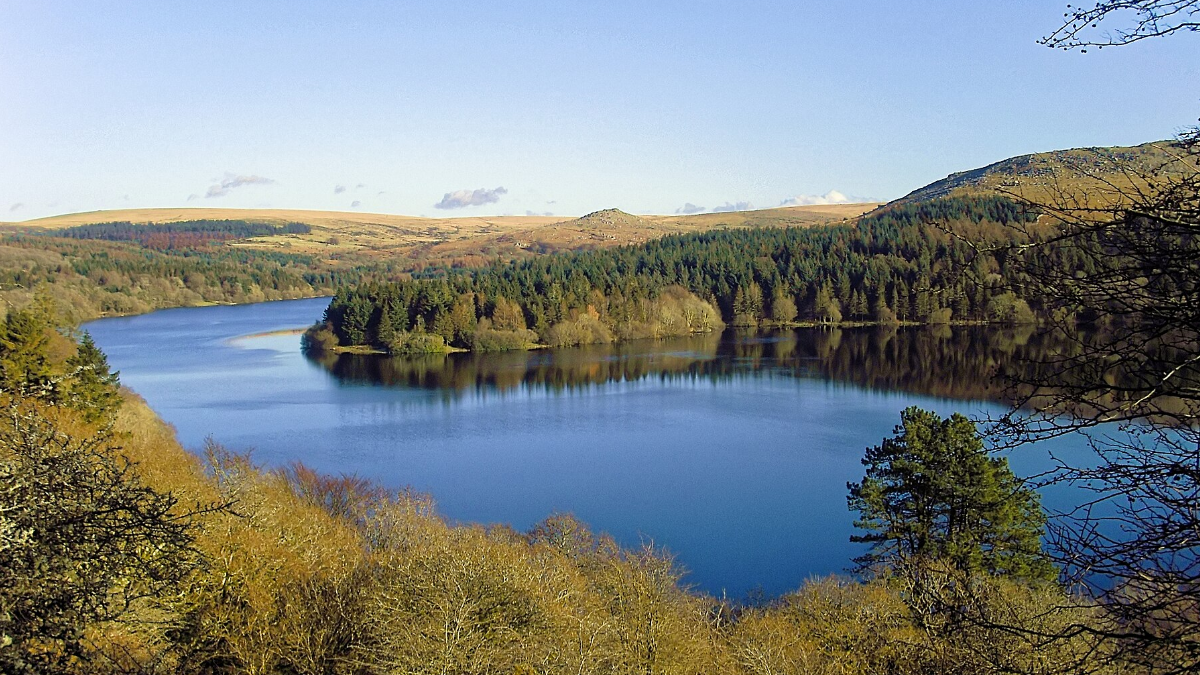
A view of Burrator reservoir on Dartmoor, England on a cold winter's day. Credit: Jolly Janner via Wikimedia Commons
The exchange came during Howell’s statement on water resources on November 16, 1976. He told the House of Commons that very heavy rainfall over the previous two months had greatly improved supplies: rationing had stopped, and most water authorities had relaxed or removed restrictions on nonessential uses.
There was still an emergency to learn from. Howell announced a review of rationing methods and warned that groundwater sources remained depleted, even as the return of rain gave MPs an opening for jokes.
Sixteen dry months preceded the appointment
The shortage had developed long before Howell received the special brief. The main dry period extended from May 1975 to August 1976, spanning two summers and a winter when water reserves would normally have been replenished.
The Met Office’s 2026 review describes a persistent blocking high-pressure pattern that kept hot, dry conditions over Britain for weeks. Earlier rainfall shortages had already reduced soil moisture and water reserves; the sustained summer heat increased the pressure on those supplies.
The temperature reached 35.9°C (96.6°F) at Cheltenham on July 3. Parts of southwestern England went 45 days without rain, according to the Royal Meteorological Society’s retrospective. Reservoirs fell, crops suffered, and water-saving measures became part of daily life.
The drought brief came with emergency powers

A Center for Ecology & Hydrology review dates Howell’s additional responsibility to August 24, 1976. He was already a minister of state in the Department of the Environment, and the government was led by Prime Minister James Callaghan.
Emergency legislation had already been debated earlier that month. During the Drought Bill’s second reading on August 4, ministers described powers to restrict nonessential water uses and, where necessary, impose rationing to protect basic household supplies, hospitals, industry and agriculture.
The practical choices included communal standpipes in streets and rota cuts, which interrupted normal piped supplies for scheduled periods. These measures affected how people obtained water, rather than simply asking them to use a little less.
The review records nightly shutoffs affecting more than a million consumers in southeastern Wales from August 9. On September 15, standpipes were brought into use to serve about 80 000 people at approximately 150 centers in Devon.
Two wet months reversed the weather
The atmospheric circulation eventually changed, and sustained wet weather followed in September and October. The hydrological review links the heavy autumn rain to that circulation change and unusually warm seas supplying moisture and heat to the atmosphere.
The Met Office’s HadUKP dataset, which includes the long-running England and Wales precipitation series, records 150.8 mm (5.94 inches) in September 1976 and 154.3 mm (6.07 inches) in October. Together, those two months received 305.1 mm (12.01 inches), compared with just 74.0 mm (2.91 inches) across June, July and August.
These are regional averages derived from rainfall stations, not measurements from one town or totals for the whole United Kingdom. The current monthly series begins in 1766. Calculating September–October totals from it places 1976 second among years up to 1976, behind 1903.
The contemporary parliamentary figures also show the scale of the change. On October 13, Howell reported a provisional September total of 158 mm (6.22 inches) for England and Wales, or 208% of the 1916–1950 September average. That provisional assessment is a separate figure from the HadUKP series.
The Commons supplied a different title

By November 16, the reversal had reached the parliamentary record. Arthur Jones told Howell that, in some parts of the country, he was now called “The Minister of Flood.” Jones also acknowledged that Howell was not claiming to have influenced the weather.
Another MP, Lipton, asked: “Has it been established whether standpipes work under water?” Howell replied: “I do not think that they have been tried.”
The humor concerned the sudden change in the weather. Hansard still identified Howell by his substantive position as minister of state in the Department of the Environment. The flood nickname did not signify the creation of another ministerial office.
The statement also recorded the practical response to the drought. Howell said about 150 orders had been granted under the Drought Act: 110 to augment water resources and 40 to limit water use. He credited emergency works, public and industrial savings, and the Act’s powers with helping the country through the shortage.
Water supplies recovered at different speeds
The change from drought to heavy rain was rapid, but the improvement in water supplies took longer. The hydrological review records normal supplies returning to North Devon on October 6, the same day all restrictions were lifted in southeastern Wales.
Groundwater recovery depended on rainfall penetrating the soil and replenishing underground aquifers. Soil moisture deficits first had to be overcome, and different aquifers responded at different speeds. A wet landscape did not necessarily mean that every underground reserve had recovered.
Britain experienced another abrupt reversal in 2012. The Watchers reported drought restrictions that spring and, later, exceptionally heavy June rainfall. The Royal Meteorological Society describes the wider 2012 transition from water shortages to repeated flooding.
In November 1976, Howell was already looking beyond the rain. He commissioned a review of standpipes, rota cuts and water-supply planning, while warning that seriously depleted groundwater sources would take months to recover. The immediate rationing emergency had eased; the next task was to prepare supplies for another dry winter and summer.
References
1 Water Resources — UK Parliament, Hansard — November 16, 1976 — HC Deb, vol. 919, cols. 1112–1117.
2 Rodda, J. C., and Marsh, T. J. The 1975–76 Drought: A Contemporary and Retrospective Review — Center for Ecology & Hydrology — 2011.
3 Met Office marks 50 years since the legendary summer of 1976 — Met Office — June 1, 2026.
4 Recalling the 1976 drought: 40 years on — Royal Meteorological Society — June 21, 2016.
5 History of James Callaghan — UK Government — undated biography; accessed November 11, 2026.
6 Drought Bill [Lords] — UK Parliament, Hansard — August 4, 1976 — HC Deb, vol. 916.
7 HadUKP — UK regional precipitation series — Met Office Hadley Center — monthly England and Wales totals; accessed November 11, 2026. Comparisons calculated from the published monthly values.
8 Water Supply — UK Parliament, Hansard — October 13, 1976 — HC Deb, vol. 917, cols. 117–119W.
10 United Kingdom experienced wettest June in recorded history — The Watchers — July 4, 2012.

Rishav Kothari is Editor-in-Chief of The Watchers, where he runs the newsroom and covers earthquakes, volcanoes, severe weather and space weather.
Published in the last 24 hours
- In April 2014, golden-winged warblers in the mountains of Tennessee, songbirds weighing about as much as four dimes, fled their breeding grounds a day or two before a tornado outbreak and flew hundreds of miles south, while the scientists tracking them sheltered in a Waffle House Epicenter
- After record Nordic heatwave, Swedish researchers to recreate indoor heat to study older adults Epicenter
- San Juan River cuts through 300-million-year-old rocks while retaining its winding course in Utah Epicenter
- LOFAR's deepest low-frequency radio images reveal hidden structure in distant galaxies Epicenter
