• Curiosity rover finds active, ancient organic chemistry on Mars

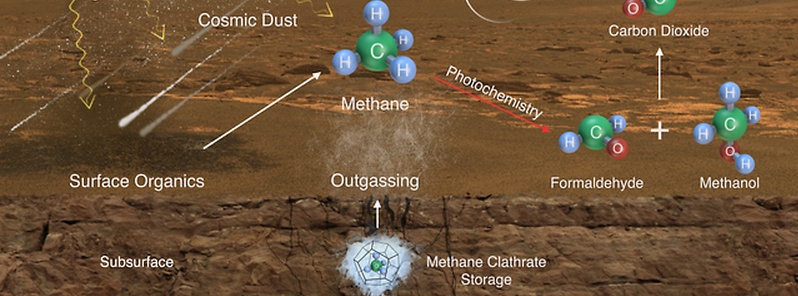
    NASA's Mars Curiosity rover has measured a tenfold spike in methane, an organic chemical, in the atmosphere around it and detected other organic molecules in a rock-powder sample collected by the robotic laboratory’s drill."This temporary increase in meth
  • New Horizons wakes up for historic Pluto encounter

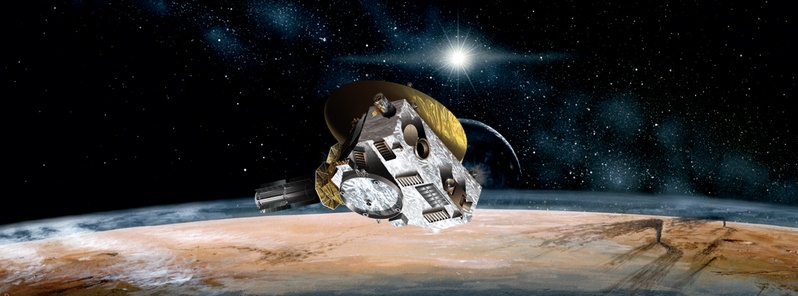
    New Horizons woke up from hibernation on December 6, 2014 after a 4.8 billion km voyage (3 billion miles) and almost nine years after launch. The spacecraft is now preparing for a six-month encounter with Pluto that begins in January 2015. This mission will complete

  • NASA’s new Orion spacecraft completes first spaceflight test

    NASA marked a major milestone today on its journey to Mars as the Orion spacecraft completed its first voyage to space, traveling farther than any spacecraft designed for astronauts has been in more than 40 years.“Today’s flight test of Orion is a huge step

  • High-resolution geological map of asteroid Vesta published

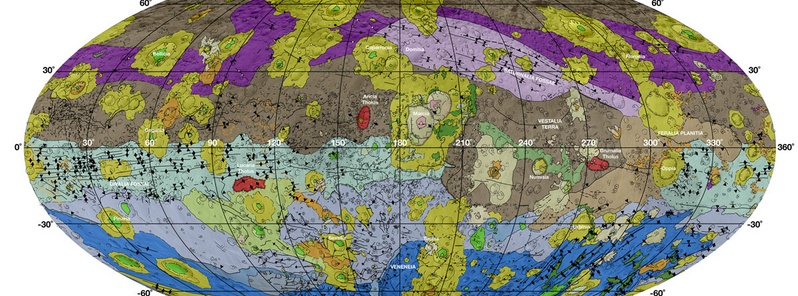
    Images from NASA's Dawn Mission have been used to create a series of high-resolution geological maps of the large asteroid Vesta, revealing the variety of surface features in unprecedented detail. These maps are included with a series of 11 scientific papers publish

  • Rocket experiment redefines what scientists think of as galaxies

    NASA's sounding rocket experiment has detected a surprising surplus of infrared light in the dark space between galaxies, a diffuse cosmic glow as bright as all known galaxies combined. The glow is thought to be from orphaned stars flung out of galaxies. The finding

  • NuSTAR discovers first ultraluminous pulsar, impossibly bright dead star

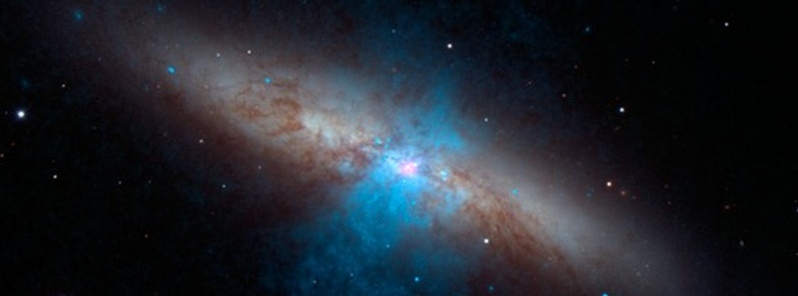
    Astronomers working with NASA's Nuclear Spectroscopic Telescope Array (NuSTAR) have found a pulsating dead star beaming with the energy of about 10 million suns. The object, previously thought to be a black hole because it is so powerful, is in fact a pulsar – the

  • Smallest exoplanet found to have water vapour

    The smallest exoplanet (about the size of Neptune) HAT-P-11b have been discovered to have clear skies and steamy water vapors as observed by astronomers using data from three of NASA's space telescopes – Hubble, Spitzer and Kepler.John Grunsfeld, assistant administr

  • MAVEN returns its first Mars observations

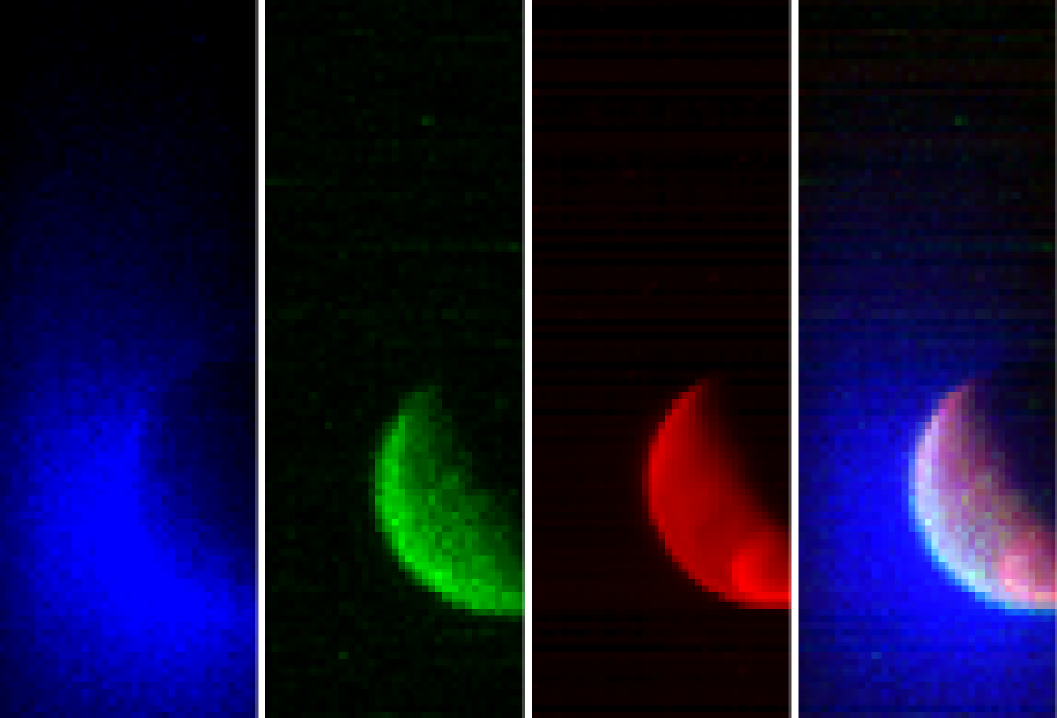
    Just after arrival, NASA’s Mars Atmosphere and Volatile Evolution (MAVEN), the first spacecraft sent to explore the tenuous upper atmosphere of Mars, has started working on it's mission. Within 24 hours of being placed in the Red Planet's orbit, the spacec