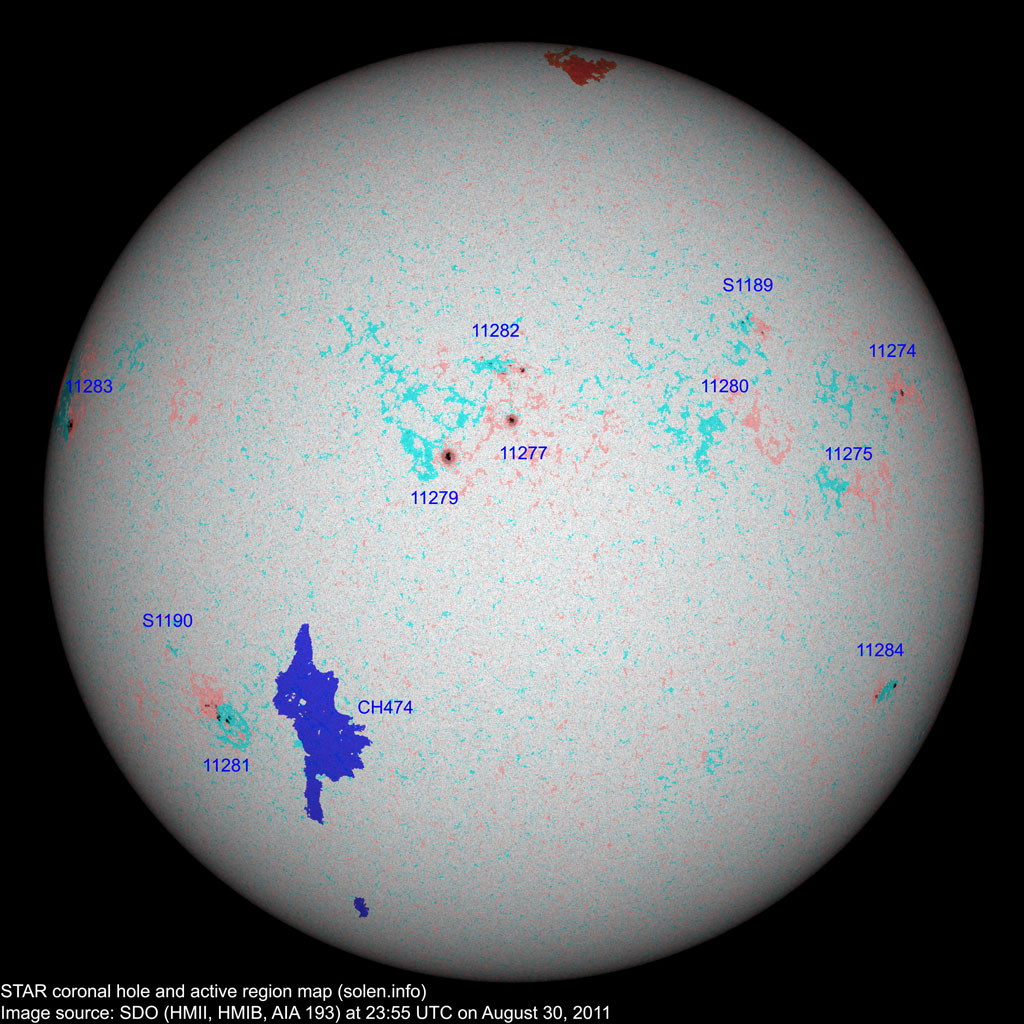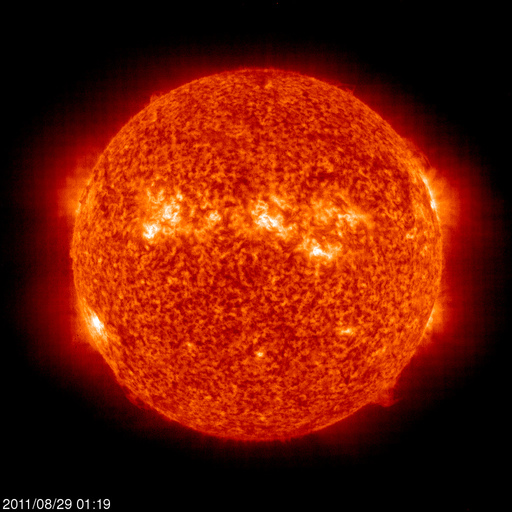
• Several sunspots have popped up around the visible solar disk

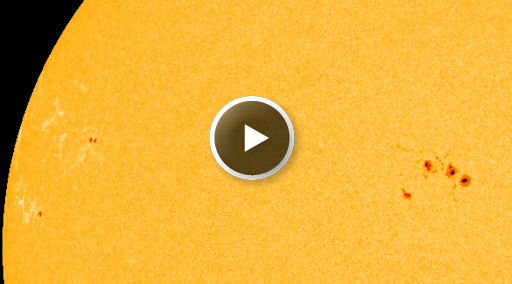
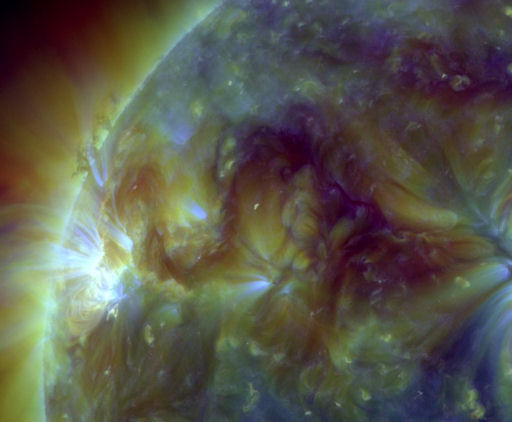
    Sunspots are emerging at several locations around the solar disk, peppering the Earth-side of the sun with active regions. Of particular interest is fast-growing sunspot 1282, shown here in an August 31st snapshot from NASA’s Solar Dynamics Observatory:AR1282 has

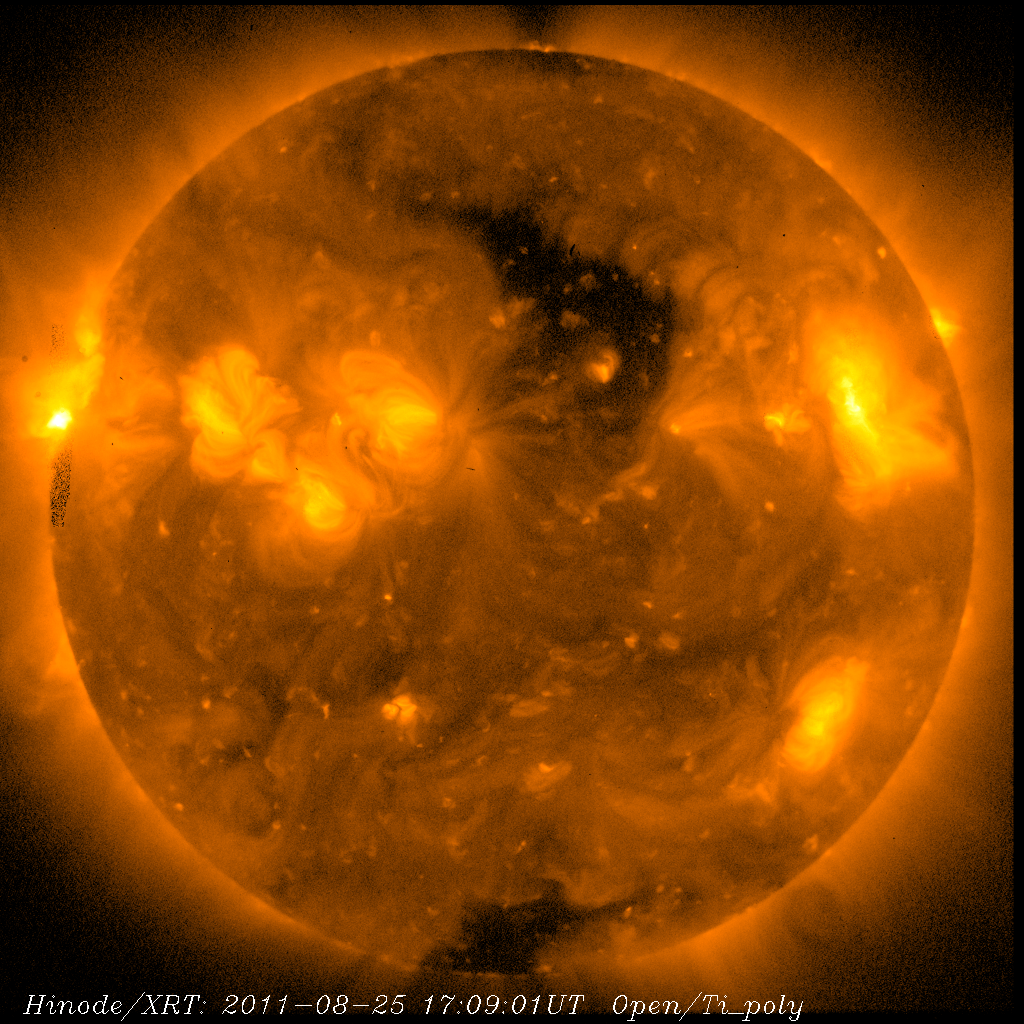
  • Expected impact of an incoming solar wind stream

    NOAA forecasters estimate a 25% chance of polar geomagnetic activity today in response to the expected impact of an incoming solar wind stream. Solar activity is at very low levels and there is currently no chance for strong solar flares on the earth facing side of…

  • A solar wind stream hit Earth’s magnetic field

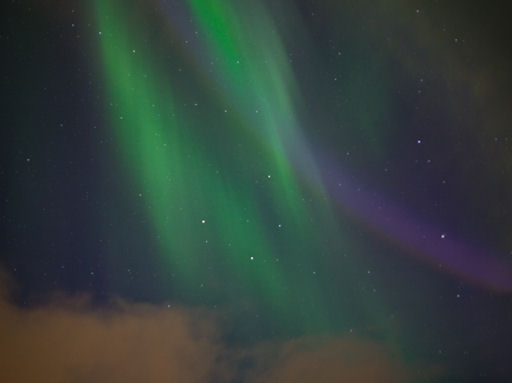
    A solar wind stream hit Earth's magnetic field during the early hours of August 24th, sparking geomagnetic activity around the Arctic Circle. "Bright, fast-moving auroras lit up the sky just after midnight," reports Sean M. Scully, who sends this picture f

  • Sunspots 1271 and 1272 are growing again

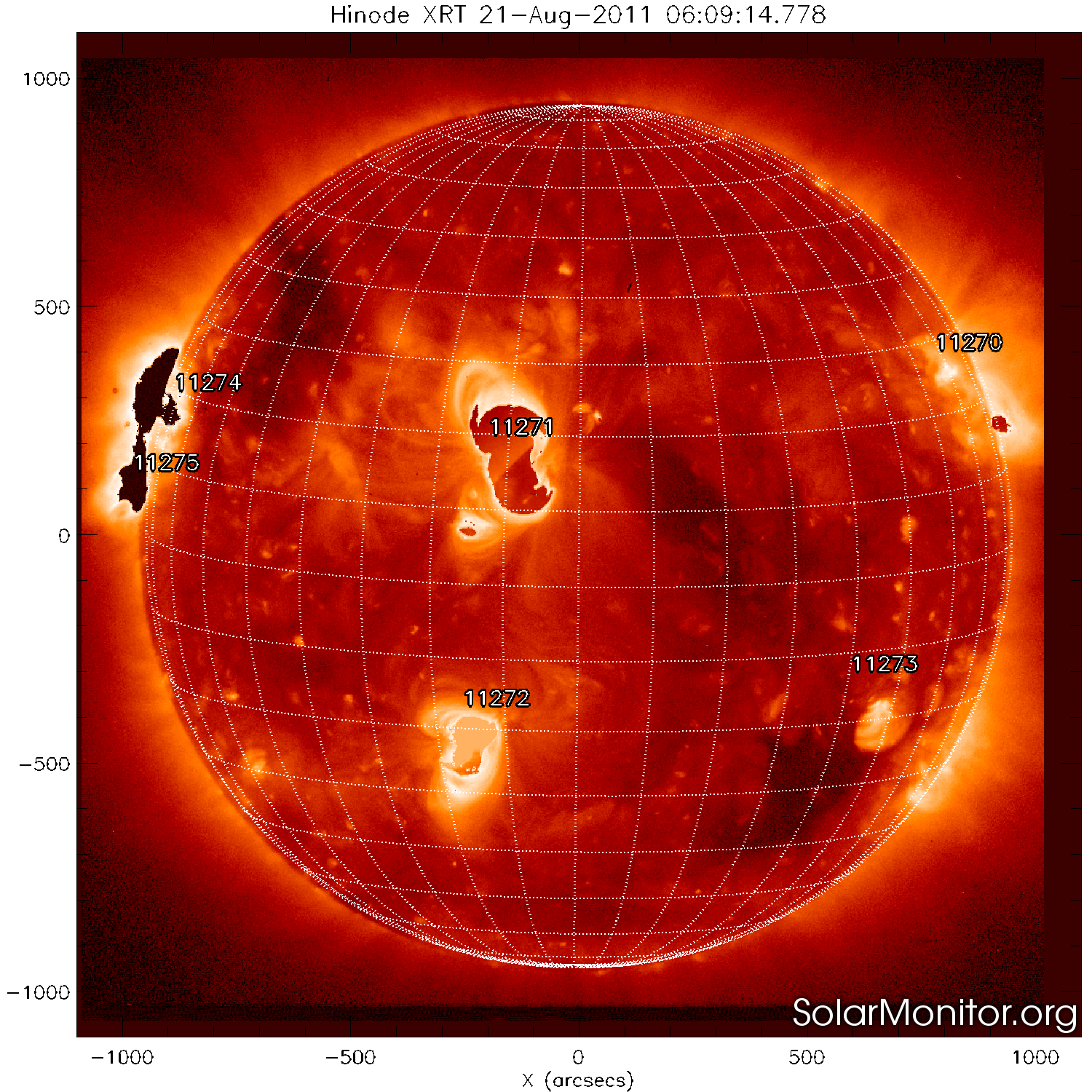
    After a weekend of quiet decay, sunspots 1271 and 1272 are growing again. Click on the image to view 24 hours of development:The increase in size has not yet translated into a significant increase in flares. Solar activity remains low, although this could change if

  • Double coronal hole spewing high speed stream toward Earth

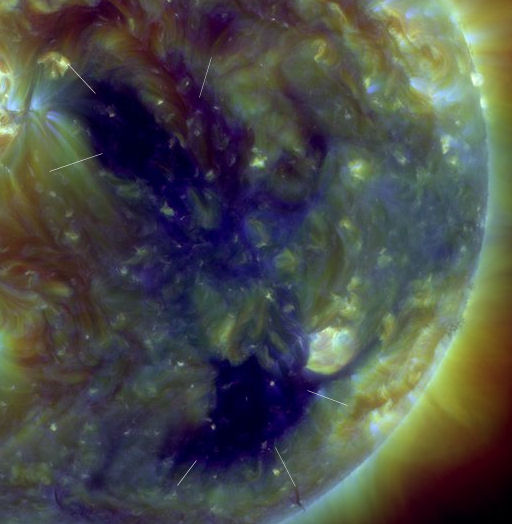
    A double-barreled hole has opened up in the sun’s atmosphere and it is spewing a split-stream of solar wind toward Earth. NASA’s Solar Dynamics Observatory captured this composite UV image of the double coronal hole on August 20th:Sky watchers should be alert for

  • Farside CME activity continues

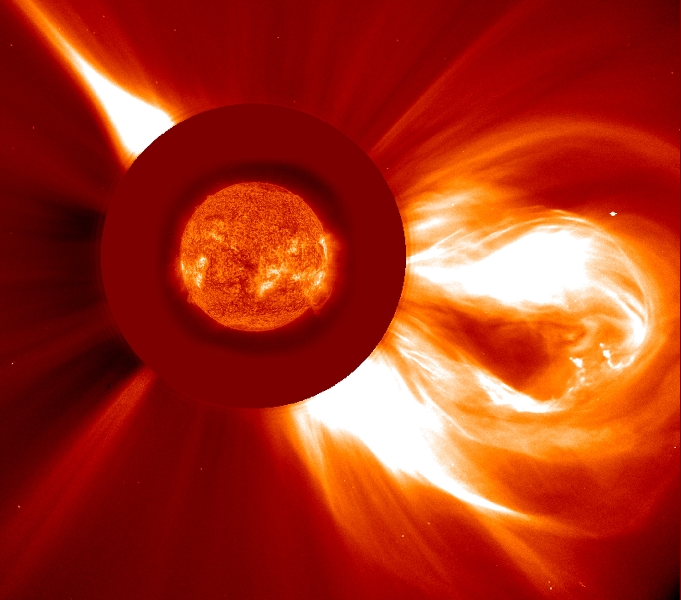
    Solar Activity continues at fairly low levels with only C-Class activity taking place in the past 24 hours. Sunspot 1271 is the largest visible area and it may pose a small threat for an M-Class event.Farside CME activity continues and you can view all of the action

  • Spacecraft sees solar storm engulf Earth

    For the first time, a spacecraft far from Earth has turned and watched a solar storm engulf our planet. The movie, released today during a NASA press conference, has galvanized solar physicists, who say it could lead to important advances in space weather forecasting.