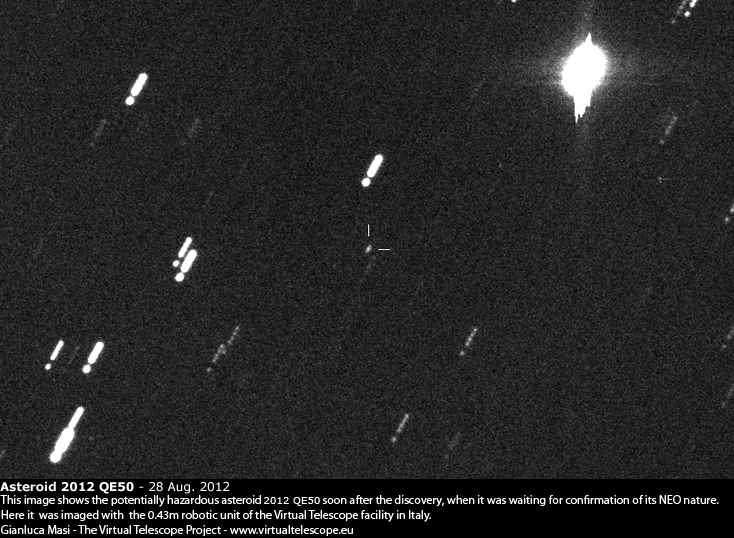
• PHA asteroid 2012 QE50 close encounter: October 8/9, 2012

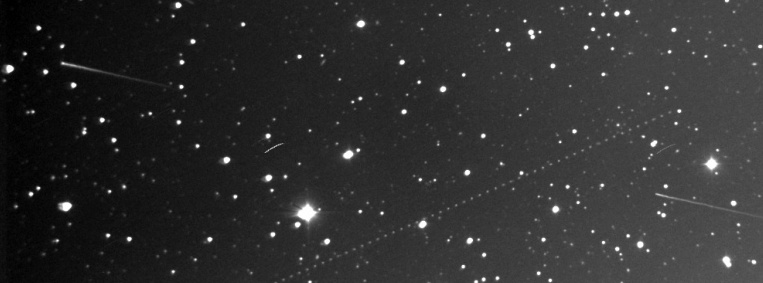
    The potentially hazardous asteroid 2012 QE50, discovered on 28 Aug. 2012 by the Catalina Sky Survey in Arizona, will approach our planet with a minimum distance of 31.5 lunar distances (13 millions of km) on October 9, 2012. There is no serious threat for our
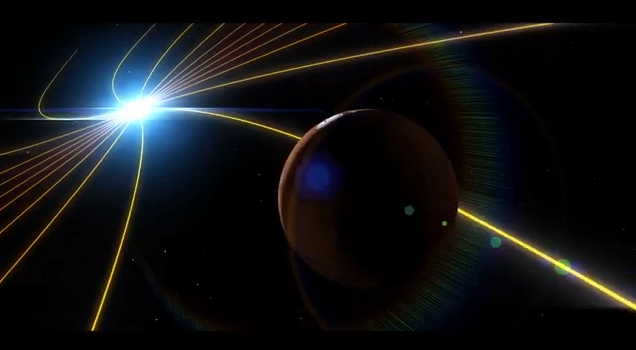
  • How Mars may have lost its atmosphere (video)

    Many scientists think that long ago, Mars once had a denser atmosphere, cloudy skies that supported liquid water flowing over the surface. For some reason, most of the Martian atmosphere was lost to space long ago and the thin wispy atmosphere no longer allows water

  • Mars express captures possible traces of water

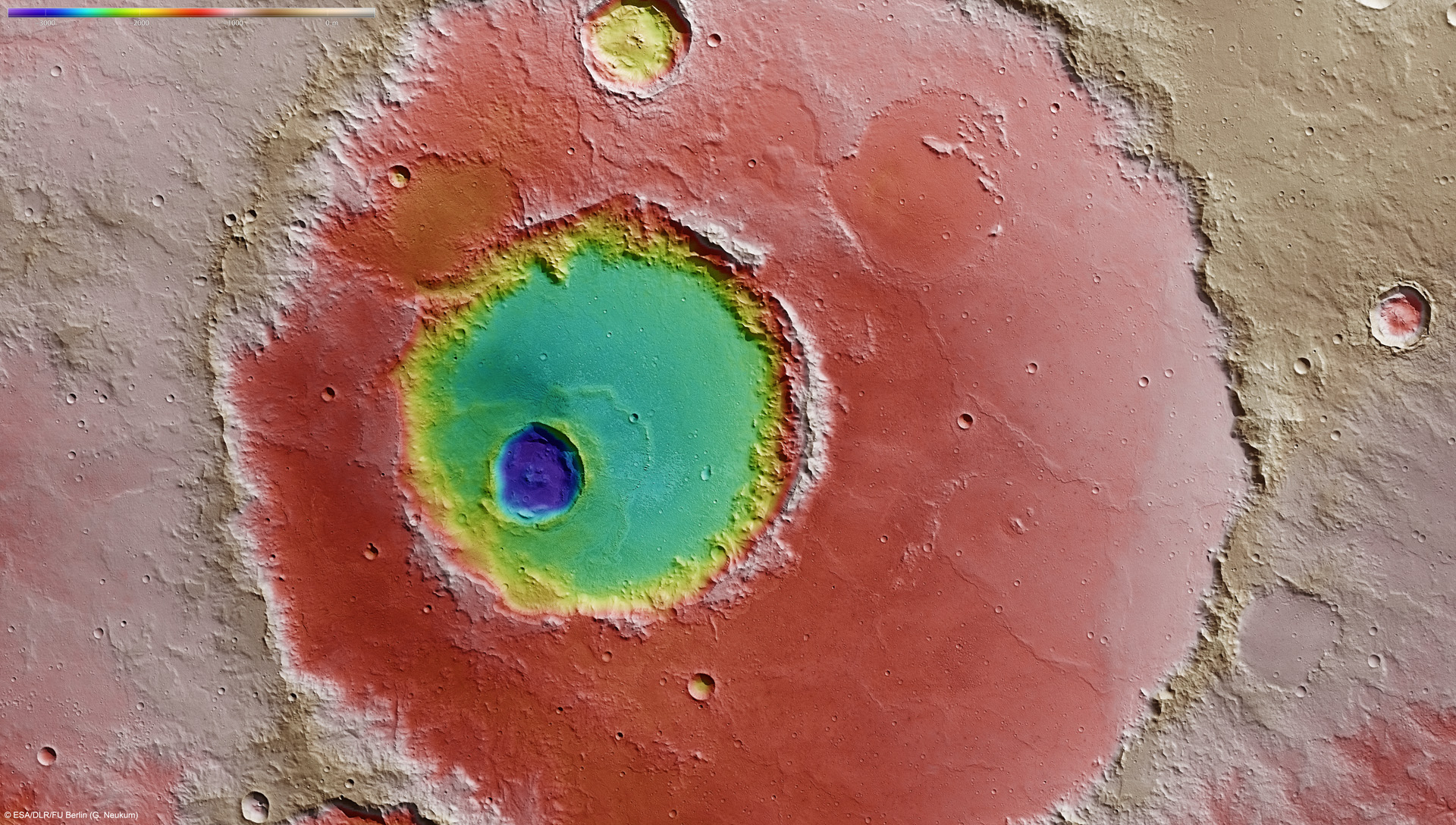
    ESA’s Mars Express spacecraft captured images of 120 km wide Hadley Crater which revealed there has been several subsequent impacts within the crater leading to formation of further craters, that are up to 2600 m deep than surrounding surface.  This observation has

  • When, where and how to spot Jupiter’s impact site

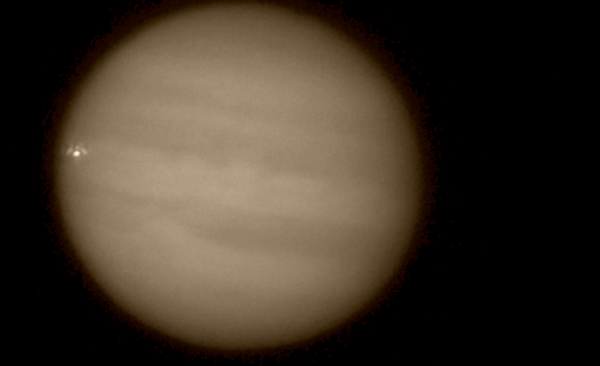
    All eyes are focused on Jupiter now. An asteroid or comet impacted Jupiter 36hrs ago, causing a flash of light. Caught on webcam by amateur astronomer George Hall in Dallas, Texas, the impact on Jupiter that occurred yesterday is currently the only video footage of…

  • PHA asteroids 2012 QG42 and 2012 QC8 to flyby Earth on September 14

    On September 14, 2012 a pair of asteroids will make close flyby near the Earth and Moon. A 300-meter space rock 2012 QG42 comes from the inner asteroid belt and it will pass 2.8 million km (7.4 lunar distances) from Earth. 1.1 km in diameter 2012 QC8 is coming from…

  • Jupiter hit by a fireball

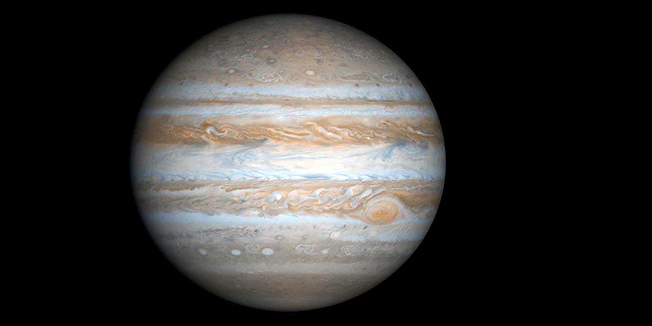
    There has been a visual sighting of an apparent fireball on Jupiter on September 10, 2012. The amateur who observed the flash was Dan Petersen, from Oregon, who made the observation at approximately 11:35 UTC on September 10. Petersen reported it to Richard Schmude…

  • Video of August 31 CME traveling through space

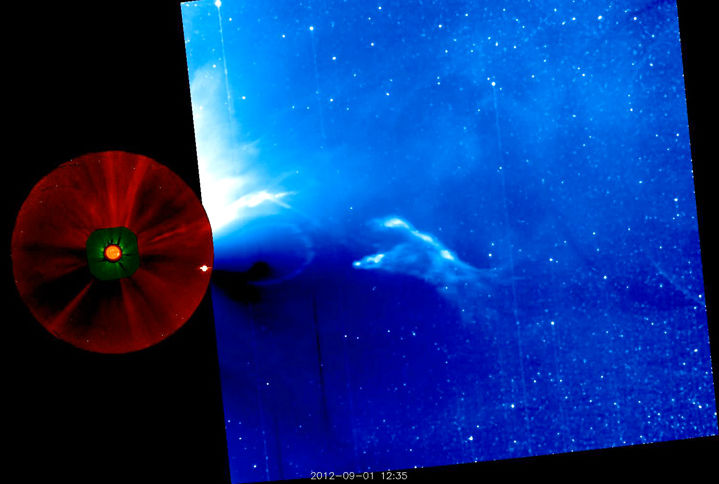
    Anyone who observes solar activity here and there surely noticed spectacular solar filament on August 31, 2012. We saw amazing images presented to us by solar observatories in space and now SOHO combined all recordings from EUVI, COR1, COR2 and HI1 that give us clear

  • Sunspot 1564 unleashed a long duration M1.4 solar flare

    Moderate long-duration solar flare measuring M1.4 took place at 17:59 UTC on September 8. It was generated around Sunspot 1564. Another strong flare was recorded about the same time around nearby Region 1562. It is possible that the X-ray flux recorded the cumulative

  • Sun turns black! Fear not, it’s only SDO eclipse season

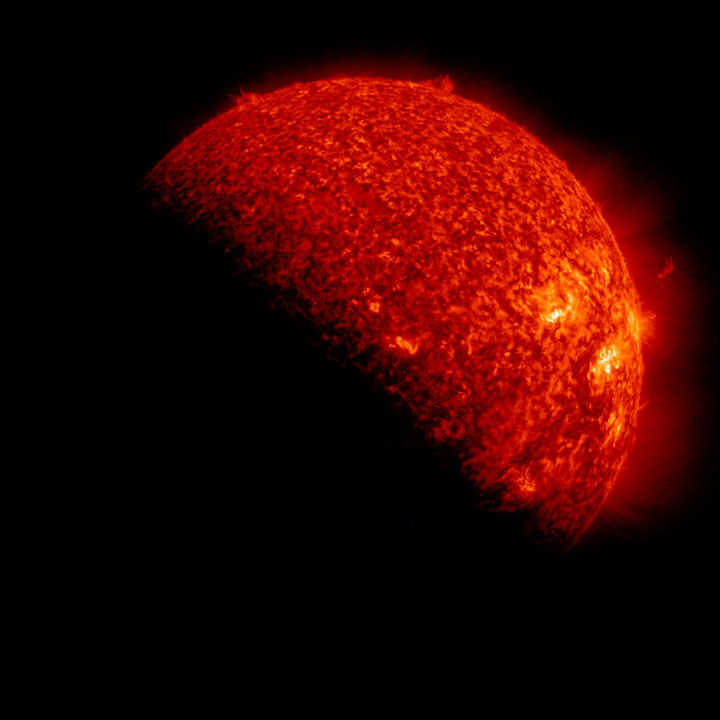
    NASA’s Solar Dynamics Observatory (SDO) has moved into its second eclipse season of 2012. September 6, 2012, marks the first day of the SDO Fall Eclipse Season. Today’s eclipse lasted 8 minutes and 15 seconds only.  Earth blocks SDO’s view of the sun for a period

  • Geomagnetic storming levels back to normal

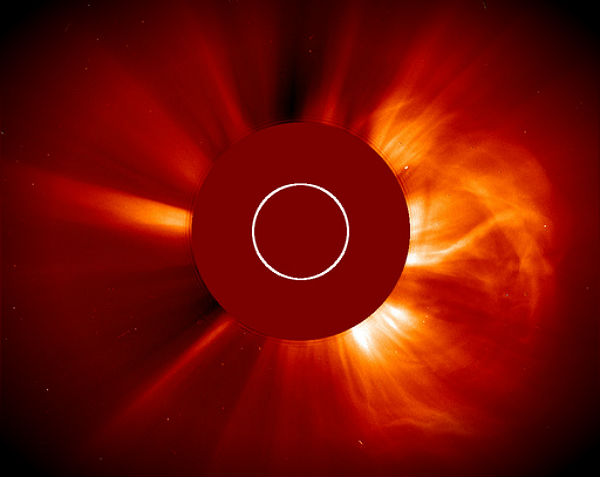
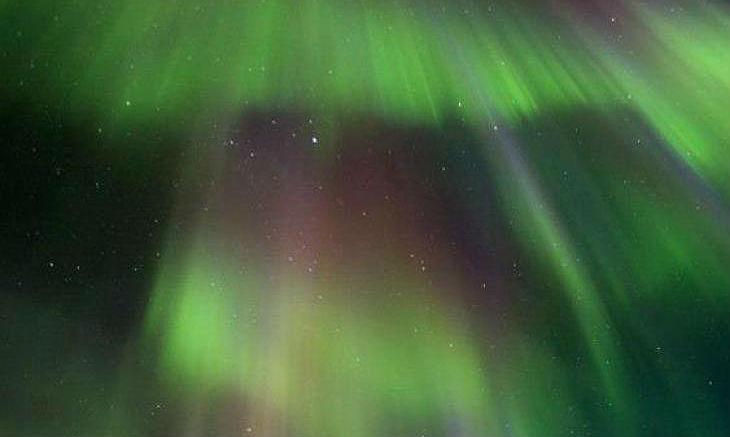
    Geomagnetic storming reached the G2 (Moderate) level at high latitudes again early today. Bright auroras could be seen around Arctic Circle. It was sparked by one of two coronal mass ejections observed on September 2.  Solar radiation storm levels have returned to