• Earth’s magnetic field showing signs of significant weakening

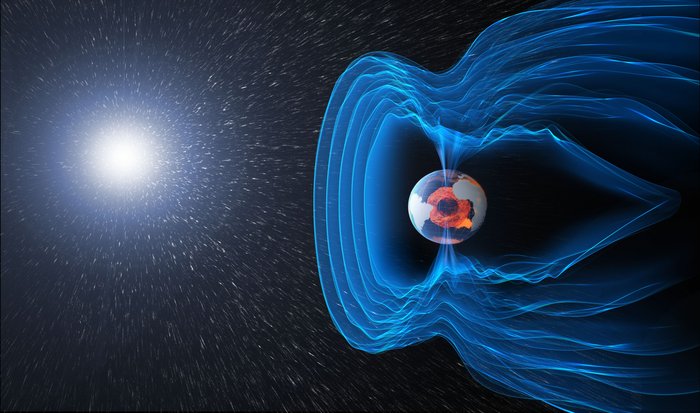
    ​The first set of high-resolution results from ESA’s three-satellite Swarm constellation reveals the most recent changes in the magnetic field that protects us from cosmic radiation and charged particles that bombard Earth. Magnetic field is in a permanent…

  • Lunar Reconnaissance Orbiter’s view of Tycho Central Peak

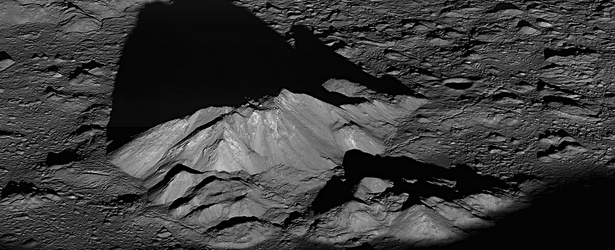
    Today, the Lunar Reconnaissance Orbiter (LRO) celebrates its fifth anniversary in space. LRO launched from Florida on June 18, 2009 and after a four-day journey, it successfully entered lunar orbit on June 23. In the succeeding five years, LRO has continued to shap

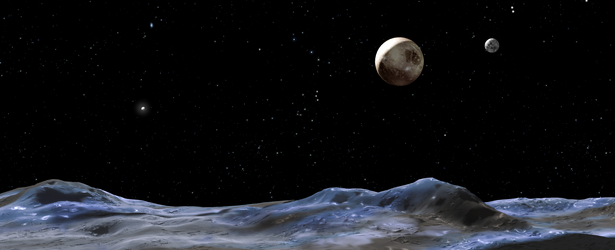
  • Cracks in Pluto’s moon could indicate it once had an underground ocean

    If the icy surface of Pluto's giant moon Charon is cracked, analysis of the fractures could reveal if its interior was warm, perhaps warm enough to have maintained a subterranean ocean of liquid water, according to a new NASA-funded study.Pluto is an extremely dista

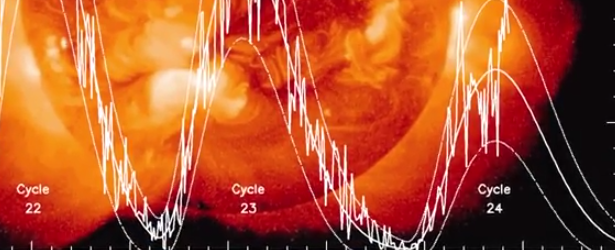
  • Solar mini-max

    NASA and NOAA agree: Solar Max has arrived, but this "mini Max" is not like any other solar maximum of the Space Age.Years ago, in 2008 and 2009 an eerie quiet descended on the sun.  Sunspot counts dropped to historically-low levels and solar flares cease

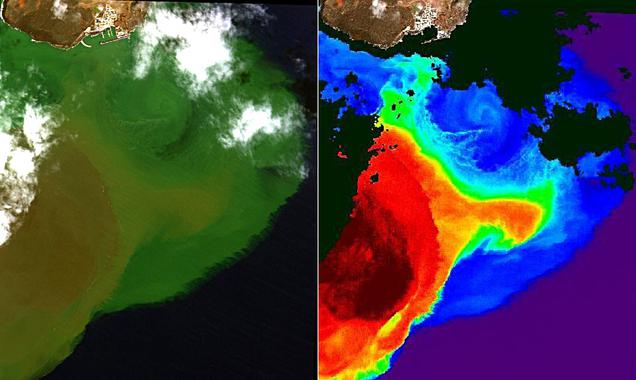
  • El Hierro volcano helps to improve algorithms used by satellites

    Information provided by satellites on the amount of chlorophyll-A and the roughness of the sea following the eruption of the underwater volcano off the island of El Hierro (Spain) did not coincide with the actual data collected in situ by vessels carrying

  • Watch near-Earth asteroid 2014 KH39 close fly-by today

    A 22 meters wide asteroid named "2014 KH39" will make a very close approach with the Earth on June 3, 2014, reaching a minimum distance of less than 440 000 km (1.14 lunar distances, 438 460 miles). The closest approach is expected at 20:07 UTC today.This is a