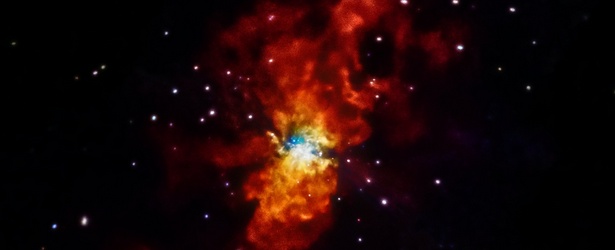
• Insight into one of the closest supernovas discovered in decades

    On January 21, 2014, astronomers around the world witnessed a supernova soon after it exploded in the Messier 82, or M82, galaxy. It is one of the closest supernovas discovered in decades. Telescopes across the globe and in space turned their at

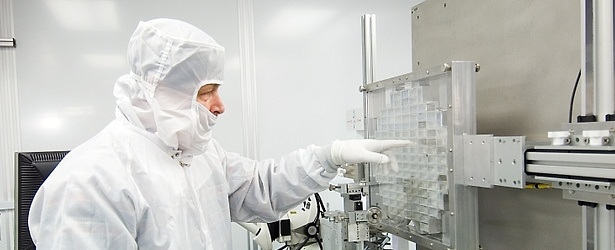
  • Stardust’s payload holds first potential interstellar space particles

    A team of scientists has been combing through the payload of NASA's Stardust spacecraft since it returned to Earth in 2006. They found seven rare, microscopic interstellar dust particles, that most likely came from outside of our solar system. If

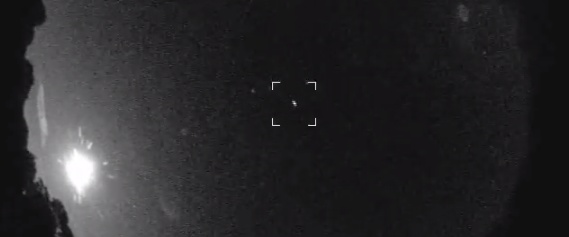
  • The sky is full of Perseids

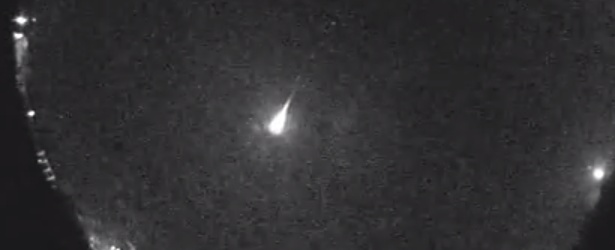
    This video is a compilation of Perseid meteors seen by the NASA All Sky Fireball Network on the night of August 12-13, 2014. Even if you missed the peak show last night there is still time, just head out when it gets dark and enjoy. The rates are sharply

  • Colliding atmospheres – Mars vs Comet Siding Spring

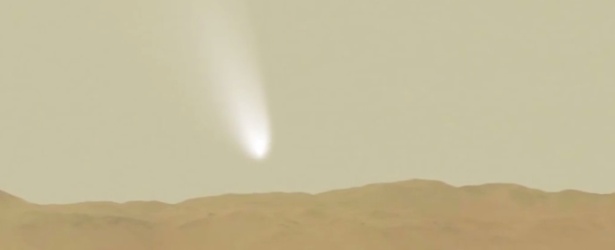
    It's a known fact that planets have atmospheres, but the same can't be said for comets. The atmosphere of a comet, called its "coma," is made of gas and dust that spew out of the sun-warmed nucleus and it's typically wider than Jupiter.La

  • Observations suggest frequent massive eruptions on Jupiter’s moon Io

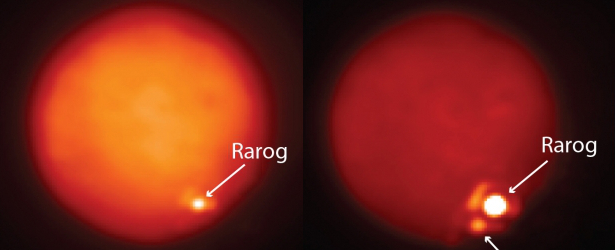
    Observations made using Keck and Gemini observatories, Hawaii, revealed three massive volcanic eruptions on Jupiter's moon Io within a two-week period in August 2013, leading astronomers to speculate that these presumed rare "outbursts" migh

  • Massive storm systems formed on planet Uranus

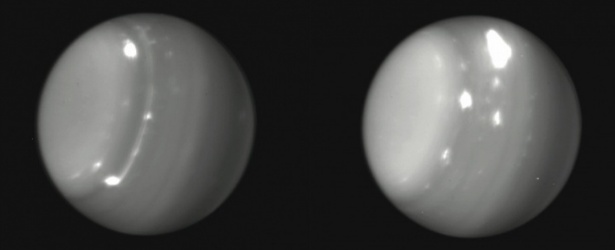
    As hurricanes threaten the Aloha State, astronomers working at W. M. Keck Observatory on the island of Hawaii were surprised by the appearance of gigantic swirling storm systems on the distant planet Uranus.During the Voyager encounter with Uranus in 1986, only a scant

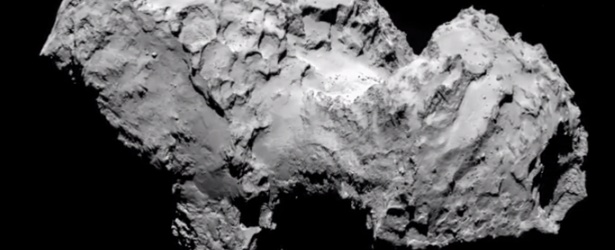
  • Comet 67P too hot to be covered in ice

    ESA’s comet chaser Rosetta has made its first temperature measurements of its target comet, 67P/Churyumov–Gerasimenko, and found that it is too hot to be covered in ice and must instead have a dark, dusty crust.The observations of the comet we

  • Night sky guide for August 2014

    Late July and early August can be one of the best times of the year to observe meteors, weather permitted. This is because there are several minor meteor showers emanating from the adjacent constellations of Capricornus and Aquarius. However, the closest and the largest