• World’s first quantum communication satellite launched

    China has successfully launched the world's first quantum communication satellite – Quantum Experiments at Space Scale (QUESS) – from the Jiuquan Satellite Launch Center in northwestern Gobi Desert at 17:40 UTC on August 16, 2016 (01:40 local time on August 17)….

  • Space junk: Garbage circles above you

    Did you get an accurate weather report today? Watch television? Use a GPS? If so, give credit where credit is due: thank a satellite. These orbiting objects actually do even more, too. A few of their other jobs include creating maps, taking photos, providing global…

  • Venus’ early climate could have sustained life

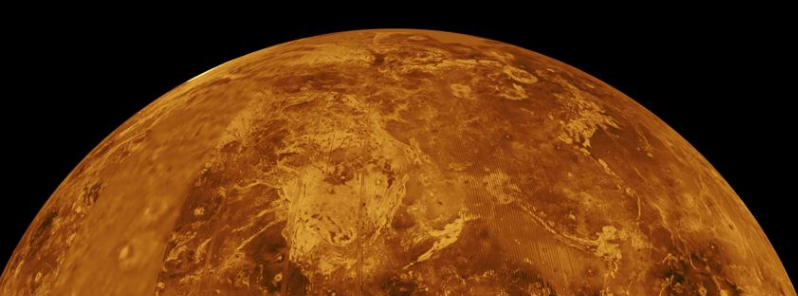
    New research, led by scientists from the NASA Goddard Institute for Space Studies, suggests Venus and Earth closely resembled each other during the early days of the Solar System, between one and two billion years ago. Venus, now the hottest planet in our Solar…

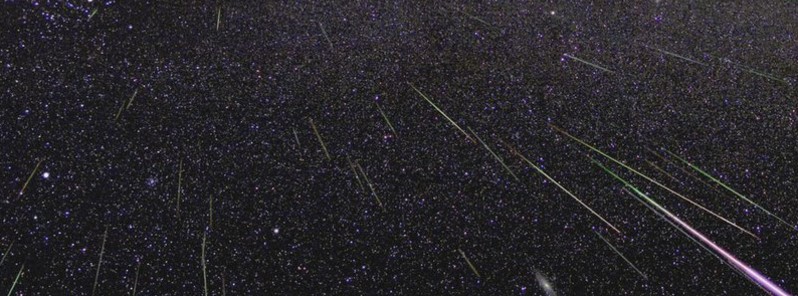
  • Perseids to peak in outburst mode on August 11 and 12, 2016

    The Perseid meteor shower is one of the most prolific annual meteor showers and this year it is expected to peak in outburst mode on the night of August 11 and the morning of August 12 (UTC). This means the shower has a great potential to be spectacular, with up to…

  • Bright Kreutz sungrazer plunges into the Sun

    A new Kreutz family sungrazing comet appeared in SOHO's LASCO C3 coronagraph imagery around 00:40 UTC on August 2, 2016. The comet made its closest approach to the Sun around 05:15 UTC on August 4, becoming one of SOHO's top 10 brightest sungrazers. Its…

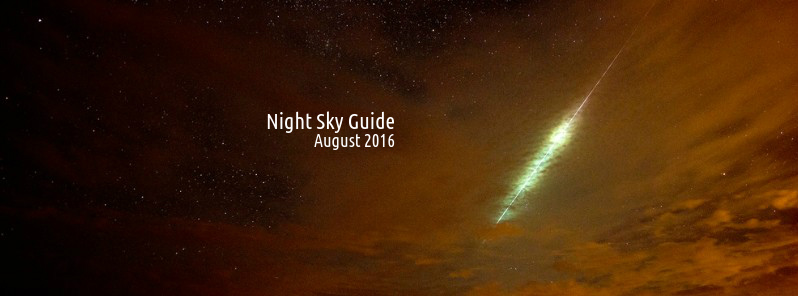
  • Night sky guide for August 2016

    The peak of this year's Perseid meteor shower, one of the most prolific annual showers, will be in "outburst" mode on August 11 and 12, the first since 2009. This means that instead of the usual 80 Perseids per hour, the rate could top 150 or 200…

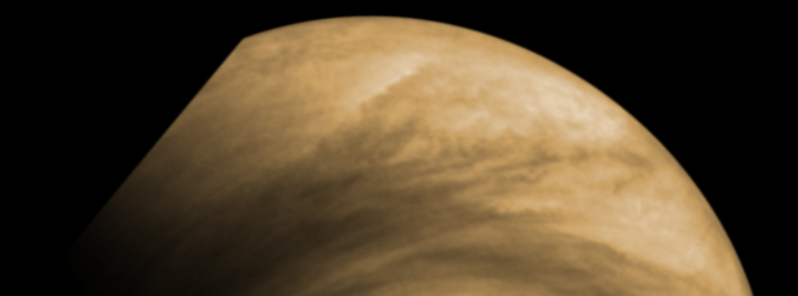
  • Venus weather patterns reveal planet’s surface

    New research, based on data from ESA's Venus Express satellite, for the first time reveals how the weather patterns on Venus are directly connected to the surface topography of the planet. Results suggest the Venus' thick cloud cover could offer further…