• Night sky guide for November 2017

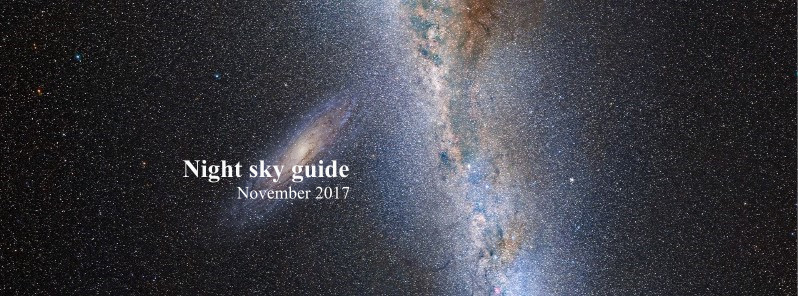
    November brings us peaks of 2 notable meteor showers, Northern Taurids (Class II) on November 11 and Leonids (Class I) on November 18. The Moon will be 24 days old during the peak of Taurids and 30 during Leonids, presenting minimal interference. We also have peaks…

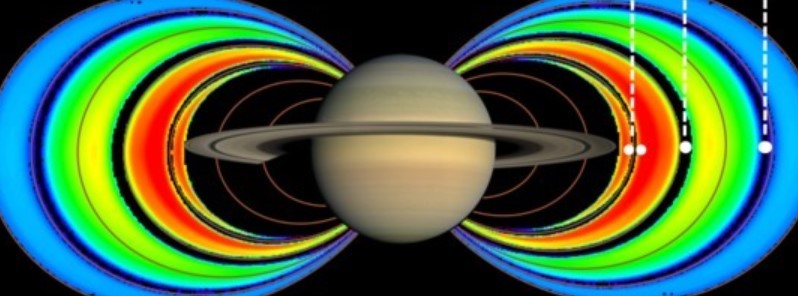
  • Saturn’s radiation belts: A stranger to the solar wind

    The high energy proton population in the environment of Saturn develops independently of the solar wind – and thus in a considerably different way from the one on Earth. The radiation belts of Earth and Saturn differ more strongly than previously assumed. In these…

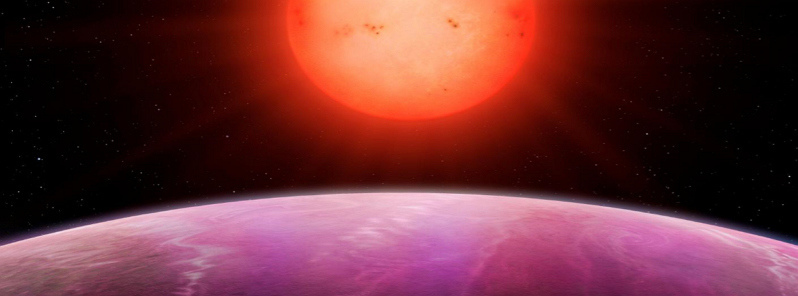
  • ‘Monster’ planet discovery challenges formation theory

    A giant planet – the existence of which was previously thought extremely unlikely – has been discovered by an international collaboration of astronomers, with the University of Warwick taking a leading role. New research, led by Dr. Daniel Bayliss and Professor…

  • Spitzer reveals ancient galaxies’ frenzied starmaking

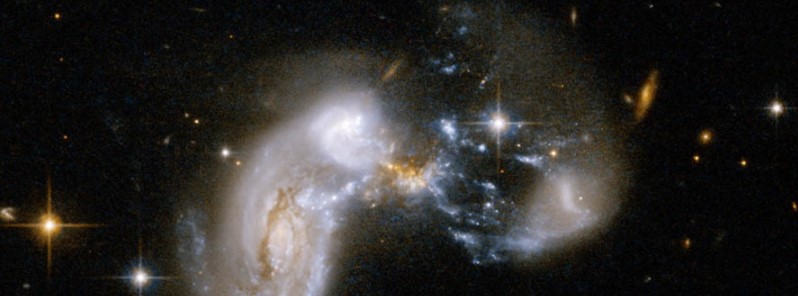
    A deep look back to the early universe by NASA's Spitzer Space Telescope has revealed a surprisingly rowdy bunch of galaxies. Within a large galaxy sample, Spitzer witnessed around 15% of galaxies undergoing bouts of extreme starmaking, called starbursts. The…

  • Surprisingly erratic X-ray auroras discovered at Jupiter

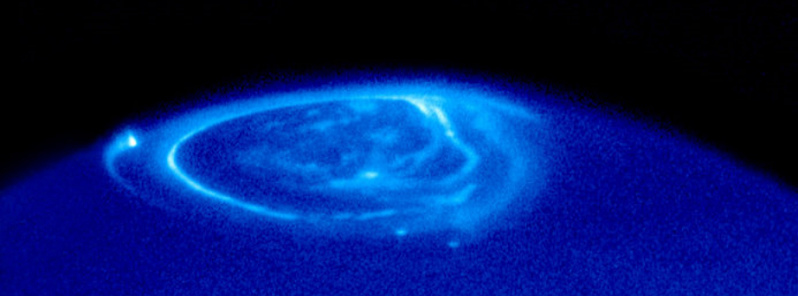
    ESA and NASA space telescopes have revealed that, unlike Earth’s polar lights, the intense auroras seen at Jupiter’s poles unexpectedly behave independently of one another. Auroras have been seen in many places, from planets and moons to stars, brown…

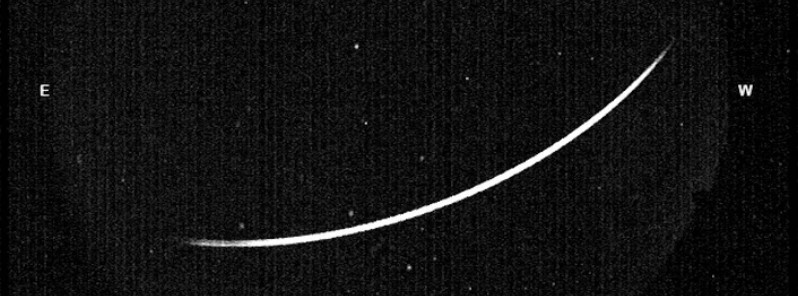
  • Asteroid 2017 UL6 to flyby Earth at 0.16 LD

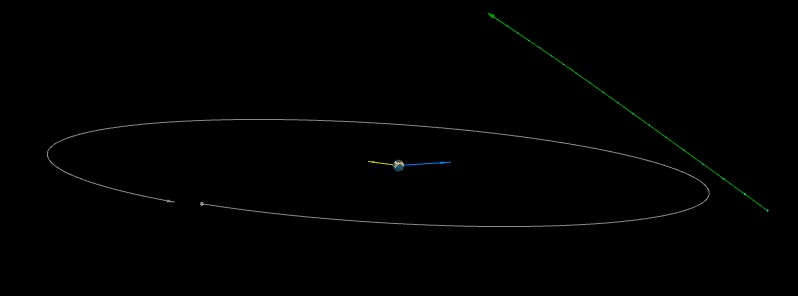
    A newly discovered, very small asteroid designated 2017 UL6 will flyby Earth at 0.16 LD or 0.00040 AU (~ 59 839 km / 37 182 miles) at 11:24 UTC on October 28, 2017. This is the 45th known asteroid to flyby Earth within 1 lunar distance since the start of the year…

  • Jets of ionospheric cold plasma discovered at the magnetopause

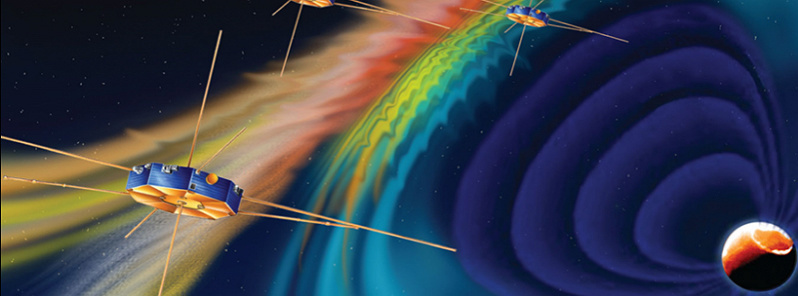
    The Sun and Earth both produce powerful magnetic fields, and their intersection develops a complex system of physics that determines the space weather experienced by our planet. The solar wind – a constant stream of charged particles (plasma) emitted from the Sun -…

  • Sentinel-1 sees through hurricanes, helping predict their paths

    This year’s Atlantic hurricane season has been a harsh reminder of the grief and devastation brought by these vast storms. Imaging the top of hurricanes from space is nothing new, but the Sentinel-1 satellites can see right through these towering spinning…