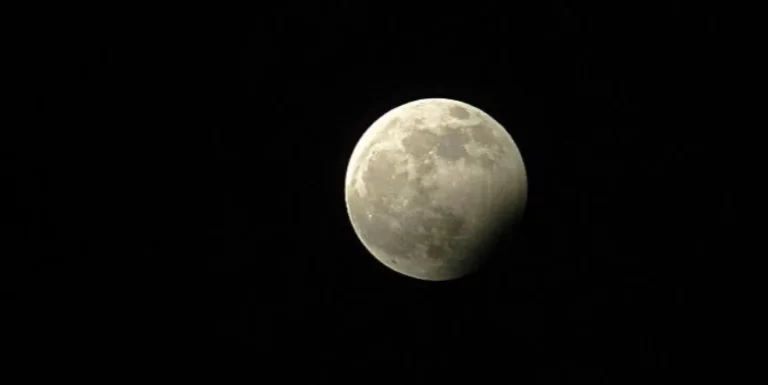
• Partial lunar eclipse of September 18, 2024, visible from Americas, Europe, and Africa

    The partial lunar eclipse of September 18, 2024, will be visible from several continents, including the Americas, Europe, and Africa. It is part of a series of astronomical phenomena in 2024 that will last more than four hours, with the partial phase beginning at 00:41 UTC and peaking at 02:44. During this period, a small piece of the Moon will pass through Earth’s umbral shadow, darkening around 8.5% of its surface.

  • Eta Aquariid meteor shower to peak on May 5, outburst possible

    The Eta Aquariids meteor shower is anticipated to reach its peak on May 5, 2024. Observers may witness an unusually high number of meteors this year, thanks to debris from Halley’s Comet ejected some 2 500 years ago and minimal lunar light interference, providing optimal viewing conditions.

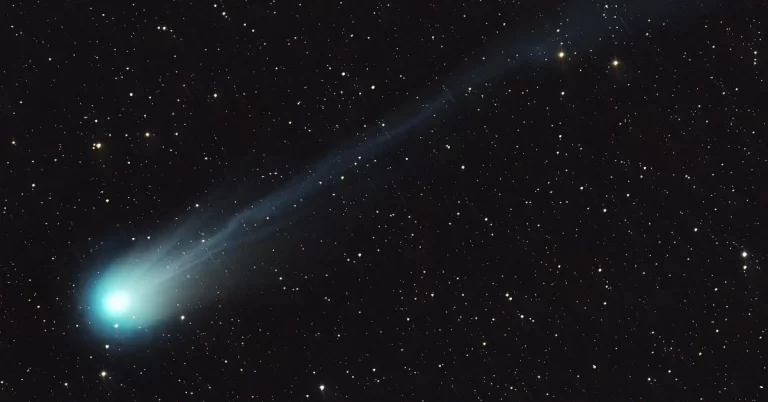
  • ‘Devil Comet’ 12P/Pons-Brooks reaches closest point to the Sun on April 21

    On April 21, 2024, Comet 12P/Pons-Brooks, commonly referred to as the ‘Devil Comet,’ will reach its perihelion, the closest point to the Sun, at a distance of 0.785 astronomical units (117 million km / 73 million miles). This celestial event will allow the comet to be visible just after sunset within the Taurus constellation, marking its peak visibility period.

  • Upcoming nova explosion in T CrB star system offers rare night sky event

    In a stellar event anticipated to occur between now and September 2024, the T Coronae Borealis (T CrB) star system, located 3 000 light-years away, is predicted to undergo a nova outburst, becoming visible to the unaided eye. This rare occurrence, last witnessed in 1946, will temporarily elevate the system’s brightness to match that of the North Star, offering a unique viewing opportunity.

  • Extremely rare astronomical event: Asteroid Leona to eclipse red supergiant Betelgeuse

    An extremely rare celestial event will unfold at the beginning of next week as the main belt asteroid Leona transits in front of Betelgeuse, the famed red supergiant in the Orion constellation. This rare astronomical occurrence, observable from regions stretching from South Florida to Italy and Greece, will offer a unique spectacle where the luminous Betelgeuse may temporarily dim or even vanish from the night sky.

  • Penumbral lunar eclipse of May 5, 2023

    The penumbral lunar eclipse of May 5, 2023, will be visible from Africa, Asia, and Australia. This is the first of 2 lunar eclipses in 2023. It’s taking place 2 weeks after the hybrid solar eclipse of April 20, 2023.