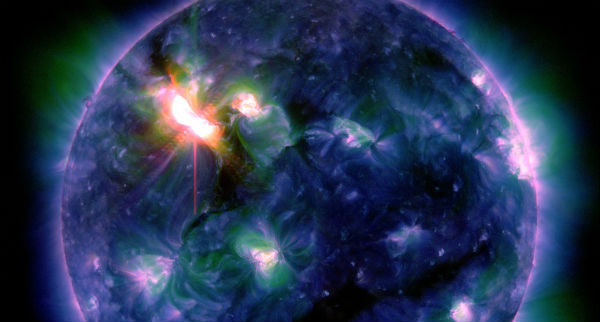
• Return of the old Sunspot 1402

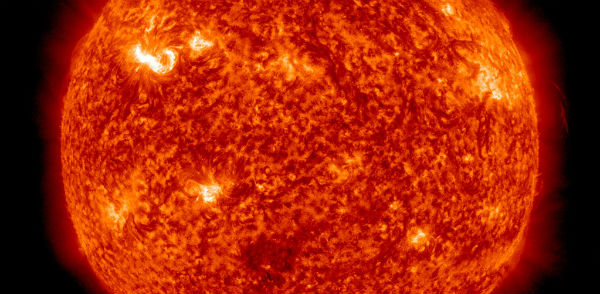
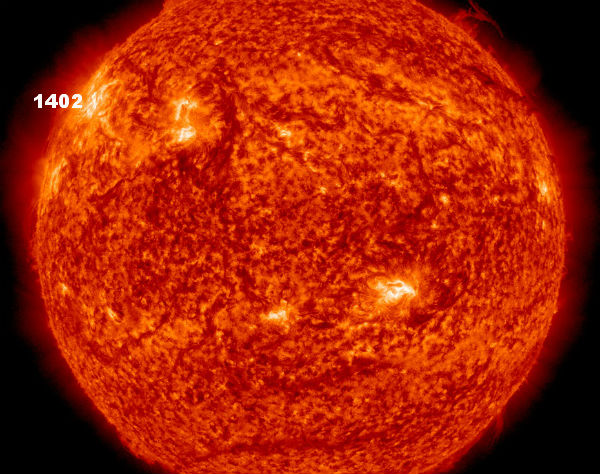
    After two-week long transit around the far side of the Sun, Sunspot 1402 has returned into view in the northeast quadrant. Sunspot 1402 is now re-numbered as Sunspot 1419. This region is smaller than it was before, after two weeks of decay. On January 27 it unleashed

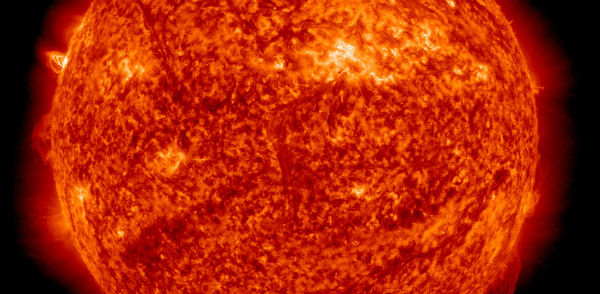
  • Solar activity is picking up again

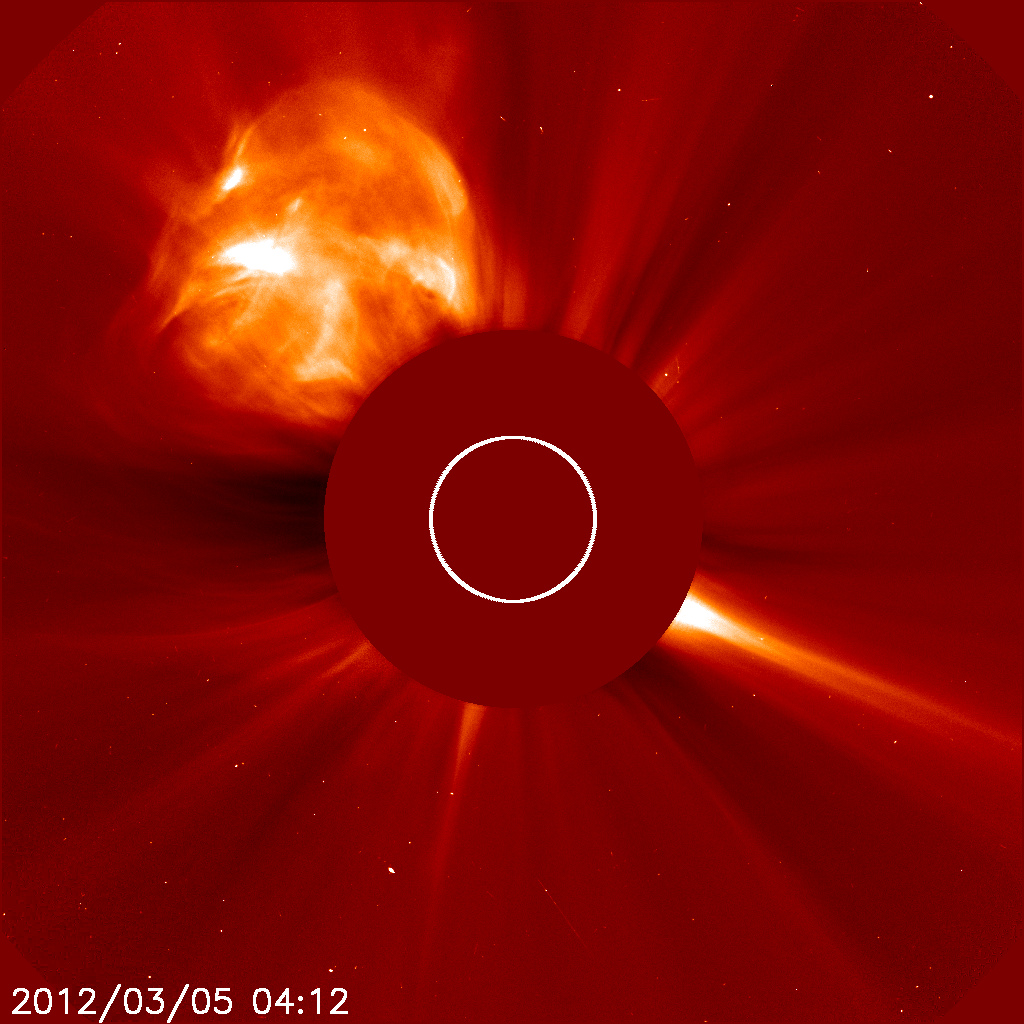
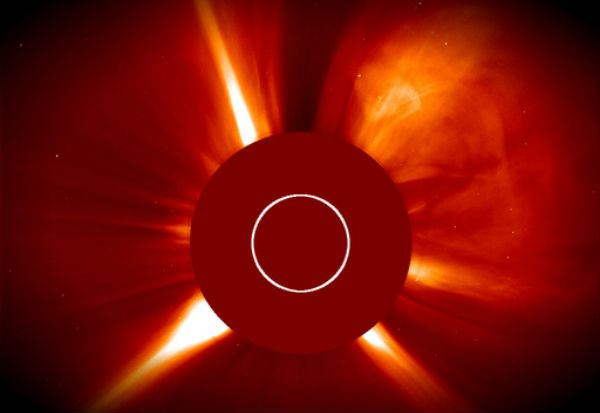
    Explosion of dark magnetic filament occurs over the northeastern limb during the late hours of February 9th. Explosion generated a bright coronal mass ejection (CME) that is heading toward Venus as it seems. Fortunatelly, this CME is not Earth-directed. Sunspot

  • Auroras seen around parts of the Arctic Circle

    Earth passed through a minor solar wind stream on Feb. 4-5. The weak impact of the solar wind was just enough to spark auroras around parts of the Arctic Circle. The effects of the solar wind are subsiding, and the auroras might disappear into the moonlight for the

  • Sunspot 1402 still active – Farside eruption

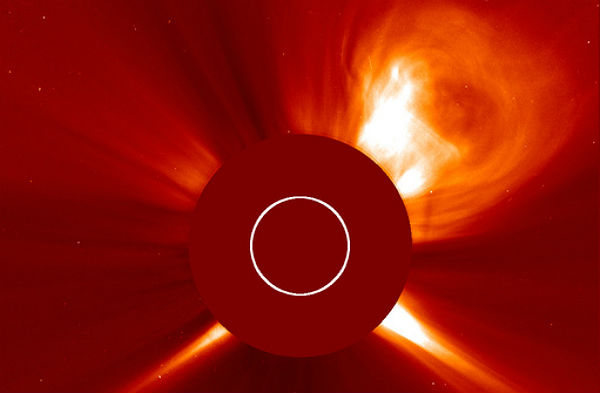
    Sunspot AR1402, the source of last week’s X-flare and many beautiful auroras, is on the farside of the sun now. Although we can’t see it, the active region is still erupting. Bellow is the video showing coronal mass ejection flying over the sun’s western limb. Click

  • S2 radiation storm generated by X1.7 solar flare in progress

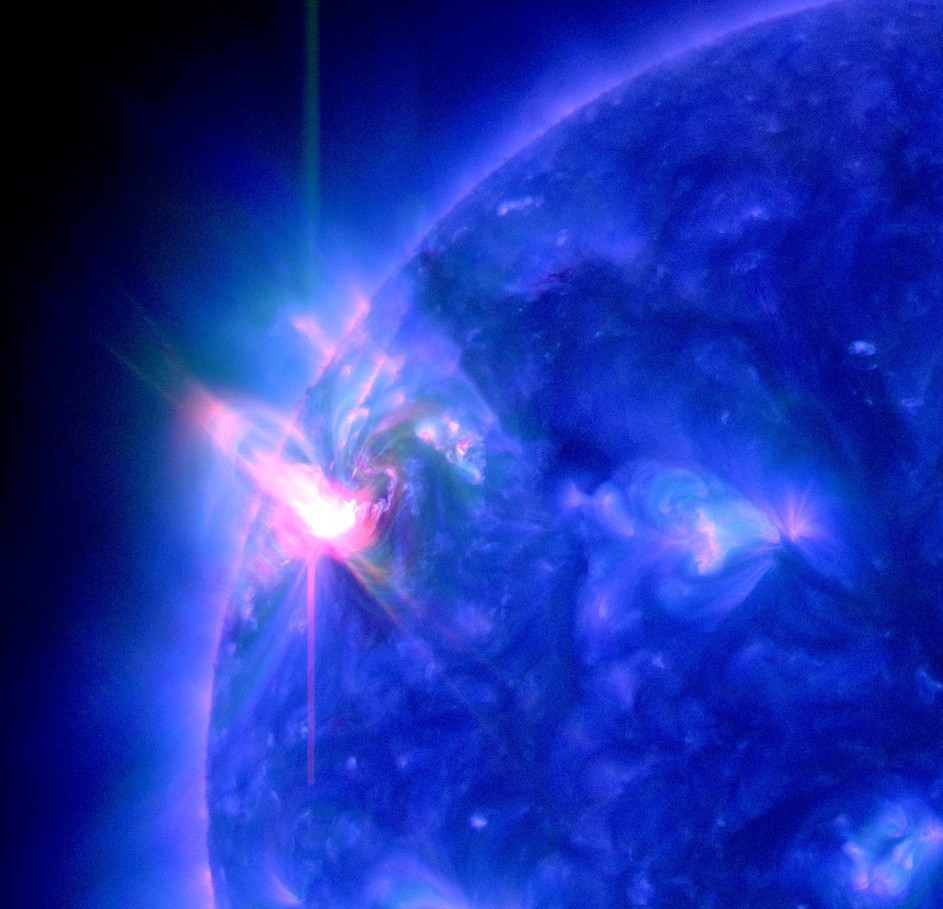
    Sunspot 1402 located on the northwest limb, produced a major X1.7 Solar Flare at 18:37 UTC Friday afternoon. Solar activity is now expected to be very low as 1402 rotated onto the western limb and is now out of direct Earth view. All remaining current visible regions

  • X1.7 solar flare – the 7th largest in Solar Cycle 24

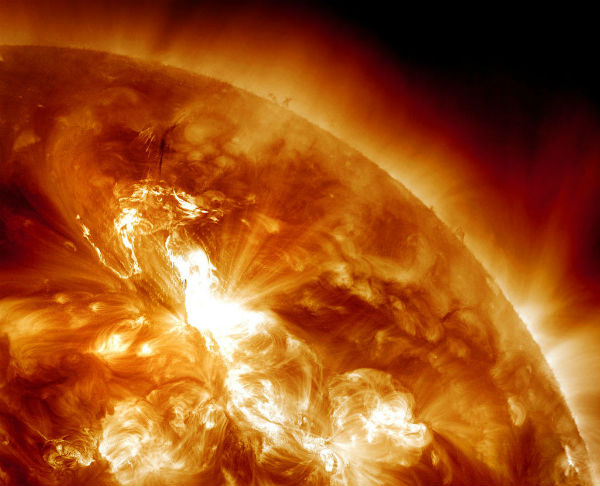
    Earth-orbiting satellites detected a powerful X1.7 solar flare today, January 27, at 18:37 UTC. The source was departing sunspot 1402 which rotate onto the far side of the sun, so the blast site was not Earth directed. Goddard Space Weather Lab’s analysists say the