• Near X-class solar flare and geomagnetic storm – M9.3

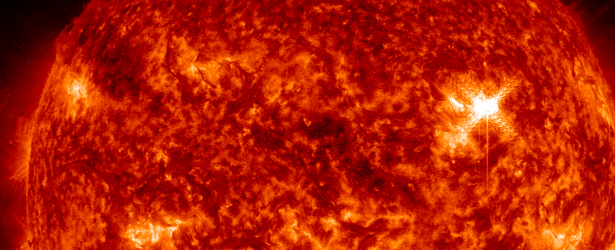
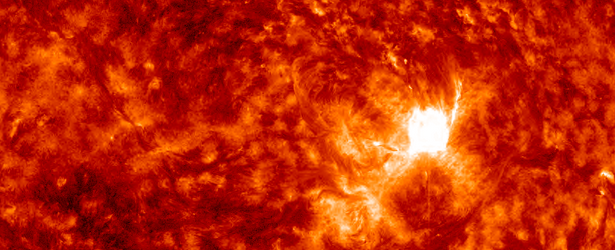
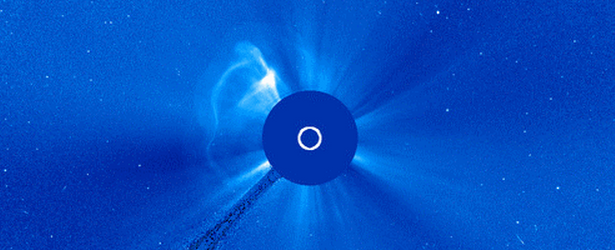
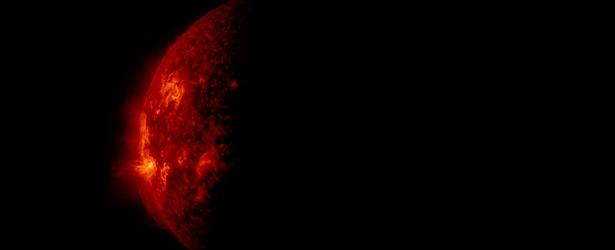
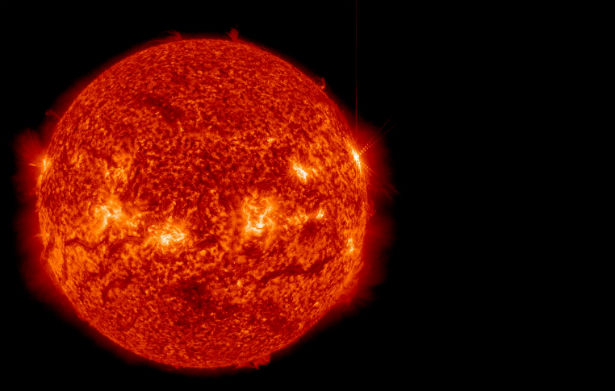
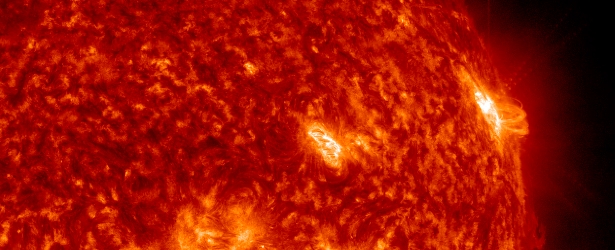
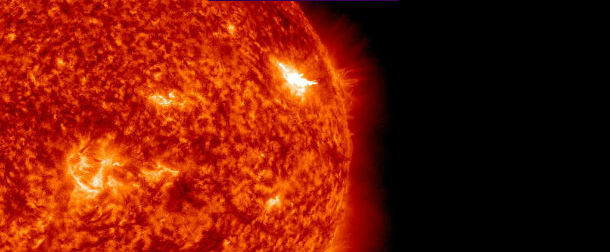
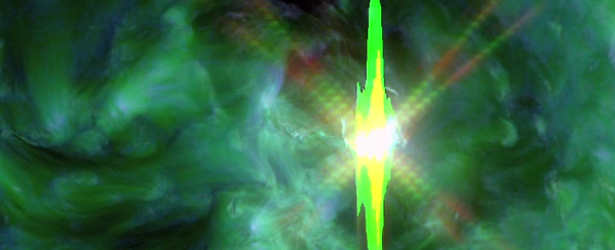
    Near X-class solar flare reaching M9.3 erupted from departing Sunspot 1996 on March 12, 2013 at 22:34 UTC.

    This decaying sunspot is located near eastern limb and generated CME was not geoeffective, however, it produced a R2 (Moderate) Solar Flare Radio Blackout

  • Solar activity back to moderate levels, M2.5 from Region 1996

    After major X4.9 solar flare that erupted on February 25 from Region 1990 [during its 3 rotation on the Earth side of the Sun] we almost had no day without a moderate eruption. Since then, solar observatories recorded 16 M-class solar flares ranging from M1.0 to M3.5. S

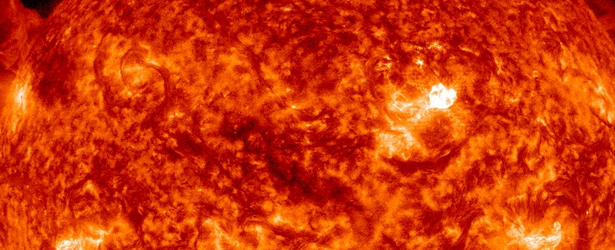
  • Sunspot 1996 produced M3.5 solar flare

    Active Region 1996, located in the northern hemisphere, produced moderate  M3.5 solar flare at 03:50 UTC on March 11, 2014. This active region continues to rotate closer towards the northwestwern limb.  

    SDO's AIA 304 and EVE with GOES X-ray flux

  • THEMIS discovers new process that protects Earth from space weather

    In the giant system that connects Earth to the sun, one key event happens over and over: solar material streams toward Earth and the giant magnetic bubble around Earth, the magnetosphere helps keep it at bay. The parameters, however, change: The particles streaming in

  • Powerful X4.9 solar flare erupted from Sunspot 1990

    Newly numbered Active Region 1990 produced powerful X4.9 solar flare at 00:49 UTC on February 25, 2014, making it the third largest X-flare event of the current solar cycle. This decaying sunspot is in fact old returning region previously numbered as AR 1967. This is

  • Genesis of a Lunar Halo – Time-lapse video by InFocus Imagery

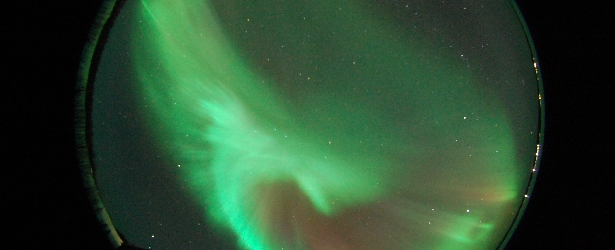
    This short time-lapse was captured on February 19, 2014. At approximately 02:00 UTC an unexpected CME (Coronal Mass Ejection) impacted our planet's magnetosphere. The aurora display was fairly active peaking at G2 storm levels.

    A large portion of the display